




New York City to Build Garbage Truck Parking Tower in Hudson Square
NEW YORK CITY, NY – The New York City Department of Sanitation wants to build garages on three sites, one of them owned by United Parcel Service, in the Hudson Square neighborhood where six luxury residential towers have risen in the past few years.
NEW YORK CITY, NY – The New York City Department of Sanitation wants to build garages on three sites, one of them owned by United Parcel Service, in the Hudson Square neighborhood where six luxury residential towers have risen in the past few years, according to the Web site www.downtownexpress.
The project would require joint use of the 85,450-square-foot UPS parking lot on the north side of Spring St. along West St. behind the UPS. Washington St. truck-loading facility. Sanitation would build a garage 150 feet tall — 13 feet taller than the new, 12-story, Philip Johnson-designed Urban Glass House directly across Spring St. from the site. The garage would store garbage and recycling trucks, snow plows, and salt spreaders on the upper level, and UPS would use the lower level for the staging area for its Manhattan South sorting and dispatching operation.
The garage would be home to trucks from three Sanitation districts, including those currently on Gansevoort Peninsula, as well as those from the Sanitation garage on the south side of Spring St. at West St. Under a legal settlement, the city must remove its garbage trucks from Gansevoort by 2012 so that the peninsula can be redeveloped as part of the Hudson River Park.
Norman Black, UPS public affairs director, said the city was threatening to take over the property under eminent domain, so the company made a deal, according to www.downtownexpress.com.
Also part of the D.O.S. project is the demolition of the existing Sanitation garage at Spring and West Streets and replacing it with a truck-washing and refueling facility that would accommodate four 4,000-gallon diesel fuel tanks, a 4,000-gallon unleaded gasoline tank, a 4,000-gallon ethanol tank, a 2,000-gallon hydraulic oil tank, a 2,000-gallon motor oil tank, and a 1,000-gallon waste oil tank.
The third part of the project calls for converting an existing parking garage on Washington and Clarkson Streets into a covered shed to store 6,500 tons of road salt with two above-ground storage tanks for liquid calcium chloride used to melt snow and ice on city streets. This would replace the salt shed on Gansevoort.
Sanitation will conduct a public scooping session on the project from 7:30 p.m. to 9:30 p.m. Wed., Jan. 31, in the Rosenthal Pavilion on the 10th floor of New York University’s Kimmel Hall, at 60 Washington Sq.
More Operations
Fleet Replacement Decisions, Waste Fleet Technology and the GFX Deadline
Is your next vehicle the right fit, can your records settle a missed pickup dispute, and what could your fleet teach others at GFX 2027?
Read More →
Is Delaying Fleet Replacement Really Saving Money?
Could delaying replacement cost your fleet more than it saves? This week’s recap takes a closer look, plus an update on GFX 2027.
Read More →
What Government Fleets Are Missing About Their True Costs
What are fleet budgets missing, and how can agencies use the data they already collect to make a stronger case for change?
Read More →
Rethinking Fleet Decisions From the Budget Office to the Shop
This October we looked back at how public fleets are reconsidering familiar processes and using what they learn to make better decisions.
Read More →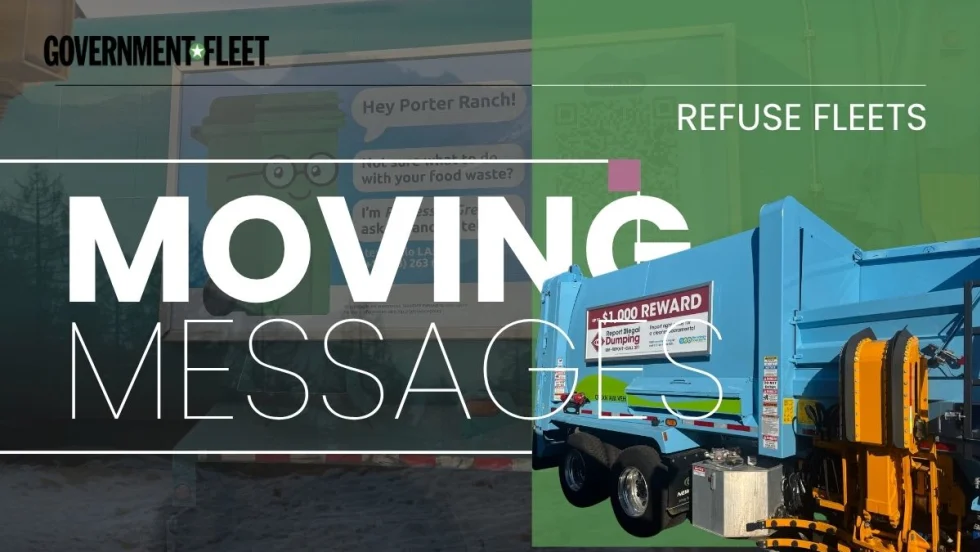
Who Owns the Message on a Refuse Truck?
Refuse trucks can carry public messages into neighborhoods, but keeping those messages current takes planning and clear responsibility.
Read More →
Who Deserves Fleet Recognition and What Could You Teach at GFX?
Who helped shape your fleet career, and what have you learned that could help someone else?
Read More →
What’s Haunting Public Sector Fleets?
Public sector fleet challenges rarely happen in isolation, and addressing one often means understanding how it connects to another.
Read More →
Is Keeping Older Fleet Vehicles Really Saving Money?
Is keeping vehicles longer saving money, and what happens when a diagnostic test points to the wrong fix?
Read More →
How Smart Fleet Strategy Can Help Local Government Agencies Do More with Less
Keeping a vehicle longer may ease this year’s budget, but what does it cost the next one? A closer look at fleet decisions can reveal opportunities to reduce spending while protecting essential services.
Read More →
Connect with Government Fleet on LinkedIn
From industry news and fleet management strategies to conversations with peers, Government Fleet's LinkedIn page offers public-sector fleet professionals another way to stay informed and connected.
Read More →