




New Safety Study Finds 34% More Drivers Maintain Better Control With Electronic Stability Control
Robert Bosch Corporation, a member of the Electronic Stability Control Coalition, has issued results of a newly published research study by the University of Iowa that concludes 34 percent more drivers maintain control of vehicles with Electronic Stability Control (ESC) than drivers without ESC.
FARMINGTON HILLS, MI — Robert Bosch Corporation, a member of the Electronic Stability Control Coalition, has issued results of a newly published research study by the University of Iowa that concludes 34 percent more drivers maintain control of vehicles with Electronic Stability Control (ESC) than drivers without ESC. Unveiled at the SAE 2004 World Congress, the research study delivers evidence supporting the effectiveness of ESC. In conjunction with the Electronic Stability Control Coalition and the University of Iowa, the ESC study was implemented by employing the National Advanced Driving Simulator (NADS), owned by the National Highway Traffic Safety Administration (NHTSA). During the study, researchers at the University of Iowa were able to study drivers during true-to-life critical driving scenarios that would normally lead to a loss of control. "ESC is an active safety technology that can help a driver maintain control of the vehicle and reduces the danger of skidding and rollover accidents," said Wolfgang Drees, member of the board of management, Robert Bosch GmbH. "The results of this study reflect similar data from international observational studies that ESC does in fact help to save lives." Previous international observational studies — from Mer-cedes and Toyota — have shown that ESC could help prevent up to 50 percent of single-vehicle crashes. The University of Iowa's study compared driver performance during three selected loss-of-control scenarios — lane departure, curve departure, and wind gust — between two vehicles equipped with an ESC system and the same vehicles with the system off. The results show that vehicles equipped with ESC systems provide a significant safety benefit: 34 percent more drivers were able to maintain control of vehicles equipped with ESC than without ESC. ESC is an active safety technology that uses mi-croelectronics to help drivers maintain control of their vehicle and prevent crashes before they occur. The system detects when a driver is about to lose control of a vehicle and automatically intervenes to provide stability and help the driver stay on course. ESC is marketed under various trade names. "This research, the first hi-fidelity simulator-based analysis of driver response to vehicles with and without Electronic Stability Control, changes the automotive safety landscape," said University of Iowa researcher Dr. Yiannis Papelis, one of the leading researchers on the study. "Using the National Advanced Driving Simulator allowed us to observe human behavior and measure drivers' reactions in conditions that would be too dangerous to conduct in real life. The results found ESC can reduce the risk of losing control by as much as 88 percent, which equates to an increase of 34 percent in the number of drivers who maintained control of their vehicles with the ESC system activated." A joint effort of two of the largest automotive technology suppliers, Robert Bosch Corporation and Conti-nental Teves, the ESC Coalition was established in 2003 to inform consumers and other key audiences about the benefits of ESC systems.
More Operations

How St. Johns County Turned Fleet Data Into Better Replacement Decisions
St. Johns County, Florida, had fleet data, but turning it into reliable decision guidance was another matter. Instead of starting over with a new fleet management system, the county connected existing tools and built a scoring system that gives managers an objective look at fleet health.
Read More →
Fleet Forward Conference Introduces One-Day Passes for 2026
New one-day registration lets fleet professionals attend Tuesday, Wednesday, or Thursday, with passes available for $249.
Read More →
ENC Unveils its ZAVIR Medium-Duty Shuttle
Two variants of the concept shuttles were revealed: a low-floor configuration and a high-floor configuration.
Read More →
Could Your Next Fleet Technician Start as an Intern?
What if your next technician hasn’t worked in a fleet shop yet? What fleets are doing to free up time.
Read More →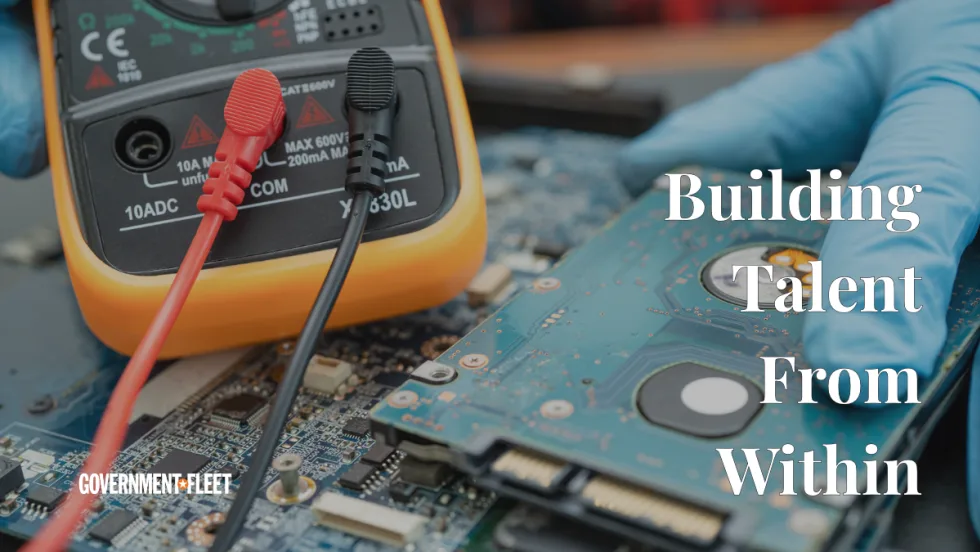
How Phoenix Is Building Its Next Generation of Fleet Technicians
With more than 8,000 vehicles and pieces of equipment to maintain, the City of Phoenix could not afford to wait for fully trained technicians to walk through the door. Instead, they revamped their entire workforce strategy and showed how public fleets can create their own talent pipeline while preparing existing employees for increasingly complex vehicles.
Read More →
What’s Slowing Your Fleet Down?
Could a change in how work gets done help your fleet return vehicles to service sooner?
Read More →
Can Public Fleets Trust the Data Driving Their Decisions?
Public fleets have more data than ever, but inconsistent records and missing information can still undermine maintenance, replacement, and cost decisions.
Read More →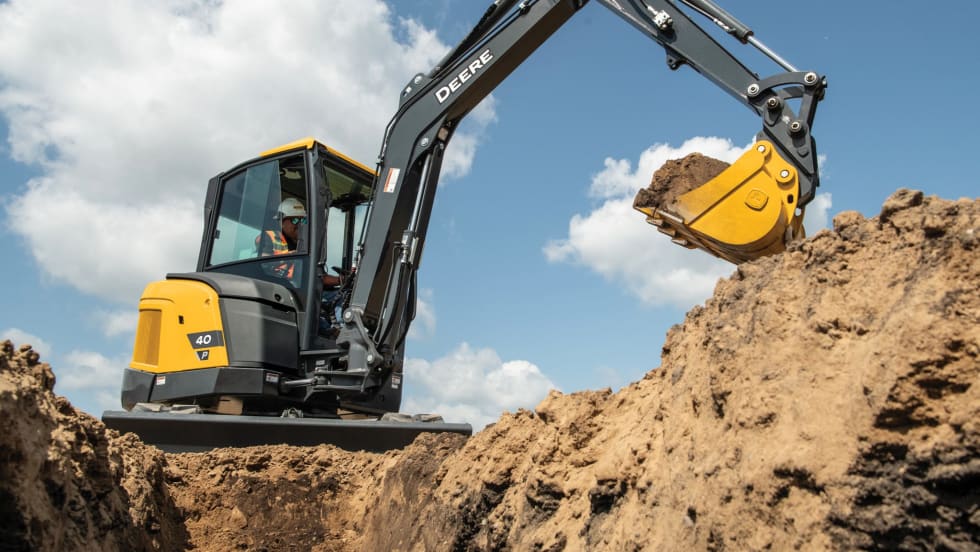
John Deere Introduces 40 P-Tier Compact Excavator
John Deere is adding a compact excavator designed for crews that need to move equipment between jobsites and handle multiple types of work with one machine. The 40 P-Tier weighs less than 10,000 pounds and offers configurable hydraulics, attachment options, and connected fleet-management capabilities.
Read More →
How Leading Fleets Improve and Why Business Plans Matter
This week, we look at what past Leading Fleet winners can teach us about making progress, plus how to build a business plan your fleet will actually use.
Read More →
Nominate a Fleet Leader for the 2027 Public Fleet Hall of Fame
Do you know a fleet leader who has made a lasting impact on the industry? Nominate this fleet professional for the 2027 Public Fleet Hall of Fame.
Read More →