




Kansas City Adding New CNG Trucks to Fleet
KANSAS CITY, MO - The City recently took delivery of one of the first of a total of 19 heavy-duty compressed natural gas (CNG) trucks being placed into service this year.

Kansas City Fleet Administrator Sam Swearngin, along with other fleet operations staff, recently received training for the new CNG truck.
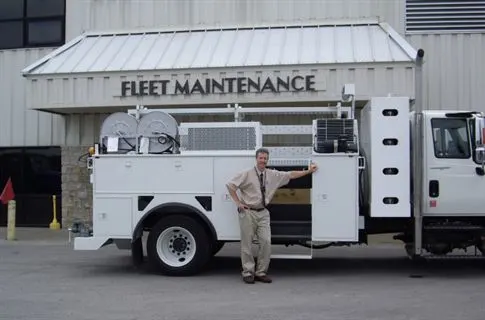
KANSAS CITY, MO - The City of Kansas City recently took delivery of one of the first of a total of 19 heavy-duty compressed natural gas (CNG) trucks being placed into service this year.
The city received a federal grant through the Congestion Mitigation and Air Quality (CMAQ) Program to help pay for the CNG system, according to Sam Swearngin, fleet administrator for Kansas City. The CNG truck is an International 4300 storm water utility truck application.
Though the fleet also uses other available alternative fuels including propane, ethanol, biodiesel, hybrid-electric, and plug-in electric, CNG "displaces more foreign oil derived fuels than all the others combined," said Swearngin.
"We use CNG for a number of reasons. First of all, we want vehicles that are safe and perform as well as traditional vehicles. Secondly, we want the lowest emissions possible, and finally, we want a secure, domestically produced fuel that will be affordable over the long haul and offer price stability, to get us off the roller coaster of petroleum fuels. For us, the move to CNG has proven to be a good choice," Swearngin explained.
City fleet technicians, supervisors, and superintendents recently received training for the new truck from the National Alternative Fuels Training Consortium. The training involved three full days of class and hands-on learning.
The training covered:
Understanding the properties of compressed natural gas and how it compares to other fuels.
Purpose and function of compressed natural gas vehicle components.
Recognizing the proper installation guidelines and identifying component damage.
Compressed natural gas safety.
Cylinder inspection.
While the CNG truck is similar to traditionally fueled models, Swearngin said there are two noticeable differences between CNG trucks and traditional trucks. "First, the CNG fuel tanks are bigger, heavier and required more space on the vehicle. Second, filling the CNG truck's fuel tank is different. It's like a heavy-duty air chuck that snaps on the truck's inlet nozzle," Swearngin explained.
Kansas City was pleased to have worked with truck body company Mobile Hydraulics Equipment Co. (MHE) on the new trucks. "As with just about all 'first of vehicles', there are usually delays. And there was with this project, but MHE rolled with the flow and was very supportive," noted Swearngin.
CNG Truck Specs
Cab and Chassis Make and Model: International 4300
CNG Engine Make and Model: ESI Phoenix 7.6L 265HP, 820ft.lb @ 1400 RPM
CNG Fuel Tank Package: Enviromech -60 dge (diesel gallon equivalent) minimum (dge = scf /139); 4-cylinder system
Application: Storm Water Utility Truck
More Fuel
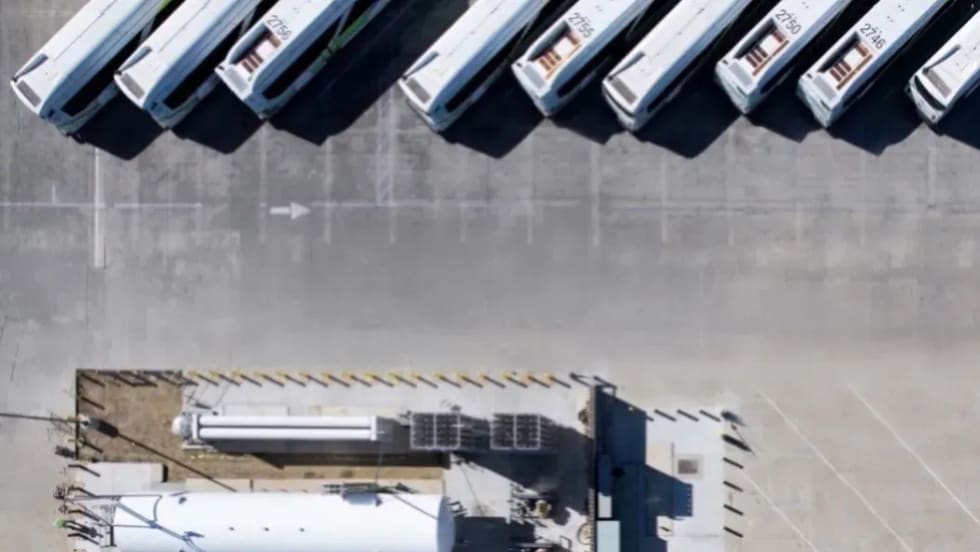
Clean Energy to Build Hydrogen Station for Orange County Transportation Authority
The new station will support the agency’s growing fleet of zero-emission hydrogen fuel cell buses.
Read More →
How Fleet Managers Reduce Fuel Waste and Protect Budgets
When fuel prices swing, fleet averages don’t tell the whole story. This white paper helps fleet and operations leaders uncover where fuel waste really hides and what data they need to build a smarter, more resilient fuel strategy.
Read More →
Planning for Future Technologies: Hydrogen and Beyond
As public agencies work to cut emissions from off-road operations, fleets are turning to a mix of renewable fuels, hybrid systems, battery-electric equipment and emerging hydrogen technology.
Read More →
RoadFlex Expands Fuel Network with Refuel Partnership
RoadFlex expands its fueling network for public sector fleets through a new partnership with Refuel, adding more than 250 locations across the Southeastern U.S. to improve access, savings, and efficiency.
Read More →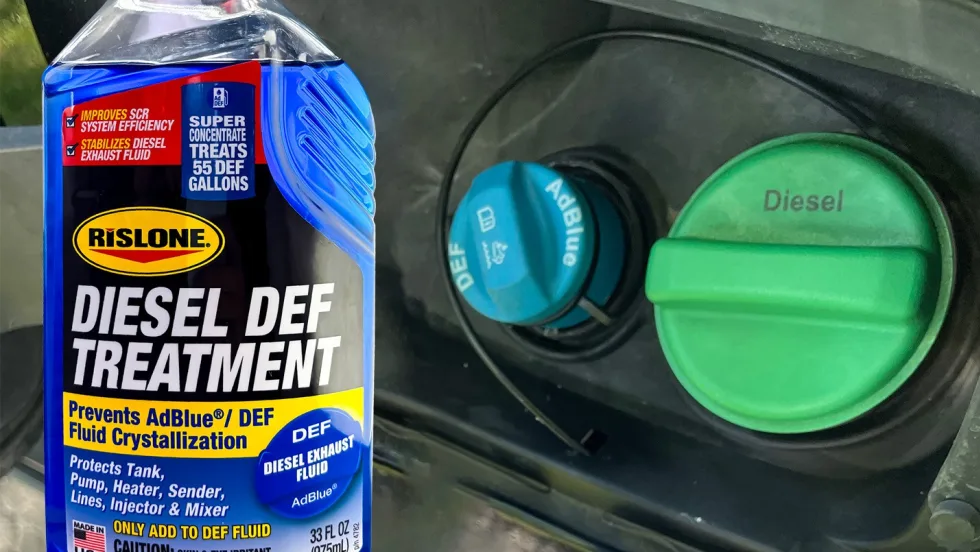
Rislone DEF Treatment Designed to Keep Diesel Exhaust Fluid Crystal-Free
Rislone is rolling out a super-concentrated version of its Diesel DEF Treatment that is designed to stabilize and improve diesel exhaust fluid.
Read More →
Are Bi-Fuel Propane Autogas Vehicles Making Law Enforcement Fleets More Resilient, Cost-Effective?
How a Florida sheriff office’s choice in fuel system led to a healthier budget, increased resiliency, and decreased emissions.
Read More →
Fleets All-In On Fuel Management Tech
Fuel management can become a tricky obstacle, but smart strategies and new tech have turned it into a well-oiled machine where price prediction is art, and cost control is science.
Read More →
Prepare Diesel Trucks for Winter with Diesel Exhaust Fluid
Understand proper DEF purchasing, handling, and storage practices in order to meet regulatory requirements and operates at peak performance.
Read More →
Diesel Exhaust Fluid (DEF) Locator
Yara, a diesel exhaust fluid (DEF) producer, offers a DEF locator website to help get the fluids fleets need.
Read More →
Gas vs. Diesel: The Bad Investment Only Fleet Managers Know About
A major point of debate in fleet management is using diesel vs. gas cars and trucks. Choosing to purchase gasoline engines instead of diesel ones for medium-duty trucks may be an unpopular decision, but is it the right one?
Read More →