




Related: Q&A with Kevin Myose: How Carsharing Saved San Joaquin County $1.7M
How to Create a Culture That Doesn’t Feel Like Work
This is how one fleet manager ensures his team leads with kindness and respect.

Lexi Tucker・Senior Editor
3 min to read
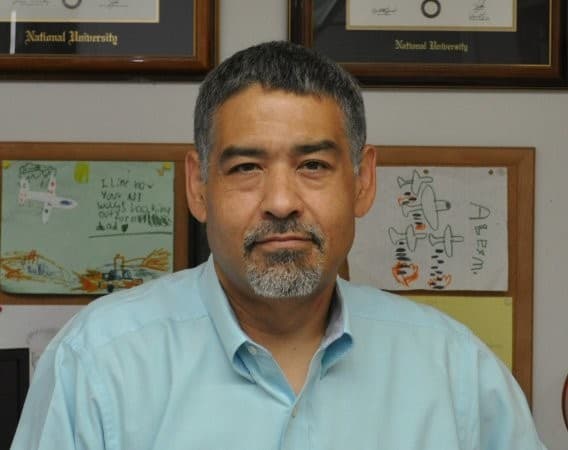
Kevin Myose, fleet manager for San Joaquin County, Calif.
It’s often said if you love what you do, you’ll never work a day in your life. Kevin Myose, fleet manager for San Joaquin County, Calif., makes sure those on his staff feel this way by fostering an environment where people care about one another and are never afraid to make changes in the name of growth.
Building A Fair Culture
So how has Myose developed a space where employees come into work every day with no time clock needed? He says it’s all about taking pride in what you do and being fairly rewarded for it.
“It comes down to being honest and fair with people,” he says. “You don’t have to bring in a catered lunch once a week to get people to be motivated. It’s not about bribing them; it’s about treating them right and fair.”
He says this is especially the case when it’s time to hand out promotions. The department has an apprenticeship program, and they currently have about 20 mechanics who all graduated from that system.
“It creates loyalty, buy-in, and people who take their job seriously. At this point, everyone knows who the next person getting a promotion will be, because they know who has earned it.” Unfortunately, there are still departments who promote based on the “It’s not what you know, it’s who you know” principle.
“I’ve been there. I’ve felt the anguish and pride, and sitting where I am now, it’s easy to keep it fair. I know where people are coming from.”
When you have happy employees, you’ll have happy customers. It won’t be necessary to ask someone to stay late; they’ll know it has to be done and do it.
“Most people come here wanting to work. They are honest and realize it’s not about how much we can carry out the back door for ourselves. We want to do a good job for the public, and that attitude is carried across the whole crew,” he says.
As long as he’s been there, they haven’t had a sick leave problem. When workers leave who weren’t exactly models of excellence, he replaces them with those who are more motivated. Before he joined the team, workers were divided.
“Those that worked on the heavy equipment weren’t allowed to talk to the guys working on the smaller vehicles. There was a total disconnect,” he explains. Those working in the parts room only had 15 contracts, and purchased anything else on credit cards. 15 years later, they now have 370 contracts in their parts department.
“Change can be a good thing. It doesn’t do you any good getting stuck doing what you’ve always done. Don’t feel you have to put up with doing something a certain way that’s clunky and inefficient.”
Considering The Environment
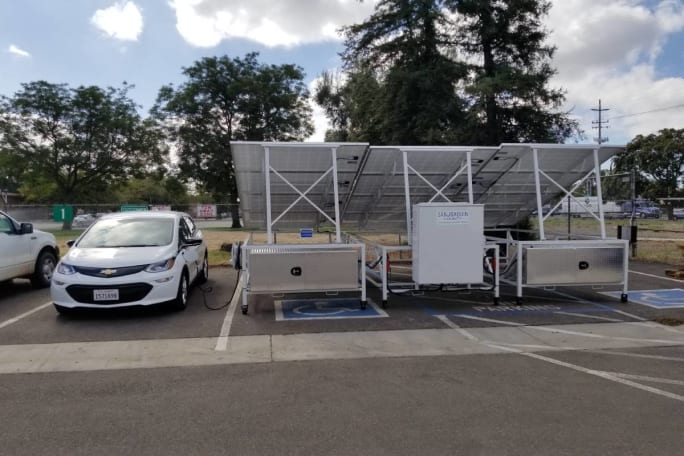
The department has already built their own solar charger (seen here), and recently received almost $900,000 worth of grant money to build a solar charger for the local hospital with a backup generator.
One of the projects Myose is working on is building a strong alternative fuel program. The department has already built their own solar charger, and recently received almost $900,000 worth of grant money to build a solar charger for the local hospital with a backup generator.
Their next move will be to leverage solar power for fueling infrastructure for electric vehicles. San Joaquin County gets nine months of pure sunlight, and if the fleet department leverages it right, it will save a lot of money.
“There’s ‘green’ on both sides of it. It will show we can be responsible with the environment and our pocketbook as well.”
More Operations

What’s Haunting Public Sector Fleets?
Public sector fleet challenges rarely happen in isolation, and addressing one often means understanding how it connects to another.
Read More →
Is Keeping Older Fleet Vehicles Really Saving Money?
Is keeping vehicles longer saving money, and what happens when a diagnostic test points to the wrong fix?
Read More →
How Smart Fleet Strategy Can Help Local Government Agencies Do More with Less
Keeping a vehicle longer may ease this year’s budget, but what does it cost the next one? A closer look at fleet decisions can reveal opportunities to reduce spending while protecting essential services.
Read More →
Connect with Government Fleet on LinkedIn
From industry news and fleet management strategies to conversations with peers, Government Fleet's LinkedIn page offers public-sector fleet professionals another way to stay informed and connected.
Read More →
Town of Queen Creek Named Most Successful Fleet Award Winner of Inaugural RTA Fleet Success Awards
Five fleets were honored at RTA Connect 2026 in Chicago for excellence across resource efficiency, intentional culture, risk management, and stakeholder satisfaction.
Read More →
Sponsored•October 14, 2026
A buyer's guide to fleet management software in 2027
Buying fleet management software in 2027 means looking beyond features and price. As fleet operations, technology and expectations evolve, this guide explores what today’s fleet professionals should consider when choosing a system that can deliver value now and adapt to what comes next.
Read More →
Hazard Alerts, Fleet Car Sales Rise and a New Shuttle Concept
Fleet car sales doubled, but the bigger picture tells a different story in this week’s roundup.
Read More →
How St. Johns County Turned Fleet Data Into Better Replacement Decisions
St. Johns County, Florida, had fleet data, but turning it into reliable decision guidance was another matter. Instead of starting over with a new fleet management system, the county connected existing tools and built a scoring system that gives managers an objective look at fleet health.
Read More →
Fleet Forward Conference Introduces One-Day Passes for 2026
New one-day registration lets fleet professionals attend Tuesday, Wednesday, or Thursday, with passes available for $249.
Read More →
ENC Unveils its ZAVIR Medium-Duty Shuttle
Two variants of the concept shuttles were revealed: a low-floor configuration and a high-floor configuration.
Read More →