




Keep Reading: Can Electric Fire Trucks Meet the Needs of Today’s Fire Departments?
How an Arizona City's New Electric Fire Truck Differs from its Diesel Fire Trucks
Mesa Fire and Medical's E-ONE Vector electric pumper can get about 142 miles in a city and 100 miles on a highway before the range extender kicks in.

Christy Grimes・Former Senior Editor
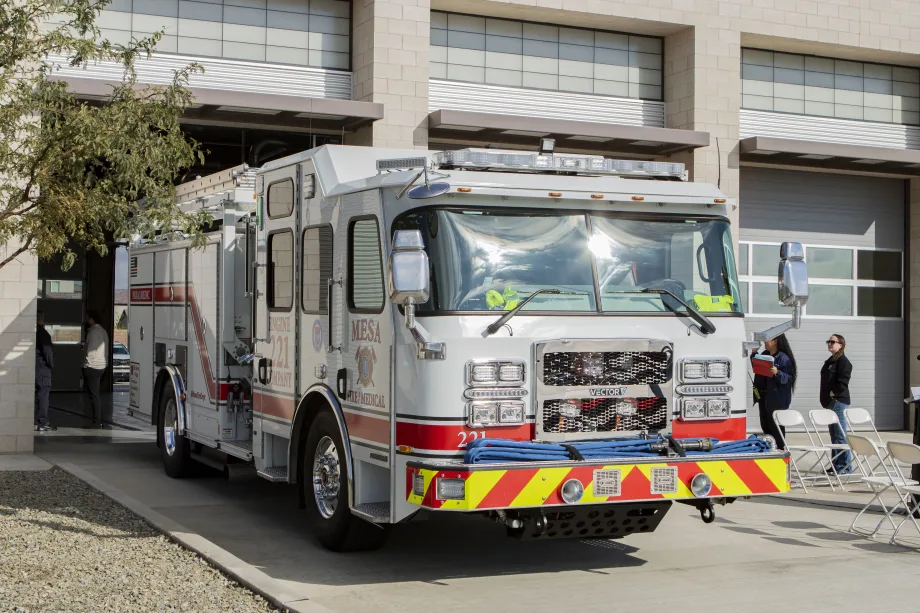
The high-capacity batteries on the E-ONE Vector electric pumper provide 327 kWh of total storage at 800 volts DC, with the option for a 120-volt line voltage.
Photo: City of Mesa
3 min to read
The city of Mesa, Arizona, has a new fire truck, and it's not fueled by diesel. The Mesa Fire & Medical Department now has an E-ONE Vector all-electric pumper truck.
The truck, stationed at Fire Station 221, will reduce toxin exposure for firefighters as part of the department's commitment to implementing cutting-edge health and safety practices, the city stated in a press release.
“We are proud of what today signifies. As a department, we are taking a unique step towards improving the health and safety of our personnel,” Mesa Fire Chief Mary Cameli said. “Every innovative step that contributes to the overall health and safety of our personnel is a step in the right direction. As a department, we are fortunate to be part of a city that uses data and research combined with technology and a willingness to test ideas and analyze the results. Trailblazing, the use of technology like this truck to help reduce the risks to our crews exemplifies the Mesa Way.”
The city of Mesa was the first to place an order for the E-ONE Vector in 2021, as originally reported by Government Fleet.
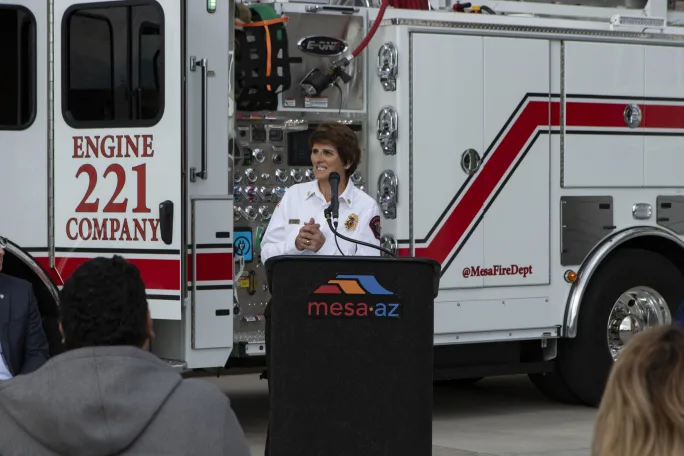
The purchase of the E-ONE Vector supports the city's Climate Action Plan and goal of achieving carbon neutrality by 2050. Mesa Fire Chief Mary Cameli is pictured here at a ceremony celebrating the delivery of the pumper.
Photo: City of Mesa
How the E-ONE Vector is Powered
The Vector is a fully-electric vehicle, with the ability to respond, pump, operate, and return all on lithium-ion batteries.
A spokesperson for REV Group — which owns E-ONE — told Government Fleet that the truck can get about 142 miles in a city and 100 miles on a highway before the range extender kicks in (more on that below).
The high-capacity batteries provide 327 kWh of total storage at 800 volts DC, with the option for a 120-volt line voltage.
Station 221 is equipped with an electrical charger capable of fully recharging the fire truck in approximately three and a half hours.
Maintaining Reliability On Scene
On a full charge, the Vector can pump a typical structure fire for three to four hours on the battery before the power source switches to the range extender.
The optional diesel-powered range extender, which has an on-board charge capacity of 120 kW, automatically engages and recharges the battery if the lower limit of EV battery state of charge is reached.
It's capable of maintaining a constant EV battery state of charge during pump operations.
The range extender takes the place of the much larger diesel engine in a traditional fire truck. The diesel fuel tank for the range extender is at the rear of the truck, the same place you would find it on a traditional fire truck.
Inside the E-ONE Vector
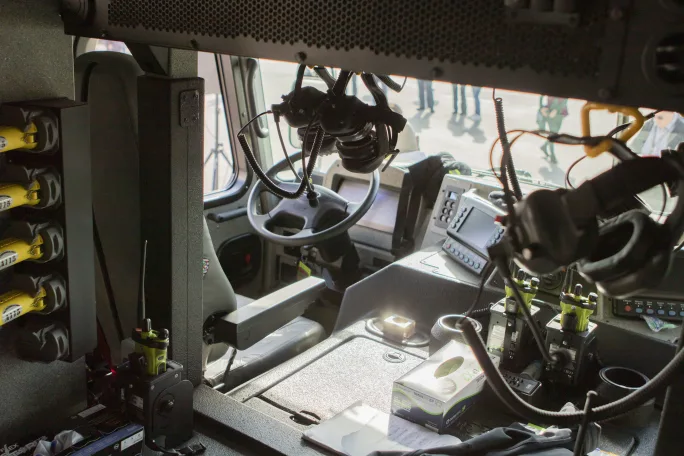
Mesa's fire truck was built to the department's requested configuation.
Photo: City of Mesa
The Vector is available in custom body configurations. Mesa's fire truck was built to the department's requested configuation. It's designed with the same components that are used on diesel-driven fire apparatus, making it familiar to firefighters.
Slashing Emissions and Cutting Noise Pollution
Unlike a traditional diesel-fueled fire truck, the Vector offers zero tailpipe emissions and zero greenhouse gas emissions, which will keep firefighters from being exposed to these emissions on scene.
The truck also reduces noise pollution, creating a quieter environment on scene.
Funding for Mesa’s E-ONE Vector came from 2018 bonds approved by voters and the city’s general fund. SRP is also expected to provide a $30,000 rebate to help offset the cost of the fire truck and installation of the EV charging infrastructure.
The purchase supports the city's Climate Action Plan and goal of achieving carbon neutrality by 2050.
About the Mesa Fire and Medical Department
According to its website, the Mesa Fire and Medical Department has around 190 total vehicles serving 21 fire stations to support the approximately 70,000 calls per year that the department receives.
The department serves more than a half-million residents over an area of 133 sq. miles.
More Green Fleet
Sustainability Partners, Energy Systems Group Help Albuquerque Close the Gap on its 100% Renewable Energy Goal
The eight-site, 6 MW solar project has advanced the city toward 100% renewable energy for municipal operations.
Read More →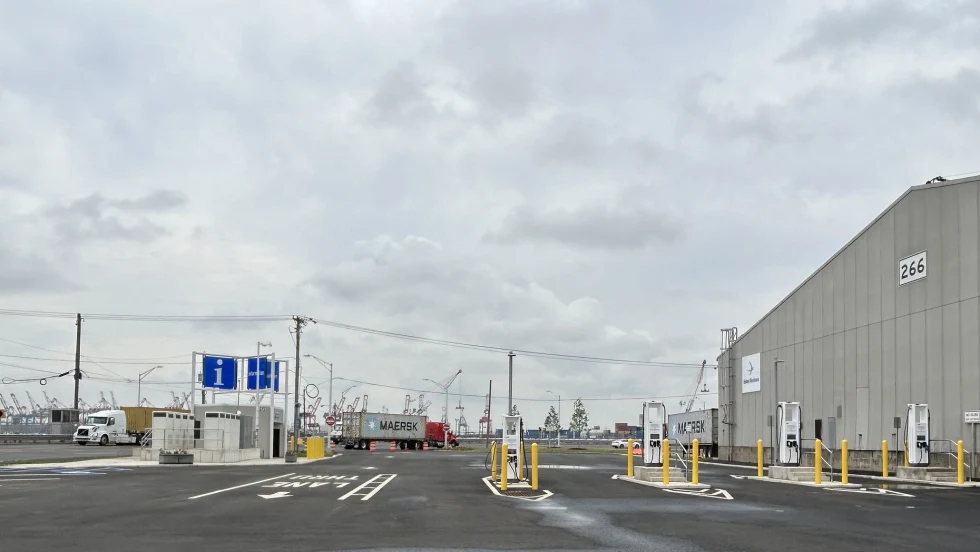
Port Authority and CALSTART Launch $45 Million Electric Truck and Charging Programs
The programs aim to boost sustainable operations across the East Coast's busiest seaport.
Read More →
Moving Government Fleets Beyond the Vehicle Purchase: EV as a Service
A discussion on how EVaaS is moving beyond pilot programs and what fleets should consider before beginning a larger deployment.
Read More →
Moving Government Fleets Beyond the Vehicle Purchase: EV as a Service
As fleets move beyond small EV pilots, Sustainability Partners CEO Adam Cain explains how EVaaS can address the infrastructure and long-term planning required for larger deployments.
Read More →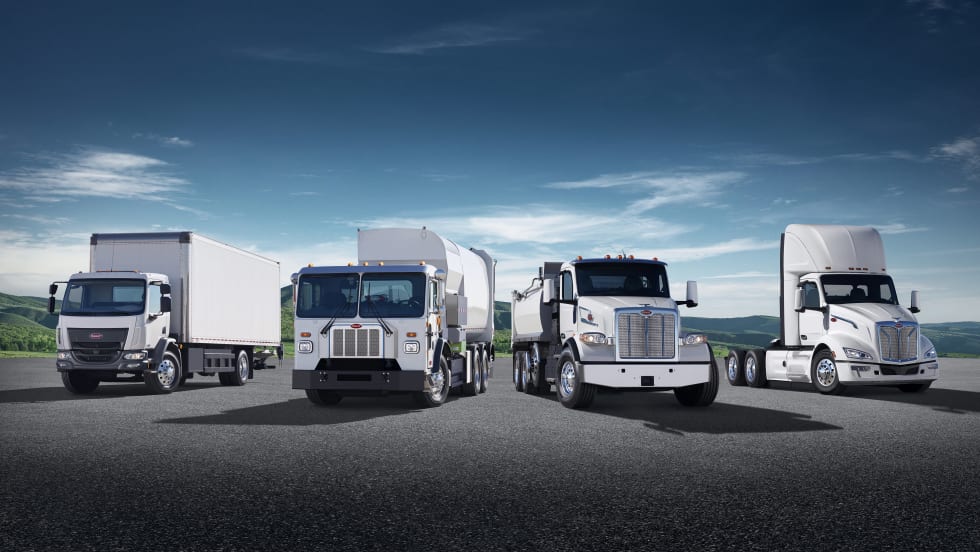
Peterbilt Expands Sourcewell Partnership with Electric Vehicle Lineup
The agreement aims to provide streamlined procurement of Peterbilt trucks for government, education, nonprofit and tribal organizations across the United States and Canada.
Read More →

EV Adoption & Charging Challenges
Where is your fleet in the journey of vehicle electrification? If you're still looking for answers to fleet electrification you've come to the right place.
Read More →
Hawaii Passes Clean Fuel Policy
Hawaii lawmakers passed clean fuel legislation that could support renewable natural gas production, biogas-powered transportation, and lower-carbon fueling options for public and commercial fleets.
Read More →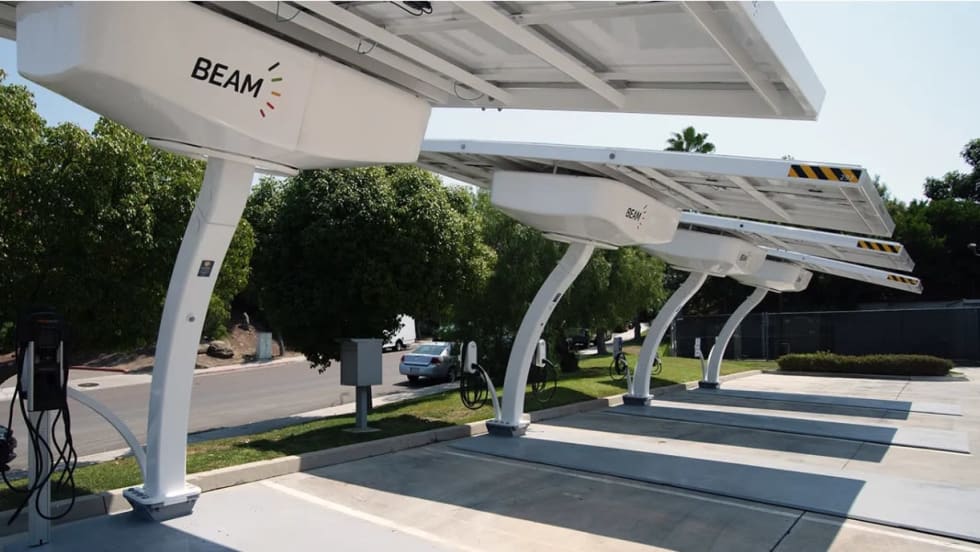
Stanislaus County Deploys Ten Beam Global EV ARC Systems to Support County Fleet Electrification
Stanislaus County deployed 10 off-grid solar-powered EV charging systems and a mobile charging trailer from Beam Global to support its electric fleet operations and emergency response flexibility.
Read More →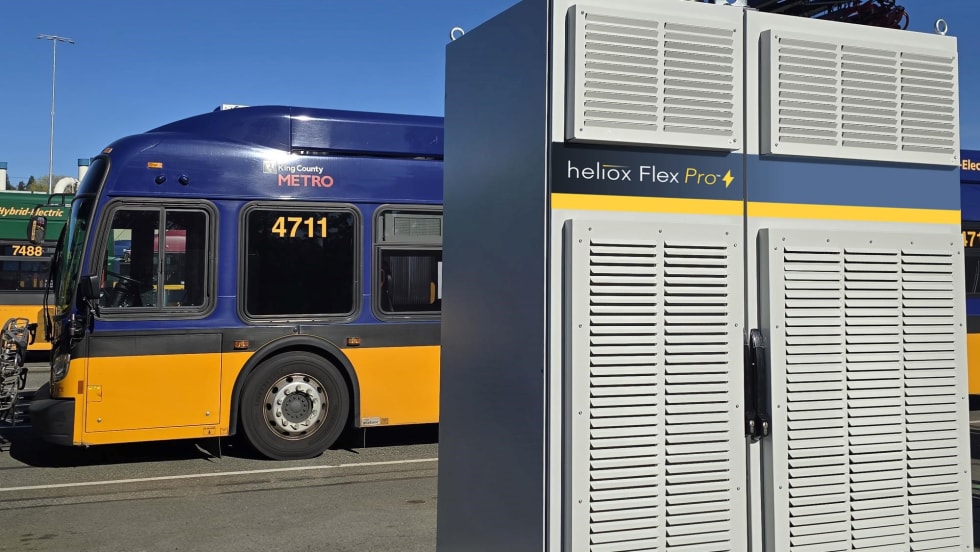
Heliox Pilots 480-kW Bus Charger with King County Metro
King County Metro is piloting Heliox’s new 480-kW Flex Pro charger to support expansion of its battery-electric bus fleet and depot charging infrastructure. The compact charging system supports pantograph and plug-in charging configurations for high-density transit operations.
Read More →