




Higher Fuel Prices Raise Tax Bills as Governments Pass Along Cost of Gassing Up
CHARLOTTE, NC — Like the general public, local governments throughout the Catawba Valley are struggling with high fuel costs, according to the Charlotte Observer newspaper.
CHARLOTTE, NC — Like the general public, local governments throughout the Catawba Valley are struggling with high fuel costs, according to the Charlotte Observer newspaper. Some cities and counties have already budgeted more fuel money for the 2004-05 fiscal year, which begins July 1. Others, like Hickory County, have kept fuel budgets steady, hoping prices already beginning to fall will continue to do so. Another, Conover County, raised property taxes — from 36 to 38 cents per $100 assessed value — in part to pay for costlier fuel. All agencies have encouraged employees to do little things, such as avoid idling vehicles and combine trips in order to save. “And those are not just fluffy, feel-good things,” said Warren Wood, Hickory's executive assistant over administration. “Those are real things to try and conserve fuel.” Some three months ago, Hickory Public Services Director Chuck Hansen began stressing the need to conserve to employees who run mostly diesel-powered vehicles such as backhoes, dump trucks, and garbage trucks — the city's high-consumption fleet vehicles. “We're letting guys use their common-sense judgment,” Hansen said. “But the general rule is, if you get out of (a vehicle) for any reason, go ahead and turn it off.” Most local governments pay far less for fuel than the average Joe. Governments pay wholesale prices for bulk fuel from local or national distributors, said Tim Watson, Catawba County's facilities and fleet maintenance manager. The county uses three underground sites to store fuel for its fleet, Watson said. The last time the county bought fuel, on June 7, it paid about $1.36 per gallon for premium gasoline. “Thank goodness we're able to realize a lot of savings,” Watson said. “But it's way up there from what we were paying last year,” when the county was paying about 90 cents per gallon for premium. As a result, the county has increased its fleet fuel budget for about 250 vehicles from $254,000 in 2003-04 to $294,000 for 2004-05, said Budget Manager Judy Ikerd. In addition, as of July 1, the county will increase reimbursement for employees who use their own vehicles for county business from 34.5 to 36 cents per mile, she said. Hickory, though, is hoping its fuel-saving measures pay off and prices go back down. In the 2003-04 fiscal year, the city budgeted $652,236 for fuel; with 91 percent of the fiscal year passed, the city has spent $595,676, or 91 percent of the fuel budget, Wood said. The city has budgeted $661,716 for the 2004-05 fiscal year, just 1.5 percent more. “We are counting on gas prices to come down next year. If they don't, we'll go over budget,” Wood said. “We just don't have money lying around.” In any local government, public works, police, and fire are the gas-guzzling departments. The fire department can do only so much, said spokeswoman Terri Byers. “Our biggest fuel consumption is in response to calls,” she said, “and you can't cut that.” The department expects to meet its $45,000 fuel budget for the 2003-04 fiscal year, Byers said. As of April 30, it had spent $29,983 in fuel. But to be safe, the department budgeted an extra $5,000 for next year, she said. Police can't indiscriminately turn off patrol car ignitions either, said Capt. Clyde Deal, the commander in charge of the department's fleet. During traffic stops and responses to calls, officers still keep the motor running because blue lights and strobes would drain the battery otherwise, he said. But the department has begun urging officers to avoid idling whenever possible, and Deal said he's been reviewing fuel reports from each unit to track consumption. In addition, the department is considering switching to Chevrolet Impala police cars, smaller in size and slightly more fuel-efficient than the standard-issue Ford Crown Victoria Police Interceptors that make up most of the department's fleet, Deal said. Police began using nine Impalas this year. Two of the few lucky local departments this year are the county tax office and Piedmont Wagon, Hickory's public transit system. The tax office began using hybrid Honda Civics two years ago for its appraisers, and they've been averaging about 40 miles per gallon, said Tax Administrator Randy Moose. The hybrids work well for stop-and-go driving, which works the electric component of the engine more than the fuel-driven part, Moose said, “so it works real well for our appraisers.” Piedmont Wagon actually overbudgeted for the 2003-04 fiscal year. The department expects to come in under its $82,437 budget, said Manager Cynthia McGinnis. For next year, the department has budgeted $77,848.
More Operations

Improving Fleet Efficiency with Motorpool Technology
Government Fleet caught up with Daniel McGehee, Head of Sales, US, and APAC, Ridecell, about top concerns for motorpools, keyless technology, and how motorpools have transformed the way fleets are managed.
Read More →
How the Right Public Works Equipment Can Ease Your Bottom Line
Government Fleet sits down with Mark Allison, Director of Excavator Products, Gradall, and Tod Ebetino, Director, Vacall Products, to discuss the importance of using the right equipment that can make jobs more efficient and cost-effective.
Read More →
How Government Fleets Are Turning Connected Vehicle Data Into Practical Decisions
Public sector fleets are using connected technology to improve visibility, but the bigger challenge is building the processes to act on the information it provides.
Read More →
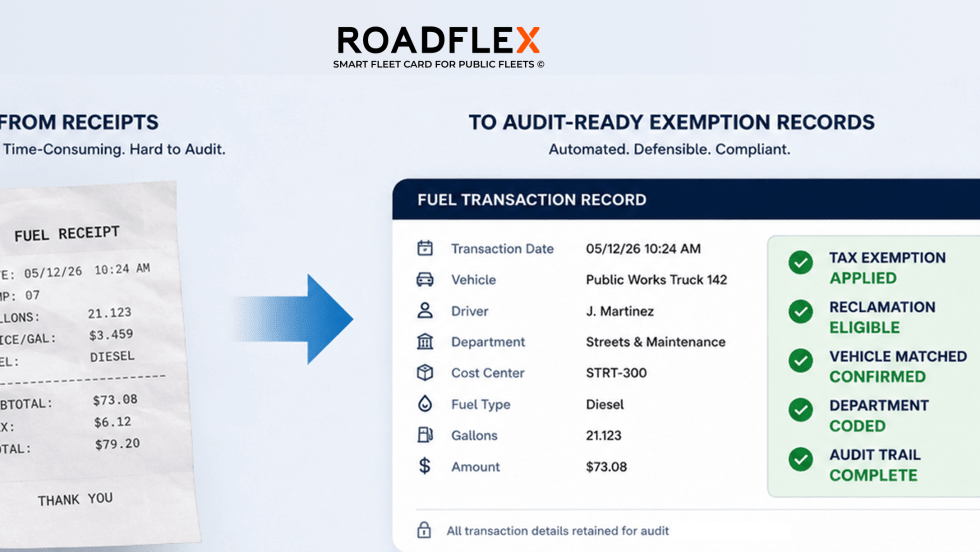
RoadFlex Brings Fuel Tax Compliance and Audit-Ready Reporting to Government, Public Works Fleets
New capabilities aim to help public-sector and public works fleets streamline fuel tax exemptions, reclamation, reconciliation, and audit-ready reporting.
Read More →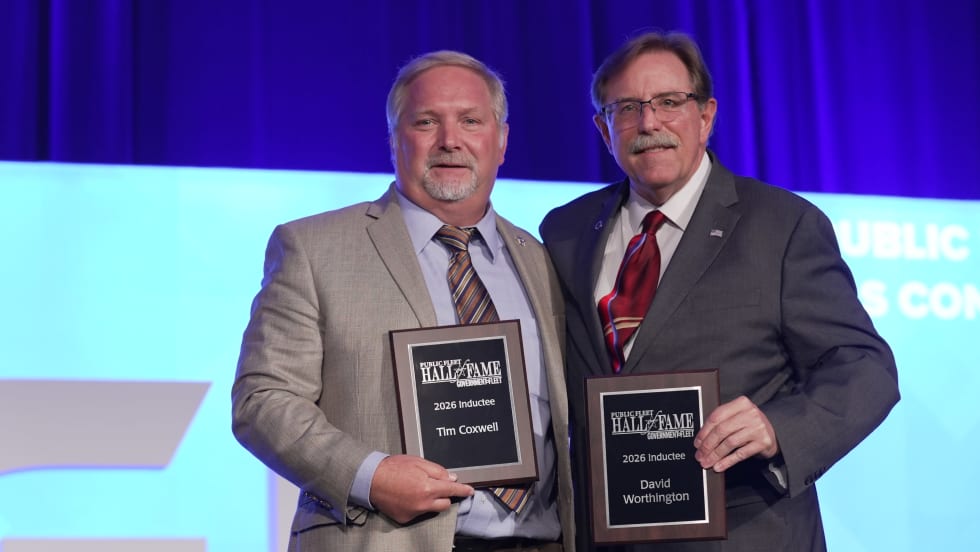
2026 Public Fleet Hall of Fame Inductees Honored
This year's class includes leaders whose work has helped shape the public fleet industry.
Read More →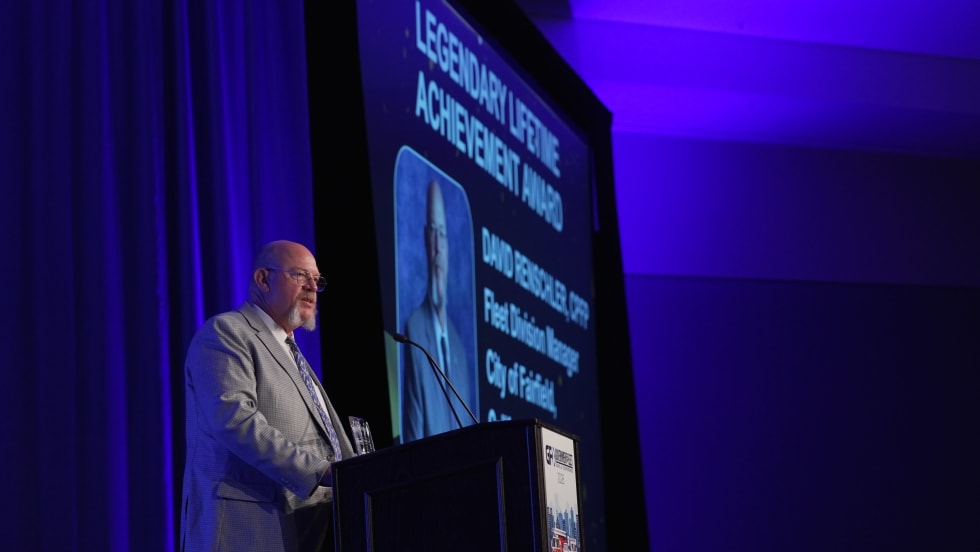
David Renschler Receives 2026 Legendary Lifetime Achievement Award
Andy Campbell of Sourcewell, which partnered with Government Fleet in presenting the award, recognized Renschler.
Read More →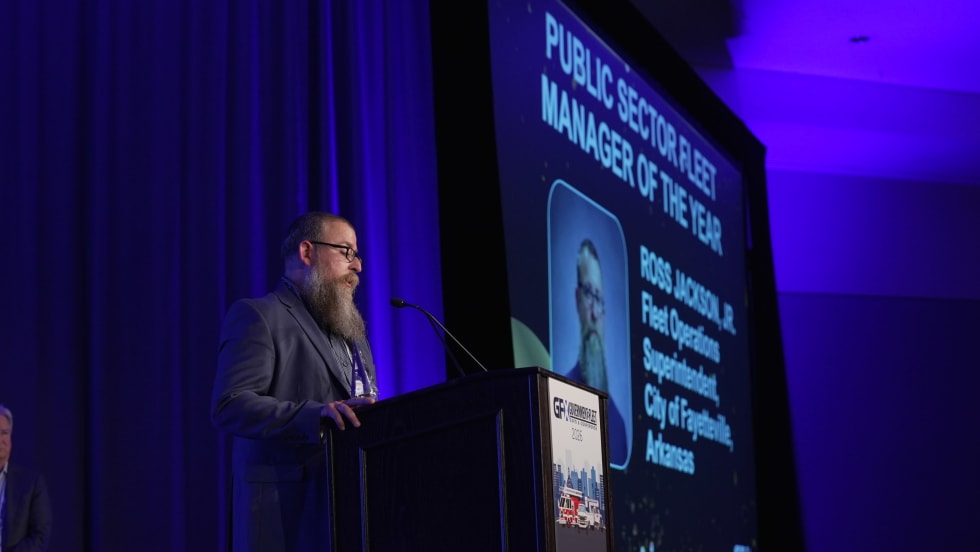
Ross Jackson Jr. Named 2026 Public Sector Fleet Manager of the Year
His leadership, innovation, and commitment to excellence earned him one of the industry's top honors.
Read More →
Public Fleet Professionals Set to Converge as GFX Gets Underway
Known as the largest gathering of public fleet professionals in the nation, GFX will feature in-depth training sessions, emerging fleet technologies, and access to leading suppliers and service providers.
Read More →
The Technician Pipeline: Finding, Keeping, and Promoting Techs Within the Operation
A look at where to find good talent, what fleets are doing to incentivize those techs to stay within the fleet, and what promotion looks like for a technician within the public sector.
Read More →
5 Public Fleet Stories Worth Revisiting Before GFX | The May Dispatch
Public fleet leaders are being asked to prepare for more, communicate better, and make decisions that hold up under pressure.
Read More →