





Related: Atlanta Fleet Wins Managed Competition for Parts Room
Half of Atlanta Police Vehicles are Past Their Life Cycles, Audit Shows
Atlanta's police vehicles have an average age of seven years and roughly 72,000 miles. An audit shows that 52% of the 1,065 vehicles in the fleet were beyond their life cycle.
September 19, 2019
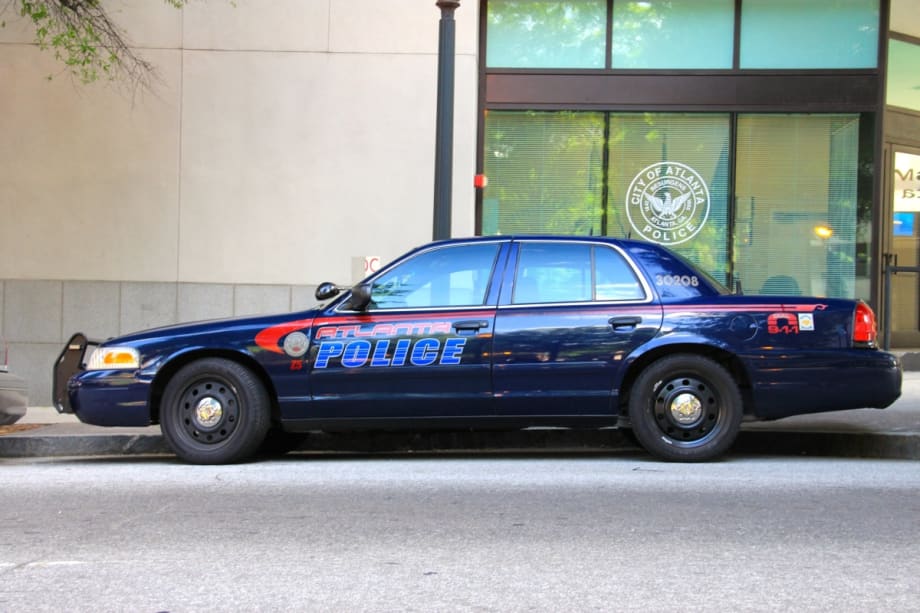
Atlanta's aged police fleet includes Ford Crown Victoria sedans.
Photo via Flickr/Daniel X. O'Neil
2 min to read
The Atlanta Police Department’s 1,000+ vehicles are past their life cycles, according to an audit released by the city auditor’s office. Auditors recommended that the PD follow purchasing processes and Fleet Services complete all required fields when filling out work orders.
Police vehicle life cycles range from three to 10 years, depending on the vehicle model. Fifty-two percent of the 1,065 vehicles in the fleet were beyond their life cycle, and more than 75% of these were sedans, including the Ford Taurus, Ford Crown Victoria, and Chevrolet Cobalt. Fleet Services records show that police vehicles have an average age of seven years and roughly 72,000 miles. This is because the PD prioritizes the replacement of wrecked cars before the aged fleet.
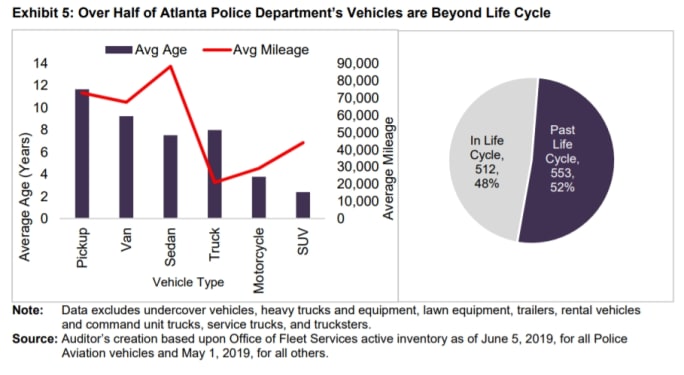
Chart via City of Atlanta Auditor's Office
The audit also looked at whether the PD ordered and received all vehicles funded by a 2018 ordinance that authorized $3.8 million in funding to purchase 88 vehicles. As of May 31, the PD has ordered 80 vehicles and received 60, using $3.6 million of the allowance. These include 50 Ford Explorers, 16 Chevrolet Impalas, nine Dodge Chargers, two Chevrolet Tahoes, and a Ford F-250, F-350, and a cutaway.
Auditors found that the PD did not follow the normal acquisition process, causing a delay in vehicle delivery by requesting special modifications after the initial purchase order had been approved. The audit recommended that the Chief of Police ensure that staff members follow the vehicle acquisition process and make no modifications to the initial purchase order after it has been approved unless Public Works coordinates the changes. The PD agreed with this recommendation and has implemented it, according to the audit.
Finally, auditors also reviewed turnaround times for repair of police vehicles and determined that the median turnaround time is 1.1 days for repairs and less than one day for preventive maintenance. Fleet Services prioritizes police vehicle work and completed 915 of the PD’s preventive maintenance work orders within two days.
The manufacturer’s recommendation for preventive maintenance is 7,500 miles, but Fleet Services lowered the threshold to 6,000 miles for the PD because police vehicles tend to have more wear and tear and idling.
Fleet Services started enforcing the entry of the “service status” field in work orders recently, and the audit recommended that Public Works enforce completion of all required fields, including service status, on work orders to accurately track out-of-service vehicles. Public Works agreed with this recommendation and will fully implement it in October, auditors noted in the report.
More Police

Ford Pro Introduces Full-Size 2028 Expedition Police Responder
Ford Pro gave law enforcement customers a first look at the pursuit-rated utility during Police Fleet Expo.
Read More →
Paterson Police Expand Drone Fleet, Launch Real-Time Operations Center
The Paterson Police Department has expanded its drone program and opened a new Real-Time Operations Center designed to support emergency response and incident management. The initiative integrates multiple technologies to provide officers with real-time information during investigations and public safety operations.
Read More →
Why Public Fleet Success Depends on More Than the Vehicles
Tim Coxwell of the Leon County Sheriff’s Office discusses the projects shaping his fleet operation, including long-term work around vehicle selection, greenhouse gas emissions, and cost per mile.
Read More →
Havis Acquires Pro-gard Products
The acquisition brings together two manufacturers of public safety vehicle equipment under one company. Havis says the move expands its portfolio of products for outfitting law enforcement vehicles and other public safety fleets.
Read More →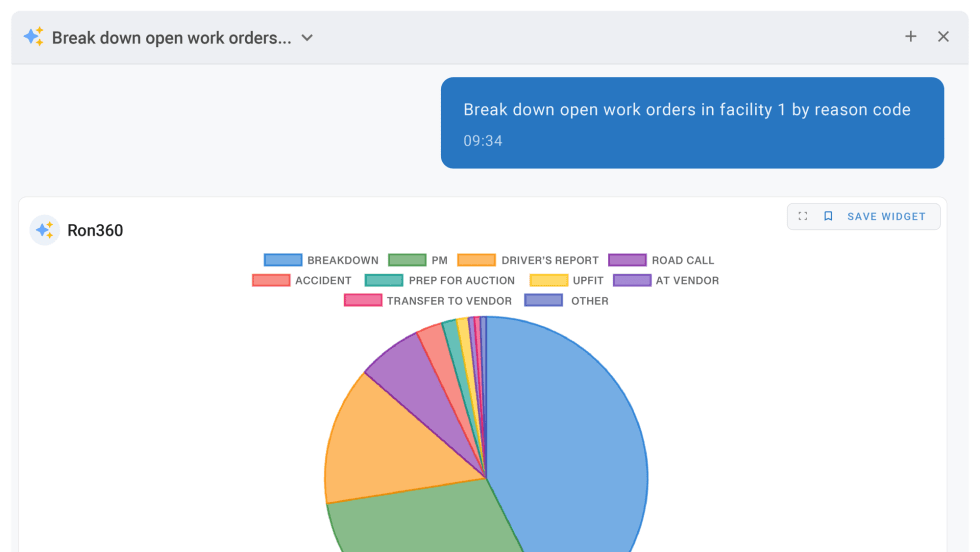
RTA Fleet Introduces AI Assistant for Fleet360 Platform
As artificial intelligence continues to gain traction across public-sector operations, fleet software providers are finding new ways to incorporate the technology into everyday workflows. RTA's latest addition aims to simplify how users interact with fleet data.
Read More →
2026 Police Fleet Innovators Named
Meet the professionals finding new ways to solve some of law enforcement's toughest fleet challenges.
Read More →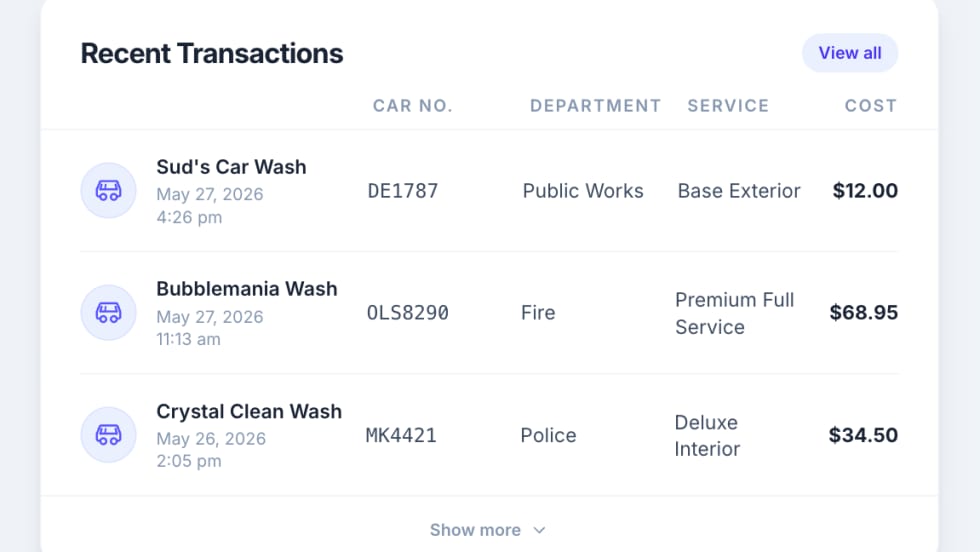
Rynse Expands Nationwide Fleet Wash Access for Law Enforcement
The North Carolina Sheriff’s Association Contract Cooperative purchasing contract aims to streamline procurement process for law enforcement agencies across the U.S.
Read More →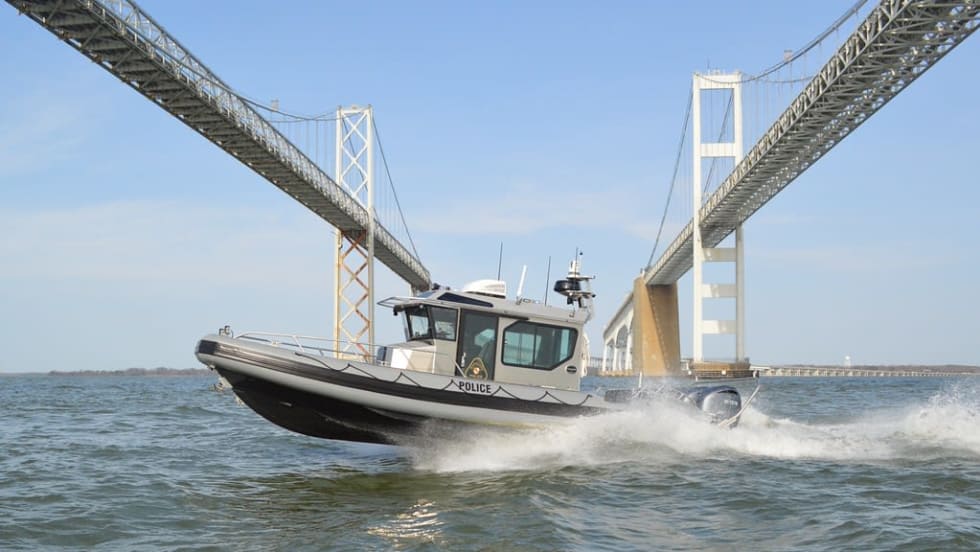
Maryland Natural Resources Police Adds 31-Foot Patrol Boat to Enforcement Fleet
A new addition to Maryland’s marine enforcement fleet is bringing expanded capabilities to Chesapeake Bay operations while honoring a legacy within the agency. The high-performance patrol vessel reflects how law enforcement fleets are adapting to growing demands on the water.
Read More →
LEHR Expands Florida Presence With Enforcement One Acquisition
LEHR has acquired Florida-based emergency vehicle upfitter Enforcement One, marking its eighth add-on acquisition.
Read More →
Maryland’s Wicomico County Sheriff Adds Mustang GT Patrol Vehicles
The agency is also working with the Maryland Police Training Commission on a specialized high-performance driving course for deputies assigned to the vehicles.
Read More →