




Related: Going Big: SUVs for Patrol
Ford Updates P.I. Utility Pursuit-Rated SUV
Ford is introducing an updated Police Interceptor Utility for the 2016 model year with a more rugged, truck-like look and several new features requested by its Police Advisory Board of law enforcement officers and police fleet managers.
by Staff
February 12, 2015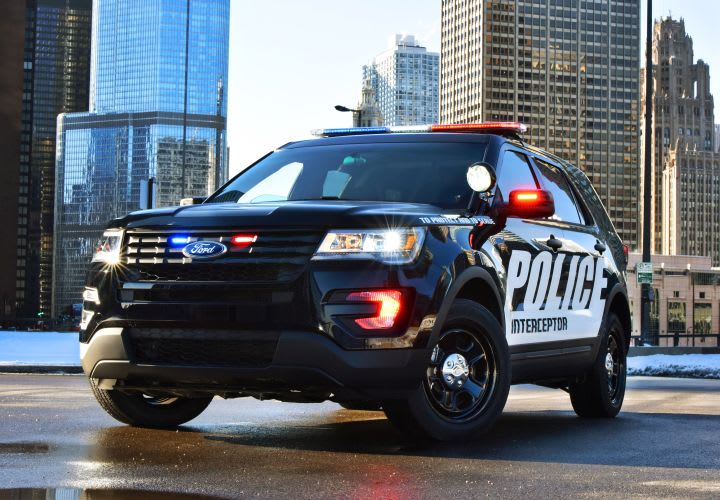
Photo of 2016 P.I. Utility courtesy of Ford.
2 min to read
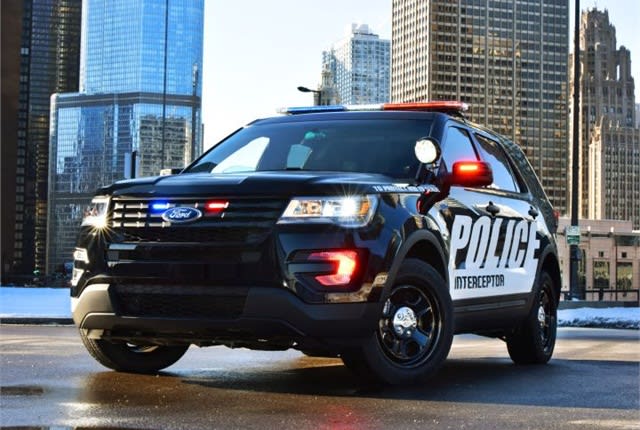
Photo of 2016 P.I. Utility courtesy of Ford.
Ford is introducing an updated Police Interceptor Utility for the 2016 model year with a more rugged, truck-like look and several new features requested by its Police Advisory Board of law enforcement officers and police fleet managers.
The vehicle will debut Feb. 12 at the Chicago Auto Show near the Chicago Assembly Plant where the vehicle is built. The vehicle is the top-selling law enforcement vehicle and has been widely adopted by the Chicago Police Department among other agencies.
For the 2016-MY, the P.I. Utility receives a new front and rear design, new headlamps, a new instrument panel and an enhanced electrical system to distribute electrical loads more efficiently.
Ford also added a lift-gate release switch that's accessible to occupants in the front that allows the rear lift-gate to remain unlocked for 45 seconds to allow officers to access the cargo area.
Additional updates include a standard rear-view camera with washer that feeds images to a 4-inch screen in the center stack. Agencies can request that images from the camera show on the rear-view mirror.
Ford has carried over the engine options, including a 3.7-liter V-6 producing 304 hp and 279 lb.-ft. of torque or optional 3.5-liter V-6 EcoBoost that makes 365 hp and 350 lb.-ft. of torque. Ford continues to offer the optional Surveillance Mode that warns the driver when someone approaches the rear of the vehicle. The vehicle is only available in all-wheel drive.
Either engine is paired with a six-speed automatic transmission that features a Pursuit Mode programmed for law enforcement use. The transmission automatically switches from normal, fuel-saving operation to Pursuit Mode when it detects aggressive driving situations, based on brake line pressure, deceleration and lateral acceleration rates.
Once in Pursuit Mode, the upshift and downshift performance of the transmission is optimized for aggressive driving, returning to fuel-save mode when it senses the aggressive driving is complete. The software is tuned to perform a reverse J-turn, which is when a reversing vehicle is spun 180 degrees and continues, face forward, without changing direction of travel.
Ford is offering additional options to law enforcement agencies, including Level III ballistic shields in the door panels, voice-activated SYNC hands-free system, blind-spot detection, a cross-traffic alert, and reverse sensing system.
The 2016 P.I. Utility will be available for ordering in the summer.
More Police

Ford Pro Introduces Full-Size 2028 Expedition Police Responder
Ford Pro gave law enforcement customers a first look at the pursuit-rated utility during Police Fleet Expo.
Read More →
Paterson Police Expand Drone Fleet, Launch Real-Time Operations Center
The Paterson Police Department has expanded its drone program and opened a new Real-Time Operations Center designed to support emergency response and incident management. The initiative integrates multiple technologies to provide officers with real-time information during investigations and public safety operations.
Read More →
Why Public Fleet Success Depends on More Than the Vehicles
Tim Coxwell of the Leon County Sheriff’s Office discusses the projects shaping his fleet operation, including long-term work around vehicle selection, greenhouse gas emissions, and cost per mile.
Read More →
Havis Acquires Pro-gard Products
The acquisition brings together two manufacturers of public safety vehicle equipment under one company. Havis says the move expands its portfolio of products for outfitting law enforcement vehicles and other public safety fleets.
Read More →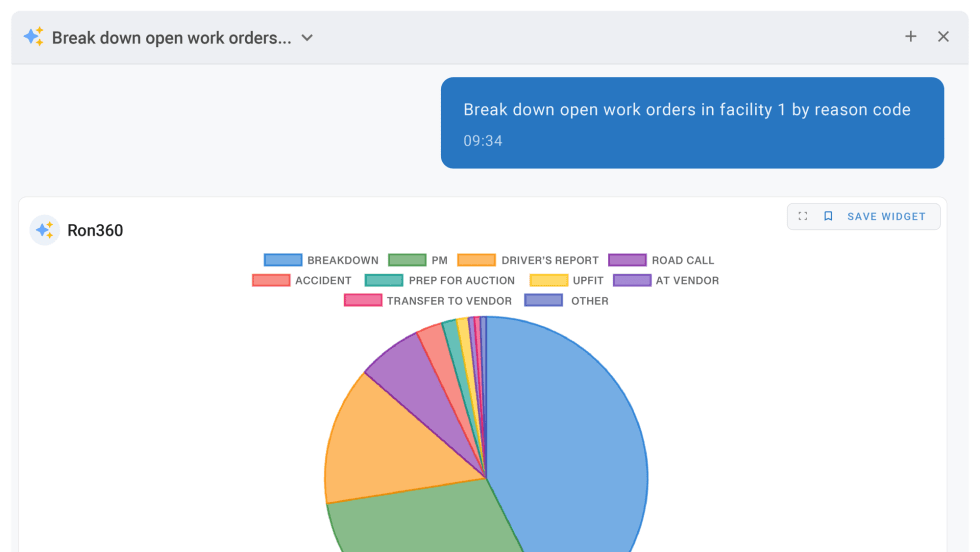
RTA Fleet Introduces AI Assistant for Fleet360 Platform
As artificial intelligence continues to gain traction across public-sector operations, fleet software providers are finding new ways to incorporate the technology into everyday workflows. RTA's latest addition aims to simplify how users interact with fleet data.
Read More →
2026 Police Fleet Innovators Named
Meet the professionals finding new ways to solve some of law enforcement's toughest fleet challenges.
Read More →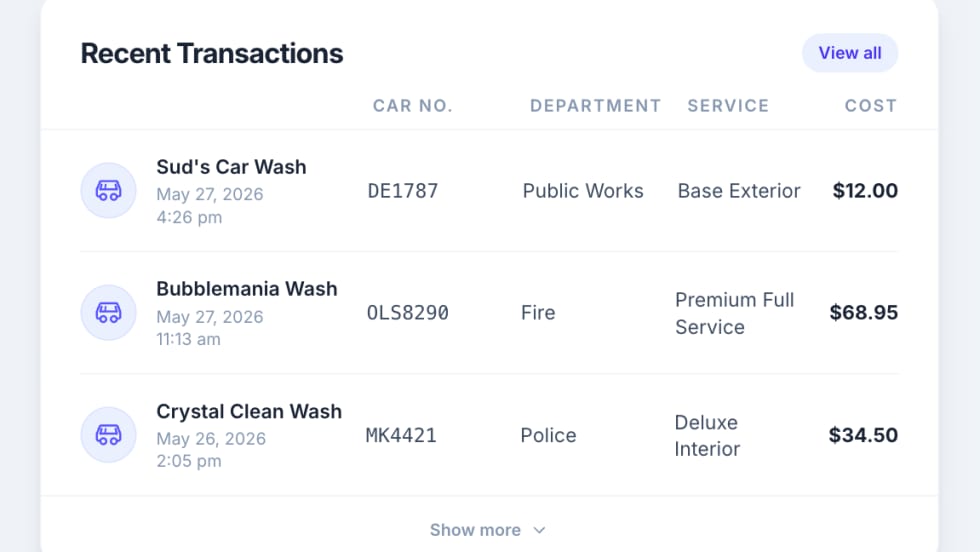
Rynse Expands Nationwide Fleet Wash Access for Law Enforcement
The North Carolina Sheriff’s Association Contract Cooperative purchasing contract aims to streamline procurement process for law enforcement agencies across the U.S.
Read More →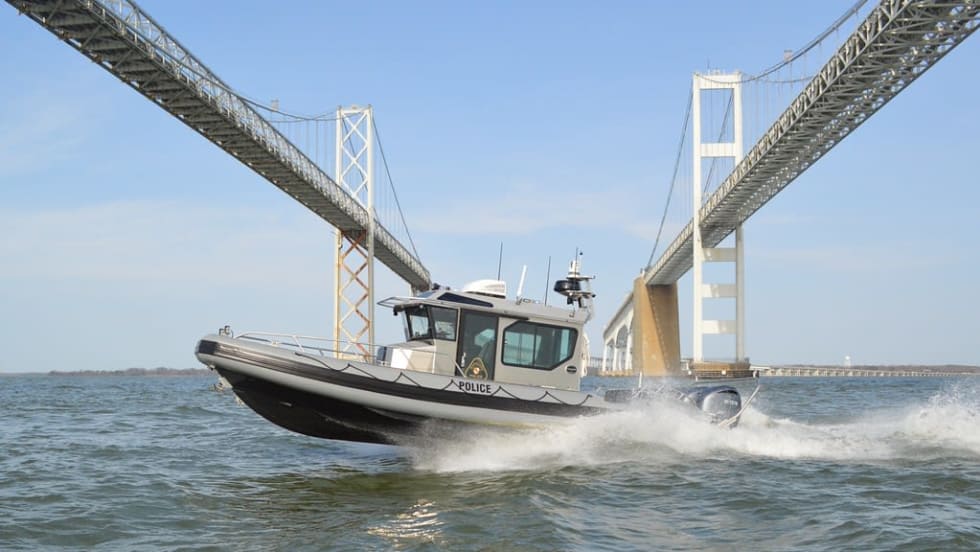
Maryland Natural Resources Police Adds 31-Foot Patrol Boat to Enforcement Fleet
A new addition to Maryland’s marine enforcement fleet is bringing expanded capabilities to Chesapeake Bay operations while honoring a legacy within the agency. The high-performance patrol vessel reflects how law enforcement fleets are adapting to growing demands on the water.
Read More →
LEHR Expands Florida Presence With Enforcement One Acquisition
LEHR has acquired Florida-based emergency vehicle upfitter Enforcement One, marking its eighth add-on acquisition.
Read More →
Maryland’s Wicomico County Sheriff Adds Mustang GT Patrol Vehicles
The agency is also working with the Maryland Police Training Commission on a specialized high-performance driving course for deputies assigned to the vehicles.
Read More →