




EV Charging Pilot Minimizes Calif. County’s Energy Use Spikes
Alameda County, Calif., is working on an electric vehicle (EV) charging pilot. Called the Smart Charging Pilot Program, it allows the building’s EV chargers to communicate and the DC fast charger to override other chargers when it’s in use.

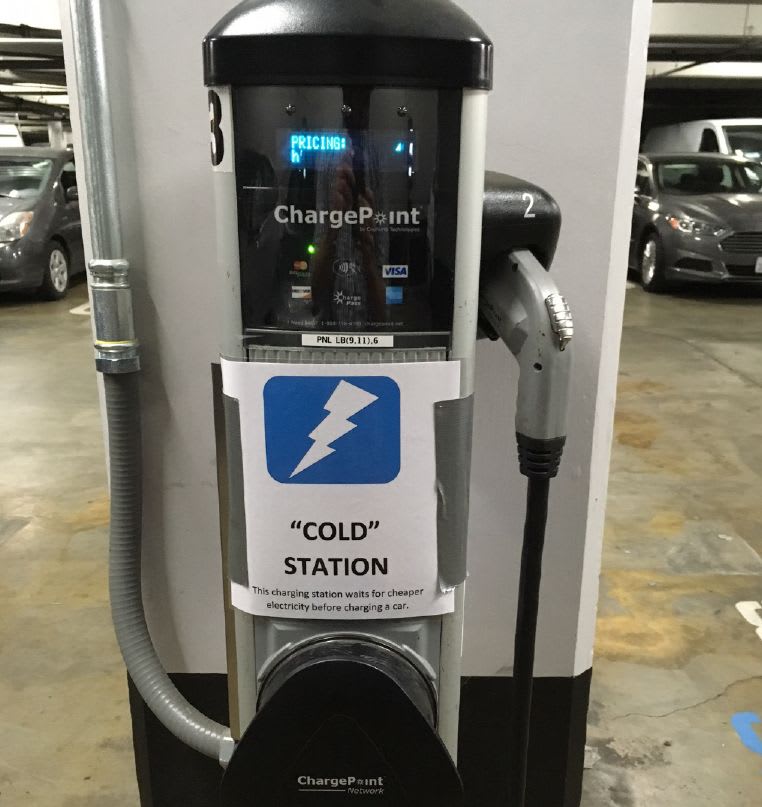
Photo courtesy of Alameda County
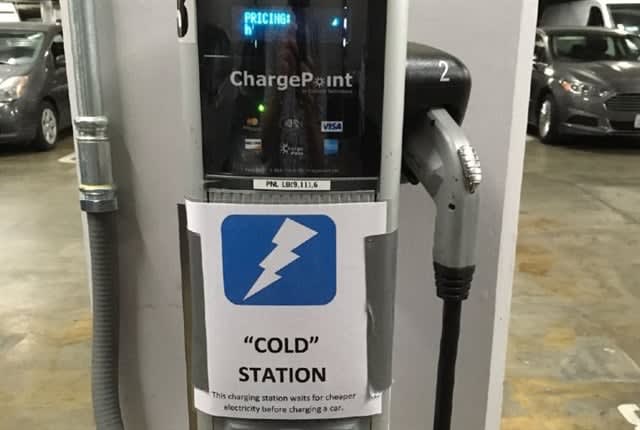
Photo courtesy of Alameda County
Alameda County, Calif., is working on an electric vehicle (EV) charging pilot that allows it to charge its many EVs while controlling energy use and reducing expensive spikes. Conducted in partnership with Lawrence Berkeley National Laboratory (Berkeley Lab) and Chargepoint, the Smart Charging Pilot Program allows the building’s chargers to communicate, and the DC fast charger to override other chargers when it’s in use.
The county’s fleet facilities were not designed for electric vehicles and as the fleet has added more, the facility has maxed out on energy use, said Phillip Kobernick, interim logistics services manager. Solar panels aren't an option for all facilities, and in addition to upgrading the main electric panels, the fleet had to find a way to reduce expensive energy use spikes.
The main fleet shop has 36 Level 2 chargers and one DC fast charger. In order to minimize expensive spikes in energy use, the DC fast charger communicates with the Level 2 chargers to tell it to reduce charging to almost zero while the fast charger is on.
“A DC fast charger is a really short charge, and if cars are plugged in for a couple of hours [on a Level 2], having it be paused for 12 minutes doesn’t do anything,” Kobernick explained. “But for us, each one that pauses is saving us 7kW, so that’s 80 or 90 kW of savings there.”
Fleet staff use the DC fast charger when it needs to get an EV back in use quickly, such as when an employee returns the vehicle early enough in the day that it can be reassigned.
Additionally, 14 of the main facility's 20 fleet-specific charging stations are “cold stations.” When a vehicle is plugged in, it doesn’t start charging right away, but rather waits until off-peak hours to begin charging. This is used for vehicles that don’t need immediate charging and reduces energy use during peak times. The program is also done with Berkeley Lab, a national lab supported by the Department of Energy and managed by the University of California.
"These types of projects are an example of how fleet managers will need to start thinking of electricity as a fuel," Kobernick said. "Fleet managers are probably pretty used to managing gaseous fuels, and electricity is a whole new field altogether. New tools are being developed to better help [with management]."
The county's electric vehicle fleet includes about 70 vehicles, and about 30 more are expected for delivery within a few months.
More Green Fleet
Sustainability Partners, Energy Systems Group Help Albuquerque Close the Gap on its 100% Renewable Energy Goal
The eight-site, 6 MW solar project has advanced the city toward 100% renewable energy for municipal operations.
Read More →
Port Authority and CALSTART Launch $45 Million Electric Truck and Charging Programs
The programs aim to boost sustainable operations across the East Coast's busiest seaport.
Read More →
Moving Government Fleets Beyond the Vehicle Purchase: EV as a Service
A discussion on how EVaaS is moving beyond pilot programs and what fleets should consider before beginning a larger deployment.
Read More →
Moving Government Fleets Beyond the Vehicle Purchase: EV as a Service
As fleets move beyond small EV pilots, Sustainability Partners CEO Adam Cain explains how EVaaS can address the infrastructure and long-term planning required for larger deployments.
Read More →
Peterbilt Expands Sourcewell Partnership with Electric Vehicle Lineup
The agreement aims to provide streamlined procurement of Peterbilt trucks for government, education, nonprofit and tribal organizations across the United States and Canada.
Read More →
EV Adoption & Charging Challenges
Where is your fleet in the journey of vehicle electrification? If you're still looking for answers to fleet electrification you've come to the right place.
Read More →
Hawaii Passes Clean Fuel Policy
Hawaii lawmakers passed clean fuel legislation that could support renewable natural gas production, biogas-powered transportation, and lower-carbon fueling options for public and commercial fleets.
Read More →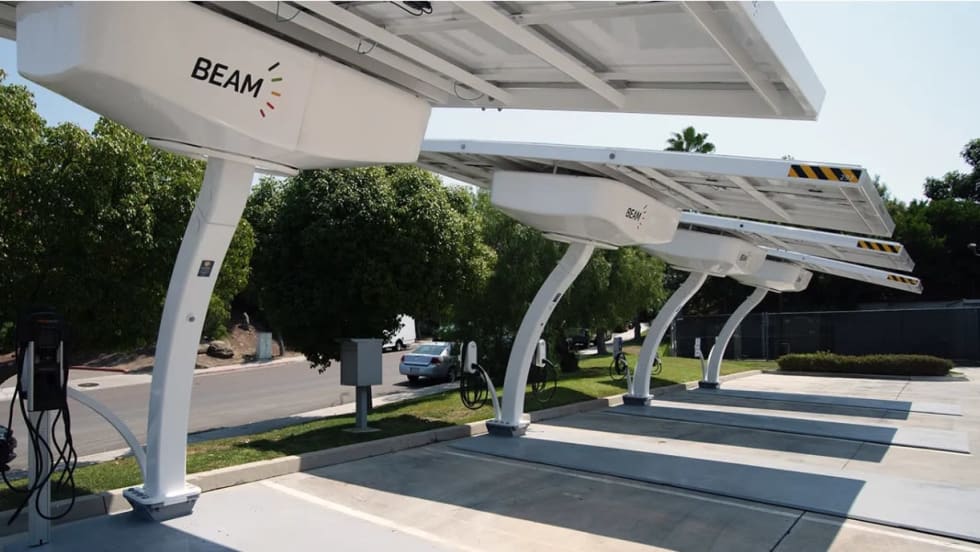
Stanislaus County Deploys Ten Beam Global EV ARC Systems to Support County Fleet Electrification
Stanislaus County deployed 10 off-grid solar-powered EV charging systems and a mobile charging trailer from Beam Global to support its electric fleet operations and emergency response flexibility.
Read More →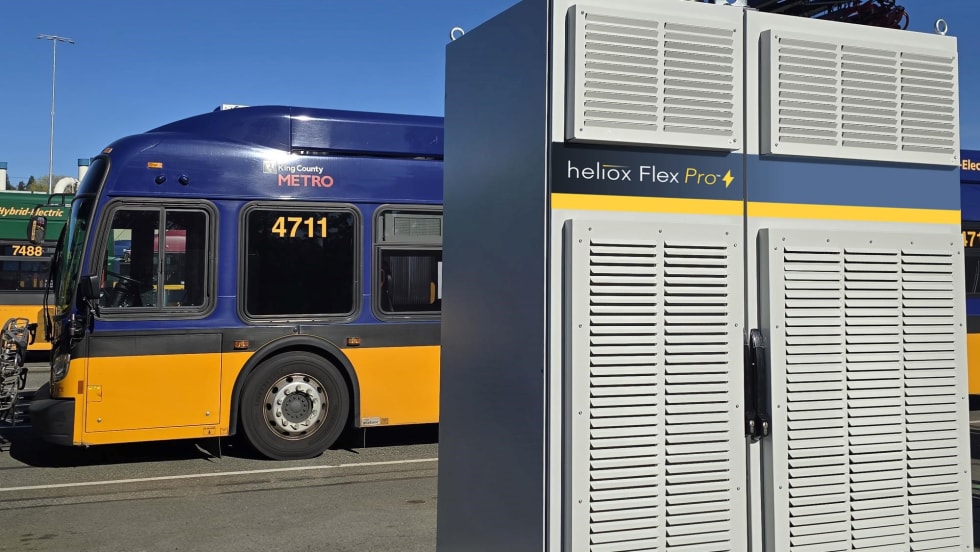
Heliox Pilots 480-kW Bus Charger with King County Metro
King County Metro is piloting Heliox’s new 480-kW Flex Pro charger to support expansion of its battery-electric bus fleet and depot charging infrastructure. The compact charging system supports pantograph and plug-in charging configurations for high-density transit operations.
Read More →