




Climate Mayors EV Purchasing Collaborative Expands to Include Higher Education Institutions
The initial group of 11 universities and colleges increases total electric vehicle commitments by 225 fleets to almost 3,800 EVs.

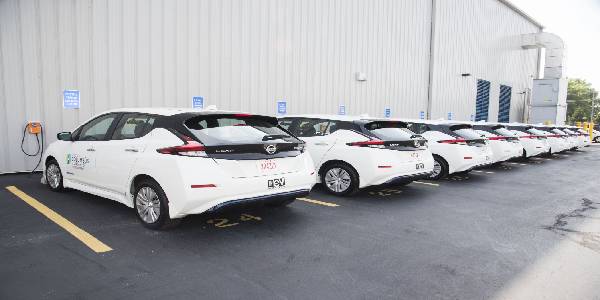
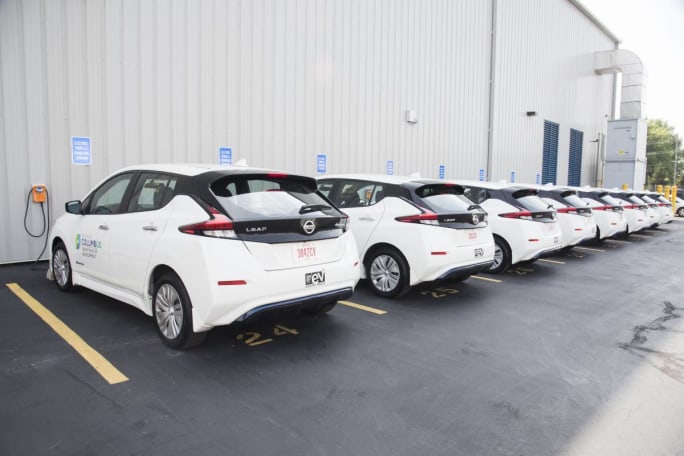
Photo: City of Columbus, Ohio
On Sept. 30, the Climate Mayors Electric Vehicle Purchasing Collaborative (the Collaborative) announced a partnership with Second Nature to accelerate electric vehicle (EV) deployment at colleges and universities around the country. Second Nature, a Boston-based non-governmental organization (NGO), has more than 450 colleges and universities in their network.
The Collaborative was launched two years ago as a partnership between Climate Mayors, the Electrification Coalition, and Sourcewell. The program, which started with just a handful of cities and counties, is focused on reducing upfront costs and EV procurement barriers. It has since grown to 225 fleets committed to purchase nearly 3,800 EVs by the end of 2021.
This expansion of the Collaborative to higher education institutions kicked off with 11 universities and colleges in ten states committing to purchase EVs. The Collaborative’s growth shows the importance of local action and communities working together to cut greenhouse gas emissions, improve inequitable public health outcomes directly linked to proximity to poor air quality, and reduce the nation’s dependence on oil through transportation electrification. These 11 university and college fleets are just the beginning—the Collaborative continues to expand, and this partnership will allow for additional higher education fleet engagement in 2020 and beyond.
The EV fleet commitments through the Collaborative are as follows:
Save nearly 28 million tons of CO2 emissions annually;
Avoid 1.7 million gallons of gas per year; and
Represent a total investment of $123.5 million in EVs.
“We're thrilled to help bring higher education into the Collaborative as electrifying campus fleets is an essential part of the goals of Climate Leadership Network signatories,” said Tim Carter, President, Second Nature. “Signatory schools have been, and continue to be, on the vanguard when it comes to not only committing to ambitious goals like the Presidents' Climate Leadership Commitments, but also following through on implementing decarbonization projects. Congratulations to all 11 schools for making the switch over to electric vehicles and we look forward to bringing more institutions into the Collaborative.”
“Universities and colleges help develop the future leaders of tomorrow. They are always at the forefront of creating ambitious climate and sustainability goals; it only makes sense that they become a part of the Collaborative and the transportation electrification future,” said Ben Prochazka, National Director of the Electrification Coalition.
“Combating the climate crisis requires a conglomeration of efforts across every level, which is why Climate Mayors is excited to announce the inclusion of universities and colleges in the Collaborative. These institutions are an important part of a city’s community and economy, and by expanding partnerships and leadership on the local level, we can address the threat of climate change and simultaneously create healthier cities with a stronger, more equitable, economic future,” said James Ritchotte, Director of Climate Mayors.
Committed Universities and Colleges (thus far) include:
University of California, Los Angeles
University of Texas at San Antonio
University of Central Florida
University of Miami
Iowa State University
Lehigh University
University of North Carolina at Charlotte
University of Massachusetts Dartmouth
Milwaukee Area Technical College
University at Albany - State University of New York
University of Tennessee
In committing to purchase electric vehicles as a part of the Collaborative, public agencies, colleges, and universities gain access to competitively solicited EVs and charging infrastructure, as well as innovative leasing options that allow fleets to reduce EV costs by accessing federal tax credits. The Collaborative also provides support with technical analysis and best practices for fleet electrification as fleets consider switching to electric.
More Green Fleet
Sustainability Partners, Energy Systems Group Help Albuquerque Close the Gap on its 100% Renewable Energy Goal
The eight-site, 6 MW solar project has advanced the city toward 100% renewable energy for municipal operations.
Read More →
Port Authority and CALSTART Launch $45 Million Electric Truck and Charging Programs
The programs aim to boost sustainable operations across the East Coast's busiest seaport.
Read More →
Moving Government Fleets Beyond the Vehicle Purchase: EV as a Service
A discussion on how EVaaS is moving beyond pilot programs and what fleets should consider before beginning a larger deployment.
Read More →
Moving Government Fleets Beyond the Vehicle Purchase: EV as a Service
As fleets move beyond small EV pilots, Sustainability Partners CEO Adam Cain explains how EVaaS can address the infrastructure and long-term planning required for larger deployments.
Read More →
Peterbilt Expands Sourcewell Partnership with Electric Vehicle Lineup
The agreement aims to provide streamlined procurement of Peterbilt trucks for government, education, nonprofit and tribal organizations across the United States and Canada.
Read More →

EV Adoption & Charging Challenges
Where is your fleet in the journey of vehicle electrification? If you're still looking for answers to fleet electrification you've come to the right place.
Read More →
Hawaii Passes Clean Fuel Policy
Hawaii lawmakers passed clean fuel legislation that could support renewable natural gas production, biogas-powered transportation, and lower-carbon fueling options for public and commercial fleets.
Read More →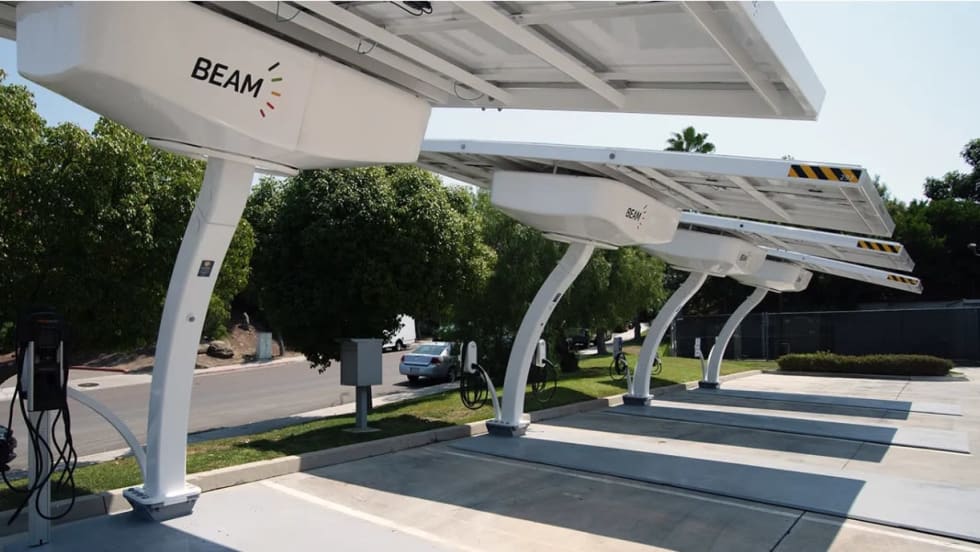
Stanislaus County Deploys Ten Beam Global EV ARC Systems to Support County Fleet Electrification
Stanislaus County deployed 10 off-grid solar-powered EV charging systems and a mobile charging trailer from Beam Global to support its electric fleet operations and emergency response flexibility.
Read More →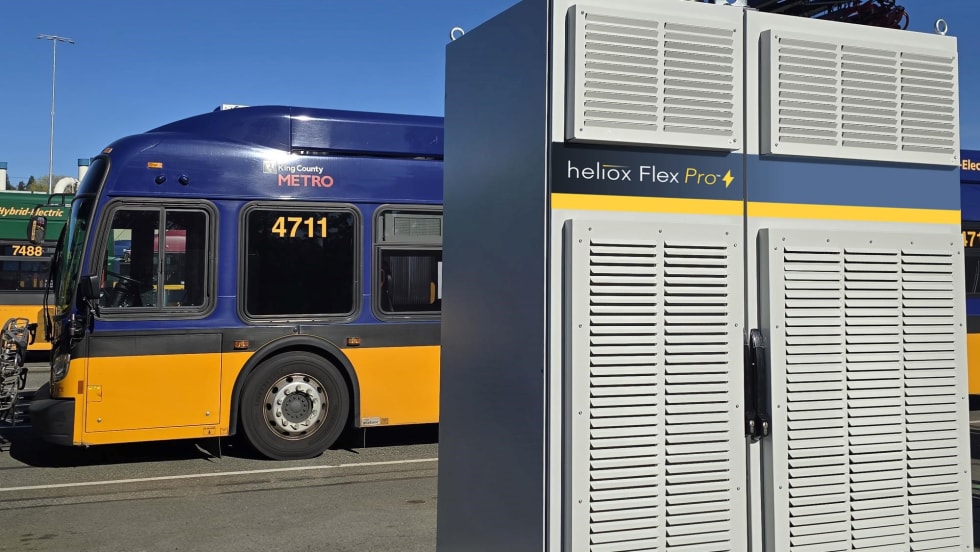
Heliox Pilots 480-kW Bus Charger with King County Metro
King County Metro is piloting Heliox’s new 480-kW Flex Pro charger to support expansion of its battery-electric bus fleet and depot charging infrastructure. The compact charging system supports pantograph and plug-in charging configurations for high-density transit operations.
Read More →