




Public Forum - Tires are Getting Bigger & More Expensive
Replacement tires are a fleet’s third-largest operating expense. And this expense is growing.

Replacement tires are a fleet’s third-largest operating expense. And this expense is growing. For the second consecutive year, there have been multiple waves of price increases for replacement tires. In 2005, there were three price hikes and another three price hikes in 2006. A key reason has been the dramatic increase in the cost of oil, which is not only used to manufacture tires, but also to transport them to market.
In the latest round of price hikes, Bridgestone/Firestone increased tire prices by as much as 4 percent Sept. 1. Likewise, Goodyear raised prices on its medium-truck tire lines and retread products by as much as 5 percent. Effective October, Michelin will raise prices on its entire passenger and lighttruck replacement tires by 3 percent, and Yokohama will increase prices up to 7 percent.
These price increases are trying to keep pace with the escalating cost of oil, a key component to manufacturing tires. For example, a 28-lb. light-truck tire contains about 22 lbs. of rubber body material, which includes synthetic rubber. The oil content of synthetic rubber is close to 33 percent; in all 3 to 4 gallons of oil are used to make the rubber portion of the tire. In addition, other raw material costs used to construct a tire have skyrocketed (see chart below), and there appears to be no end in sight.
Larger Tire Sizes Designed for Specific Models
A second factor contributing to higher tire prices is that tires are getting larger. In the past few years, more new cars have been equipped with 17- and 18-inch tires, and those sizes are becoming a bigger part of the replacement tire market. The bigger the OE tire, the more expensive the replacement tire.
The same is true with light trucks. As recently as the late 1990s, the
16-inch tire was the dominant tire for commercial light trucks. It represented 80 percent of commercial light-truck tires. Since the turn of the century, there has been a transition with light commercial
trucks to lower-profile, larger 17- and 18- inch tire sizes.
A third factor contributing to higher tire prices is that more and more manufacturers are designing tires specific to their vehicles. Manufacturers want their vehicles to perform in specific ways, and they spec the tire to be engineered to meet these requirements. As a result, a tire company develops a tire just for that model. The increased proliferation of tire sizes can result in temporary shortages for replacement tires immediately following new-model introduction. Another concern is increased liability exposure. Since tires are optimized for a specific vehicle — from size and speed rating to inflation pressure and, in some cases, position — vehicle manufacturers believe OE fitments provide the best-engineered ride and handling characteristic of a vehicle. The use of a substitute replacement tire, if a tire-related accident should occur, may be grounds for litigation.
Growing Use of Off-Brand Tires
Fleets are scrutinizing tire costs and are closely managing the cost of replacement tires. One response has been a growing use of less-expensive off-brand replacement tires. In addition, fleets are increasing the use of recapped tires because they provide comparable tread life as new replacement tires. Public sector fleets often
do themselves a disservice by getting locked into only buying specific brandname tires. Many non-traditional tire OEMs offer comparable products, sometimes at more competitive pricing.
With petroleum prices edging upward, prices for replacement tires will most likely increase again in 2007.With this in mind, it is the OE tires, not the replacement tire, that are the cheapest tires because they come with the vehicle. If you want to reduce tire expense, focus on extending the tread life of the original OE tires by having your user groups keep tires properly inflated, rotated every 5,000 miles, and regularly inspected for uneven wear.
More Operations

Fleet Forward Conference Introduces One-Day Passes for 2026
New one-day registration lets fleet professionals attend Tuesday, Wednesday, or Thursday, with passes available for $249.
Read More →
ENC Unveils its ZAVIR Medium-Duty Shuttle
Two variants of the concept shuttles were revealed: a low-floor configuration and a high-floor configuration.
Read More →
Could Your Next Fleet Technician Start as an Intern?
What if your next technician hasn’t worked in a fleet shop yet? What fleets are doing to free up time.
Read More →
How Phoenix Is Building Its Next Generation of Fleet Technicians
With more than 8,000 vehicles and pieces of equipment to maintain, the City of Phoenix could not afford to wait for fully trained technicians to walk through the door. Instead, they revamped their entire workforce strategy and showed how public fleets can create their own talent pipeline while preparing existing employees for increasingly complex vehicles.
Read More →
What’s Slowing Your Fleet Down?
Could a change in how work gets done help your fleet return vehicles to service sooner?
Read More →
Can Public Fleets Trust the Data Driving Their Decisions?
Public fleets have more data than ever, but inconsistent records and missing information can still undermine maintenance, replacement, and cost decisions.
Read More →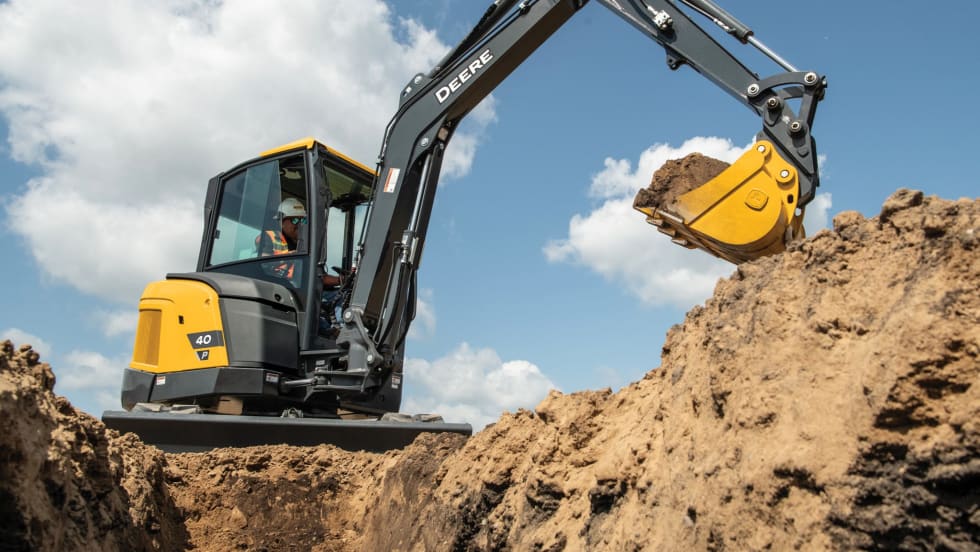
John Deere Introduces 40 P-Tier Compact Excavator
John Deere is adding a compact excavator designed for crews that need to move equipment between jobsites and handle multiple types of work with one machine. The 40 P-Tier weighs less than 10,000 pounds and offers configurable hydraulics, attachment options, and connected fleet-management capabilities.
Read More →
How Leading Fleets Improve and Why Business Plans Matter
This week, we look at what past Leading Fleet winners can teach us about making progress, plus how to build a business plan your fleet will actually use.
Read More →
Nominate a Fleet Leader for the 2027 Public Fleet Hall of Fame
Do you know a fleet leader who has made a lasting impact on the industry? Nominate this fleet professional for the 2027 Public Fleet Hall of Fame.
Read More →
Why Fleet Business Plans Need Three Perspectives
A fleet business plan should help agency leaders understand the fleet’s value, give the organization a clear direction, and establish shared expectations with customer departments.
Read More →