




Preserving Underutilized Hybrid Batteries
Aftermarket devices and underutilization can lead to a completely drained hybrid vehicle battery, but trickle chargers can prevent this scenario.
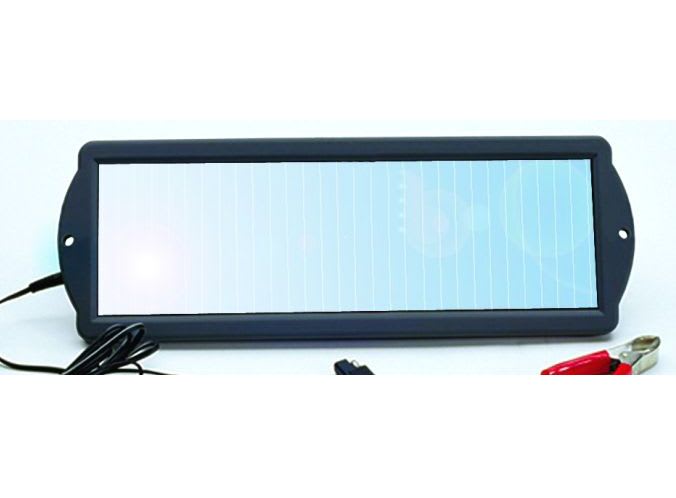
A compact trickle charger can be installed in the window corner of a hybrid vehicle, keeping the vehicle's battery from draining completely. Pictured is a 12V, 1.8W charger.
A compact trickle charger can be installed in the window corner of a hybrid vehicle, keeping the vehicle's battery from draining completely. Pictured is a 12V, 1.8W charger.
It's no secret that most of the country's fleet managers today are strongly considering alternative forms of transportation equipment, and your fleet may already include alternative-fuel vehicles, electric cars, hybrids, scooters, etc.
As technology evolves, fleet managers must learn to adapt to the problems that arise from these new advancements. One such example is with hybrid vehicles, where the combination of driver reluctance to use new technologies and battery-draining aftermarket devices may lead to complete battery drain. Luckily, fleet managers can prevent this issue.
Factors Contributing to Battery Drain
Each new alternative vehicle technology requires training, which can sometimes be quite extensive. Focusing on one of the most popular alternative-type vehicles, the Toyota Prius hybrid vehicle, some immediate concerns may pop up for a first-time driver: Push-button start, not even a slot for the car "key" for the newest models, and a very integrated display portal for the driver to ease into. And that's just the visual part.
From the fleet manager's perspective, it's a complex hybrid machine that people are going to need to get used to, especially if it's going into a pool, where there is no assigned person being "forced" to get comfortable with how it functions. Fortunately, as far as the Prius goes, maintenance is not too bad at all.
One user-behavior-related issue is quite common, however. People are reluctant to start using newcomers of this nature in the motor pool fleet if their regular counterparts are being added as well. Suddenly, the shiny new hybrid is underutilized.
It also turns out that more fleet managers, under mandates and with data-driven new policies in place, need the help of third-party devices installed in many of their vehicles. They need to monitor driver behavior, distances covered, idle time, etc. Some of these devices have memory or communicate remotely with a server or cell phone (GPS, GSM, CDMA, remote commands, etc.), which requires some battery consumption. Combine this battery draw with underutilization, and the main vehicle battery will drop in a matter of a couple weeks, depending on the devices used.
Most newer aftermarket devices like this are spec'ed out to go about 30 days without draining the battery, but that is in ideal conditions (unit is not faulty, reception is good, etc.). Some hybrid owners' manuals have stated that to "fully" recharge the battery once drained below a cranking voltage and jumped, the car should be driven at highway speeds for up to an hour. That is not very realistic.
There is a good solution out there to keep this from becoming a known issue in your fleet. We've seen them before, most likely, or at least heard of them. Trickle chargers. Yep. They are easy to install and do all the charging slowly, so when the time comes to crank, you've got a happy driver. And it works for all types of vehicles - actually, almost anything with a battery.
The Basics of Trickle Chargers
After determining the voltage and wattage necessary for the vehicle (for the Prius, it would be 12V, 1-2W), the solar charger converts the sun's rays into low-voltage DC electricity, providing power that runs in line with the car battery. Most of today's chargers have some logic built in, preventing over-charging and damage to the battery. But for passenger vehicles, for about $30-$40, you can get a compact trickle charger that sits by the car's front or rear window corner (more practical in the rear). There are two ways of installing it - plug it into a 12V accessory plug or hard-wire it in permanently. The charger shuts off while the vehicle is driving and resumes once the ignition is off. The best part is you only do this once. The system works passively and trouble-free.
There are a lot of solar charger manufacturers and price variations within the industry. With a little research, you can quickly find one that fits your budget and vehicles. At the least, your portable charger may get a chance to finally gather some dust.
About the Author
Levente Fulop has more than a decade of experience in aftermarket technologies and vehicle pooling operations. He looks to share his knowledge about custom installations in all vehicle makes and models and focuses on various hardware platforms and OEM integration.
More Green Fleet

Sustainability Partners, Energy Systems Group Help Albuquerque Close the Gap on its 100% Renewable Energy Goal
The eight-site, 6 MW solar project has advanced the city toward 100% renewable energy for municipal operations.
Read More →
Port Authority and CALSTART Launch $45 Million Electric Truck and Charging Programs
The programs aim to boost sustainable operations across the East Coast's busiest seaport.
Read More →
Moving Government Fleets Beyond the Vehicle Purchase: EV as a Service
A discussion on how EVaaS is moving beyond pilot programs and what fleets should consider before beginning a larger deployment.
Read More →
Moving Government Fleets Beyond the Vehicle Purchase: EV as a Service
As fleets move beyond small EV pilots, Sustainability Partners CEO Adam Cain explains how EVaaS can address the infrastructure and long-term planning required for larger deployments.
Read More →
Peterbilt Expands Sourcewell Partnership with Electric Vehicle Lineup
The agreement aims to provide streamlined procurement of Peterbilt trucks for government, education, nonprofit and tribal organizations across the United States and Canada.
Read More →

EV Adoption & Charging Challenges
Where is your fleet in the journey of vehicle electrification? If you're still looking for answers to fleet electrification you've come to the right place.
Read More →
Hawaii Passes Clean Fuel Policy
Hawaii lawmakers passed clean fuel legislation that could support renewable natural gas production, biogas-powered transportation, and lower-carbon fueling options for public and commercial fleets.
Read More →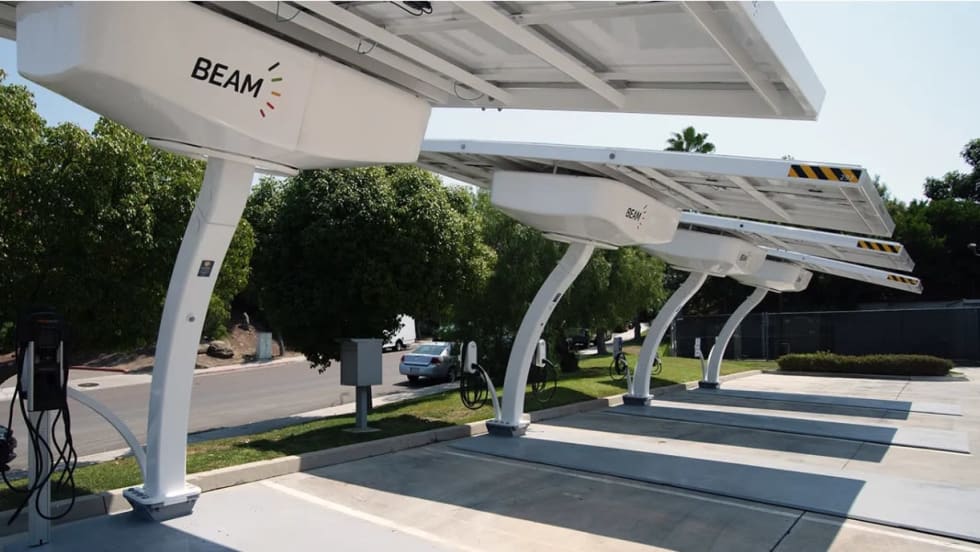
Stanislaus County Deploys Ten Beam Global EV ARC Systems to Support County Fleet Electrification
Stanislaus County deployed 10 off-grid solar-powered EV charging systems and a mobile charging trailer from Beam Global to support its electric fleet operations and emergency response flexibility.
Read More →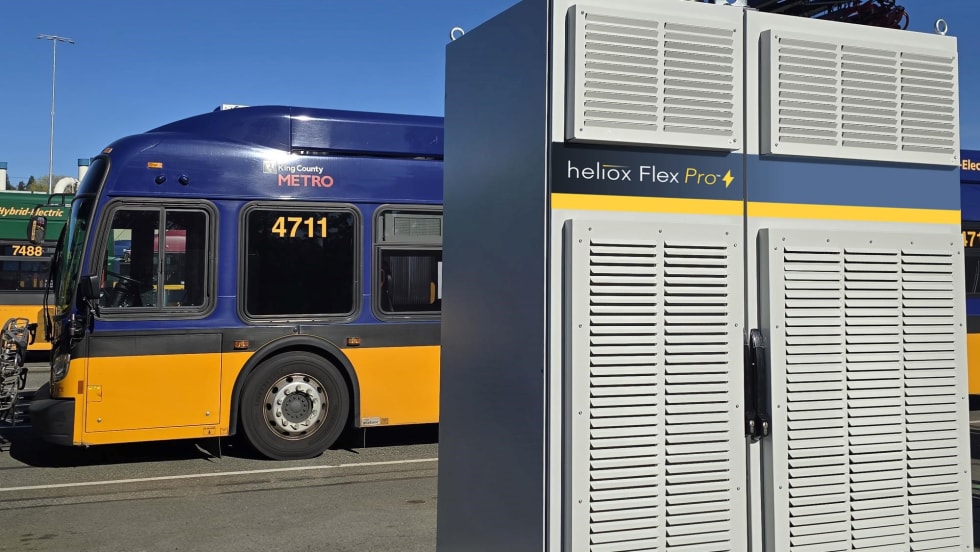
Heliox Pilots 480-kW Bus Charger with King County Metro
King County Metro is piloting Heliox’s new 480-kW Flex Pro charger to support expansion of its battery-electric bus fleet and depot charging infrastructure. The compact charging system supports pantograph and plug-in charging configurations for high-density transit operations.
Read More →