




New Contracting Process in Oregon Drives Down Vehicle Prices
The Oregon State Procurement Office used smart price and cost analyses to establish a list of dealerships offering the lowest net prices. As a result, net-to-buyer prices have rolled back to 2009 levels.
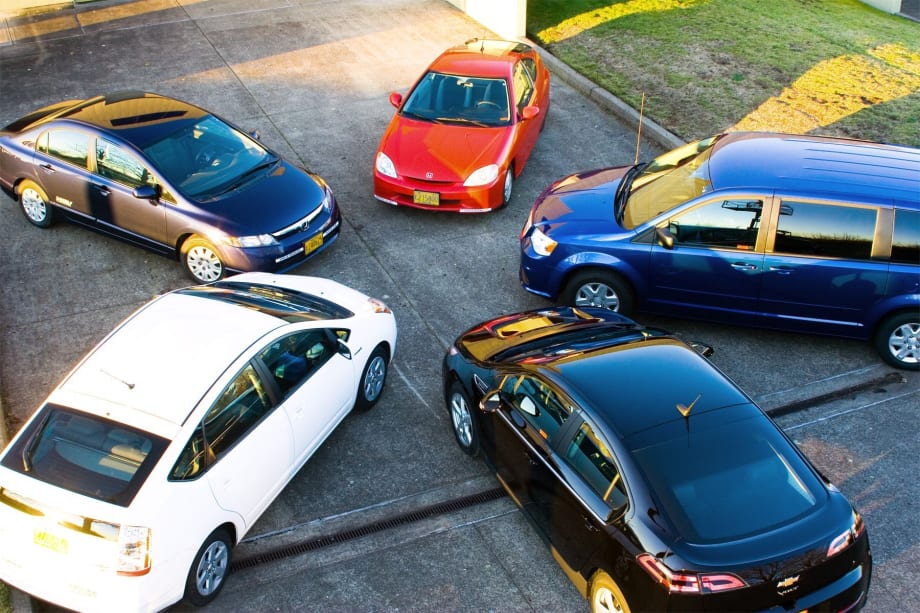
Pictured are "best value" vehicles purchase by Oregon state agencies: Honda Civic Hybird, Honda Civic CNG, Toyota Prius, Chevrolet Volt, and a Dodge Grand Caravan flex-fuel vehicle. Photo courtesy State of Oregon.
Pictured are "best value" vehicles purchase by Oregon state agencies: Honda Civic Hybird, Honda Civic CNG, Toyota Prius, Chevrolet Volt, and a Dodge Grand Caravan flex-fuel vehicle. Photo courtesy State of Oregon.
At a Glance |
The new procurement process has resulted in:
|
Procurement analysts from the State of Oregon have implemented an innovative and greatly simplified way to purchase fleet vehicles. By getting real-time bids from up to 14 dealers, fleet buyers are getting pricing barely above dealer costs. The result? State and local government fleet buyers are celebrating the lowest prices for cars, trucks, and vans west of the Missouri. Additionally, fleet buyers across the State have much greater flexibility in what they can purchase.
How the Process Works for Buyers
Fourteen dealerships around the state are on a list of qualified providers, chosen through a bidding process. The list includes Ford, Chevrolet, Chrysler/Dodge, GM, Toyota, Mitsubishi, Nissan, and Volkswagen. The dealers can sell any new inventory they have, including police cars.
To get price quotes, fleet buyers go to one of the manufacturer's websites and use the "build your own vehicle" feature. This virtual vehicle serves as the specs for the buy. Next, fleet buyers send an e-mail to the list of qualified dealers and ask for quotes for the type of vehicle they want. For the best price, they are encouraged to shop the entire list. Oftentimes, different vehicles fit the bill, creating competition not only among the same dealers selling the same make, but also dealers of different makes.
The process has shifted the dealers' business strategy. Since they are simply acting as a pass-through, their overhead for each transaction is low. Their game plan becomes maximizing volume. The old days of having inscrutable pricing structures along with lots of tack-on fees are gone.
Short-Listing Qualified Dealers
Dave Reynolds and Josh Rogers, State of Oregon procurement analysts, began by learning how the dealer price structure worked, including manufacturing incentives dealers receive for each vehicle sold. In addition, if a dealer's volume is high enough, there can be other incentives such as exclusive selling rights to rare and expensive cars in the new model-year. Reynolds and Rogers began to see how a high volume, low overhead process could work. The shift in thinking was enormous.
"I could see an entirely different way of doing business," Reynolds said.
The State could simply get out of the way and the let the power of the free market drive the process. Customers could order what they wanted, when they wanted it, and prices could float like commodity spot prices.
To get on the list of qualified dealers, dealers submitted prices for a list of fees such as dealer prep and servicing costs, discount from net invoice, dealer profit, etc. A market basket of vehicles was used for the bids. The dealers with lowest net cost for each region of the State were awarded a place on the qualified list. The fourteen dealers who made the list turned out to be an optimal size. More than that, the list gets bulky and profits among the dealers drop. Less than this, competition drops and some areas of the State might not be represented by a dealership.
Analysts review the list of dealers every five years, but can make adjustments, rebid, or renew as needed.
[PAGEBREAK]Analyzing Savings & Drawbacks
In 2011, more than 700 vehicles were purchased through this new contract. Net-to-buyer prices have rolled back to 2009 levels and are currently 6 percent lower than neighboring states. Because vehicle prices are real time, much like a commodity such as fuel, fleet buyers can place orders in August when prices are lowest. Dealers can also sell new vehicles from last year's models, which can save thousands.
"When we had the fixed price awards, these were done as soon as the new model year was available. The prices were highest then. The pricing structure favored the dealer, not the buyer," Reynolds noted. Worse, prices were locked for the entire model year.
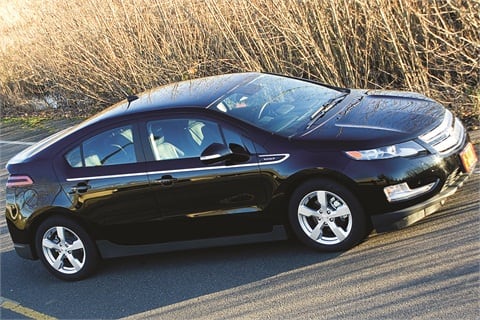
Lowered vehicle prices have allowed state agencies to purchase more "green" vehicles, including the Chevrolet Volt driven by Governor John Kitzhaber. Photo courtesy State of Oregon.
Reynolds said lower prices have allowed for the purchase of more "green" vehicles due to the budget stretching. The Oregon Department of Transportation (ODOT) has five Chevrolet Volts, while the Department of Administrative Services fleet has a number of Toyota Prius cars, some CNG vehicles, and several vehicles that have a lower total cost of ownership and a higher initial purchase price.
Don Thomson, fleet/warehouse superintendent, City of Salem Fleet Services, added, "The new contracts provide hugely expanded flexibility in choices for fleets throughout the State. Before, we had a choice of buying what State agencies wanted, or going out to bid on our own. The comprehensive choices across product lines and options lists have markedly reduced our expenditure of labor on fleet acquisitions."
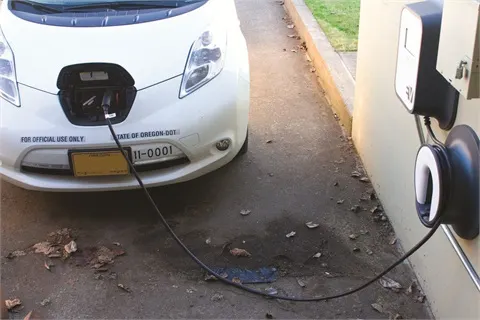
Lowered vehicle prices have allowed state agencies to purchase more "green" vehicles, including the Nissan Leaf operrated by the Department of Transportation. Photo courtesy State of Oregon.
Even delivery fees have been eliminated. Recently a city government got the lowest bid from a dealership 300 miles away. The dealer delivered for free, a service for which, in the past, the city had paid a $700 fee.
In spite of the increased competition and vehicle selection, the "build your own and order" process does have some drawbacks. Steve Blair, fleet buyer for the Oregon Lottery Commission, reported that while there is added flexibility, this can cause more work to figure out options and to cross-reference option packages between manufacturers to obtain bids.
"It was easier in a lot of ways to just have a 'state vehicle' to choose from," Blair noted.
Reducing Administrative Costs
Agency administrative costs for the new contract have dropped significantly. "There's been at least a 65 percent reduction in administration time," Rogers said. "I spent around a quarter of my time working on model-year rollovers and price increases with the 49 fleet contracts in place before this new method."
Here's one example: Every time a new model was introduced, an amendment to the contract was required, about which the dealers always complained.
"We don't hear complaints like we used to," Reynolds said. "Dealers want the business. They have an incentive to be competitive in the market."
Now, when dealers call, it's because they want to be on the list.
Not only were there savings in contract administration, the entire vehicle procurement process was stripped down. In the old days, a committee spent hours haggling over exact specifications as detailed as inches of hip room. The specification committee no longer drives the process. "Fleet managers determine what they need," Reynolds explained.
Administration is further streamlined by a simple contract clause that extends the contract terms when new models are added. This has eliminated time-consuming contract amendments. The contract also makes it easier for dealers to delete a vehicle, such as the Ford Crown Victoria that is being phased out, and simply replace it with the new model.
[PAGEBREAK]
What it Took to Get Here
When Reynolds and Rogers first proposed the new method, they were met with active resistance. A committee was in charge of making fleet decisions for the best interest of the state, and they basically told the procurement analysts what they wanted done.
"They were extremely resistant to the proposed changes to the contract. They told us the new process wasn't going to work. Prices would go up. We fought a lot of battles," Reynolds said.
The analysts examined the pricing structure for vehicles and determined how to better serve customers. Their persistence paid off when they were able to counter fears and false predictions with accurate information. "The resistance actually helped in the end. We were forced to do our homework," Reynolds said. "We also had management support. Without that, we couldn't have gotten the new process in place."
Envisioning the Next Steps
Reynolds and Rogers are already envisioning the next generation of the vehicle contract. Marketing efforts are always challenging, but ideally there would be an electronic marketplace to bring together dealers and the buyers. Education efforts for both dealers and fleet buyers would be improved with such a website.
For now, an immediate win has been applying the model to other contracts. Reynolds has already morphed the contract model to lawn and garden equipment and has greatly improved availability and prices. More contracts like this are likely to follow.
Further Refining the Process
The State of Oregon Department of Administrative Services (DAS) purchased 302 vehicles through the contract in FY-2011, primarily light-duty vehicles.
Brian King, fleet manager at the DAS State Services Division for Oregon agreed that the new contracting method does require a little more work on the purchaser's side.
However, King said it is an improvement over the previous method of requesting bids for vehicles with specific specifications, which he found restricting. But, he added, the end result makes the additional work more than worth it, not to mention being able to streamline the process as the fleet gets used to it.
"We've pretty much got it down to what we need to do, and you can't argue with the results we're getting on price," King said. "A little more work to get much better pricing is well worth it."
In addition, fleet staff is working to further refine the process. In a recent case, when the fleet needed trucks with various specifications quickly, Kent Fretwell, fleet operations manager, went to the manufacturers and dealerships on the contract and asked for the price for a base truck, saying the State would pay factory-to-dealer invoice price for anything added to it.
"That speeded it up," King said. The staff found the process functioned so well, they are working with the procurement office to see if procurement specialists will request price quotes on base models on a quarterly basis.
"Then everyone using the contract can see it, rather than some of us doing the same things," King said. "Looking down the road, can we hone the process better so it works better for all of us?"
About the Author: Greg Hopkins is a procurement training coordinator, writer, and speaker at the Oregon State Procurement Office.
More Operations

Is Keeping Older Fleet Vehicles Really Saving Money?
Is keeping vehicles longer saving money, and what happens when a diagnostic test points to the wrong fix?
Read More →
How Smart Fleet Strategy Can Help Local Government Agencies Do More with Less
Keeping a vehicle longer may ease this year’s budget, but what does it cost the next one? A closer look at fleet decisions can reveal opportunities to reduce spending while protecting essential services.
Read More →
Connect with Government Fleet on LinkedIn
From industry news and fleet management strategies to conversations with peers, Government Fleet's LinkedIn page offers public-sector fleet professionals another way to stay informed and connected.
Read More →
Town of Queen Creek Named Most Successful Fleet Award Winner of Inaugural RTA Fleet Success Awards
Five fleets were honored at RTA Connect 2026 in Chicago for excellence across resource efficiency, intentional culture, risk management, and stakeholder satisfaction.
Read More →
A buyer's guide to fleet management software in 2027
Buying fleet management software in 2027 means looking beyond features and price. As fleet operations, technology and expectations evolve, this guide explores what today’s fleet professionals should consider when choosing a system that can deliver value now and adapt to what comes next.
Read More →
Hazard Alerts, Fleet Car Sales Rise and a New Shuttle Concept
Fleet car sales doubled, but the bigger picture tells a different story in this week’s roundup.
Read More →
How St. Johns County Turned Fleet Data Into Better Replacement Decisions
St. Johns County, Florida, had fleet data, but turning it into reliable decision guidance was another matter. Instead of starting over with a new fleet management system, the county connected existing tools and built a scoring system that gives managers an objective look at fleet health.
Read More →
Fleet Forward Conference Introduces One-Day Passes for 2026
New one-day registration lets fleet professionals attend Tuesday, Wednesday, or Thursday, with passes available for $249.
Read More →
ENC Unveils its ZAVIR Medium-Duty Shuttle
Two variants of the concept shuttles were revealed: a low-floor configuration and a high-floor configuration.
Read More →
Could Your Next Fleet Technician Start as an Intern?
What if your next technician hasn’t worked in a fleet shop yet? What fleets are doing to free up time.
Read More →