




Interested in Hydrogen Fuel Cell Vehicles? 5 Factors to Consider
The California Department of Transportation (Caltrans) began purchasing hydrogen fuel cell vehicles during the last fiscal year. Here are a few things fleets can learn from Caltrans’ experience.
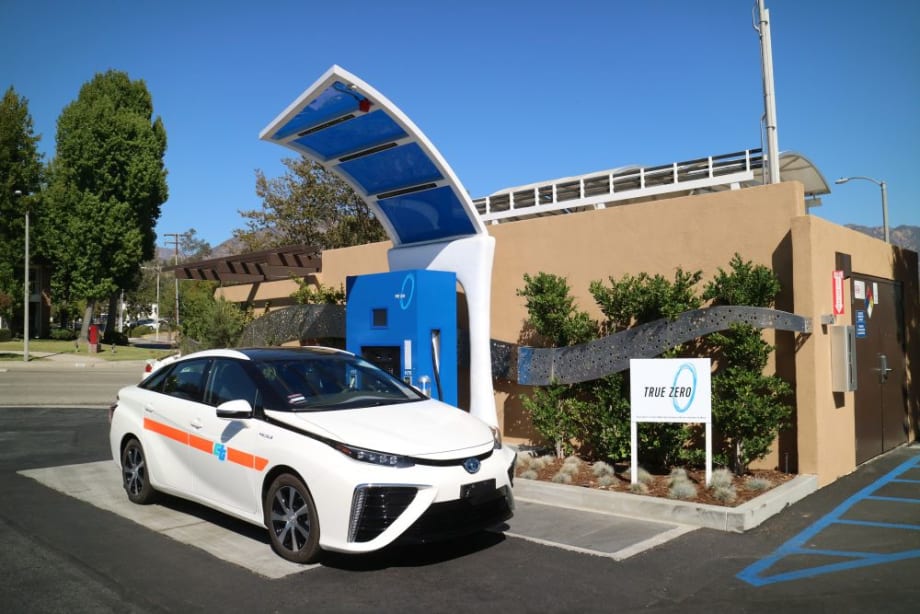
Caltrans purchased its Toyota Mirais in the San Francisco Bay Area, where there is a higher concentration of fueling stations.
Photo courtesy of Caltrans
Michael Mayor believes that when any organization decides to use a new technology, planning ahead is key. Mayor, who is chief of budgets and administration for the California Department of Transportation (Caltrans) Division of Equipment, said drivers learned to plan their trips and fueling stops in advance when the agency purchased 20 hydrogen-fueled Toyota Mirais for the 2016-17 fiscal year, and 17 Mirais for 2017-18.
Beginning fiscal year 2017-2018, California state agencies are required to procure battery-electric vehicles (BEVs), hydrogen fuel cell vehicles, or plug-in hybrid-electric vehicles (PHEVs) or traditional hybrid vehicles when available. To date, Caltrans says it has exceeded the minimum requirement, with 80 BEVs, 135 PHEVs, and 37 hydrogen fuel cell vehicles. And the number of hydrogen vehicles may grow — Caltrans is considering compact SUVs and eventually pickup trucks for the future.
Engineers traveling to construction sites are now the main users of Caltrans’ hydrogen vehicles, and those drivers have not reported any problems operating them, other than having to plan their routes to make sure they can get to a fueling station.
“I’m sure that’s how it was when the gasoline combustion engine came out. People were switching from horses. They had to plan out where that next station was going to be,” Mayor said. Caltrans oversees more than 50,000 miles of California’s highway and freeway lanes, as well as rail lines and aeronautics.
Government entities can study Caltrans’ experience to learn top considerations when acquiring hydrogen fuel cell vehicles.
1. Longer Range, Shorter Fueling Time
The Mirai’s 300-mile driving range is one of its primary advantages, according to Lisa Kunzman, supervising equipment engineer for Caltrans. By comparison, the battery-electric Chevrolet Bolt has an approximate 238-mile range. And unlike electric vehicles, which can take hours to charge, the Mirai can be filled up in five to 10 minutes.
2. Clustered Fueling Infrastructure
The infrastructure issue is closely related to the range issue, and that has been an important consideration for Caltrans. According to the California Fuel Cell Partnership website, 33 retail stations and two non-retail were in operation in the state as of April 2018. Most of the stations are in Southern California and the San Francisco Bay Area, with virtually no stations in the central and northernmost parts of the state. Caltrans vehicles are clustered where the infrastructure is currently located.
3. Higher Upfront Cost
Caltrans paid a base price of $40,800 for each Mirai, not including tax. That price is higher than other zero-emission options, but incentives helped offset that cost. Toyota offers $15,000 worth of fuel, or three years of fuel, whichever comes first. Additional rebates are available for public fleets, including those located in disadvantaged communities that are overly burdened by air pollution.
4. Training Drivers & Technicians
When hydrogen vehicle drivers stop at a fueling station for the first time, they must watch a short video showing how to fuel the vehicle. After the filling is complete, the system provides a code so the user does not have to re-watch the video every time he or she fills up at the same company’s fueling station.
Caltrans purchased an extended eight-year/125,000-mile warranty and maintenance service program, which is not included in the base price. “We have time to get our technicians up to speed if they need to be,” Kunzman said.
5. Driver Feedback
Caltrans has not received any negative feedback from drivers. In fact, the vehicles are earning praise, Kunzman said. “It doesn’t hurt that the vehicles come standard with advanced safety features,” such as adaptive cruise control, she added. The organization has also installed NetworkFleet telematics on all of the Mirais.
The only minor concern Mayor has heard is from drivers who had to learn how to handle the lack of fueling infrastructure in some areas. Mayor noted, “Like any new technology, if you’re not sure if there’s going to be fuel, of course you want to plan your trip accordingly.”
More Green Fleet
Sustainability Partners, Energy Systems Group Help Albuquerque Close the Gap on its 100% Renewable Energy Goal
The eight-site, 6 MW solar project has advanced the city toward 100% renewable energy for municipal operations.
Read More →
Port Authority and CALSTART Launch $45 Million Electric Truck and Charging Programs
The programs aim to boost sustainable operations across the East Coast's busiest seaport.
Read More →
Moving Government Fleets Beyond the Vehicle Purchase: EV as a Service
A discussion on how EVaaS is moving beyond pilot programs and what fleets should consider before beginning a larger deployment.
Read More →
Moving Government Fleets Beyond the Vehicle Purchase: EV as a Service
As fleets move beyond small EV pilots, Sustainability Partners CEO Adam Cain explains how EVaaS can address the infrastructure and long-term planning required for larger deployments.
Read More →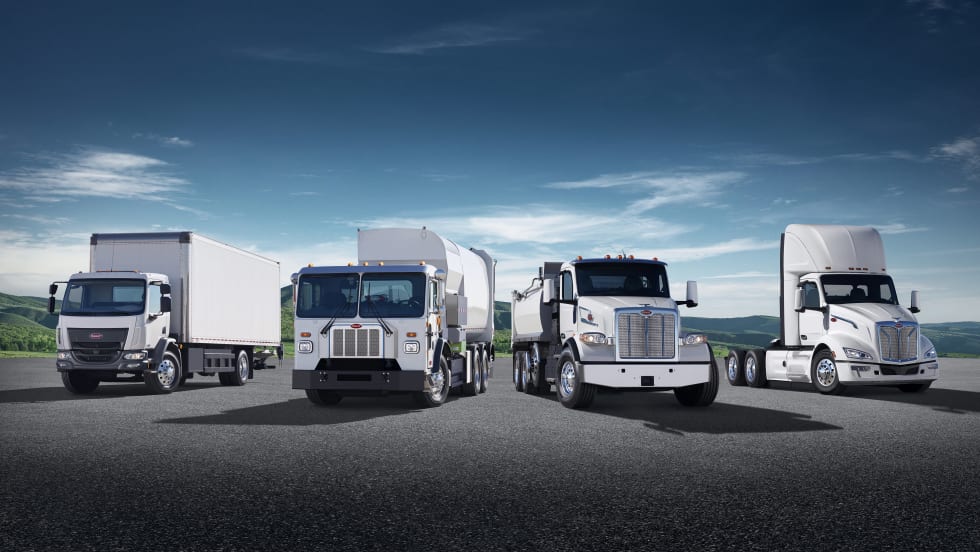
Peterbilt Expands Sourcewell Partnership with Electric Vehicle Lineup
The agreement aims to provide streamlined procurement of Peterbilt trucks for government, education, nonprofit and tribal organizations across the United States and Canada.
Read More →
EV Adoption & Charging Challenges
Where is your fleet in the journey of vehicle electrification? If you're still looking for answers to fleet electrification you've come to the right place.
Read More →
Hawaii Passes Clean Fuel Policy
Hawaii lawmakers passed clean fuel legislation that could support renewable natural gas production, biogas-powered transportation, and lower-carbon fueling options for public and commercial fleets.
Read More →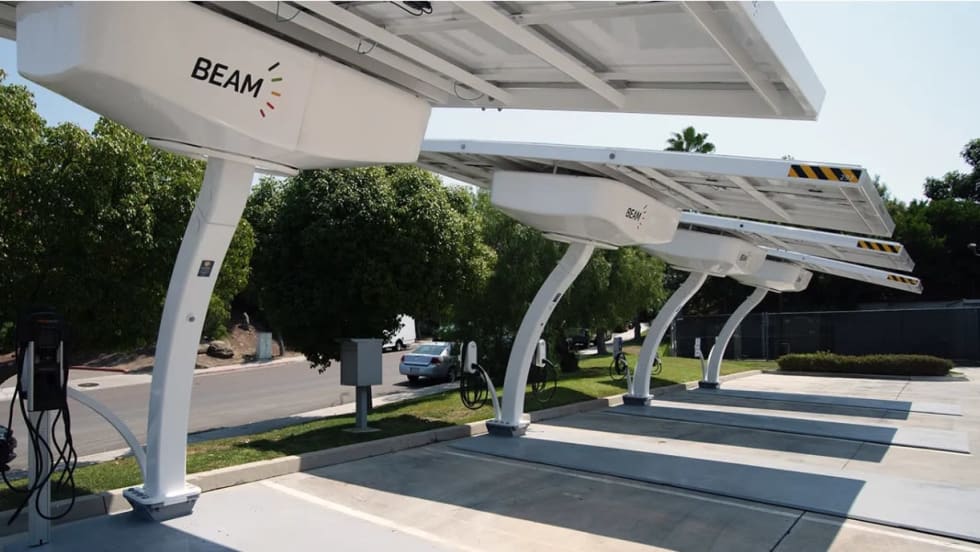
Stanislaus County Deploys Ten Beam Global EV ARC Systems to Support County Fleet Electrification
Stanislaus County deployed 10 off-grid solar-powered EV charging systems and a mobile charging trailer from Beam Global to support its electric fleet operations and emergency response flexibility.
Read More →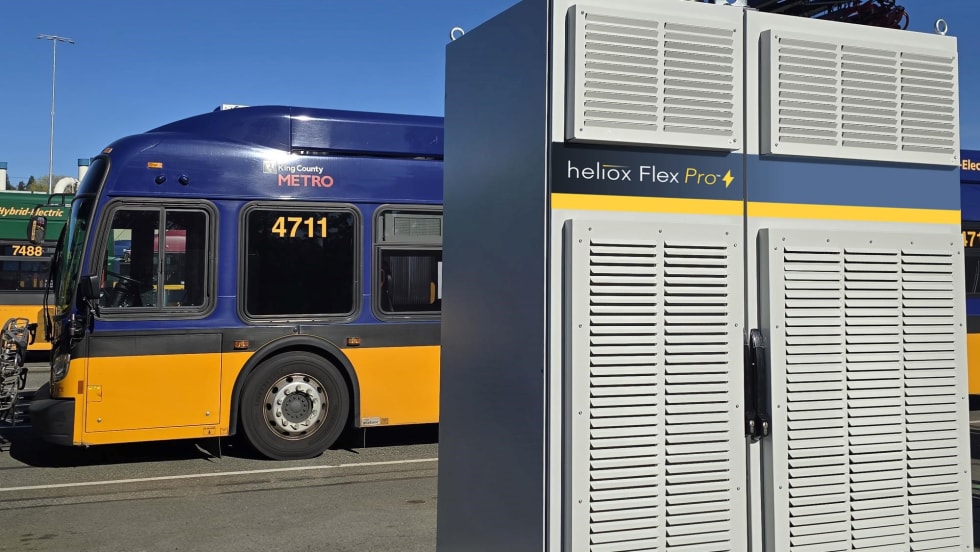
Heliox Pilots 480-kW Bus Charger with King County Metro
King County Metro is piloting Heliox’s new 480-kW Flex Pro charger to support expansion of its battery-electric bus fleet and depot charging infrastructure. The compact charging system supports pantograph and plug-in charging configurations for high-density transit operations.
Read More →