




How to Navigate the New Normal with a Looming Recession
The 10-year economic expansion is ending. How can fleet professionals prepare for upcoming budget cuts?
by Paul T. Lauria
June 10, 2020
To say that the COVID-19-induced recession is going to be painful is an understatement.
Photo: Getty Images
10 min to read
Much has been made in recent years of the aging of the fleet management profession, and especially the automotive maintenance profession. According to the Bureau of Labor Statistics, 44% of automotive maintenance workers are 45 years of age or older. Since this statistic includes “technicians” at retail outlets like Jiffy Lube and Pep Boys, the percentage of such workers in government fleet maintenance programs is probably higher.
Until the new recession roared into view, however, not as much thought was given to another statistic about the U.S. workforce: One-quarter to one-third of the workers in the above industries are younger than 35, meaning that many of them have never experienced a recession as working adults. Based on the experience of those of us who have weathered a few of these downturns, what’s in store for fleets and fleet professionals in the coming months?
The End of the 10-Year Economic Expansion
The COVID-19-induced recession will end the longest economic expansion in U.S. history, 129 months. However, it was the weakest of the 12 expansions since World War II, with an average annual increase in employment of only 1.1% and an average annual increase in gross domestic product (GDP) of only 2.3%. This compares to average annual increases of 3.1% in employment and 4.3% in GDP in all other expansions since World War II. In short, the post-Great Recession economic boom was not as much of a boon as many people assume.
In fact, the last decade left some organizations in a weaker position to confront the fleet management challenges of the oncoming recession than might be supposed. For instance, many government jurisdictions did not repair the damage to their fleet replacement programs inflicted by the Great Recession and now face the likelihood that replacement spending will be restricted once again. This will increase the repair costs of fleets that are already older than optimal. They also failed to recognize that they probably should have increased replacement spending relative to pre-Great Recession levels due to advances in automotive technology and declines in vehicle maintenance and repair capabilities.
Telematics Implementation
To be fair, the strong economy created distractions. For instance, the last five years witnessed an increasing number of fleets acquiring telematics solutions. In principle, the benefits of such solutions are indisputable: better vehicle allocation, utilization, operation, and maintenance and repair. But investments in these solutions often were not accompanied by investments in hiring and/or training employees to convert terabytes of data into actionable information and improved decision making.
Some organizations failed to grasp that most of the benefits of a telematics solution flow to fleet users. The value of telematics data lies in their ability to improve user agency and driver decision making and behind-the-wheel behavior, but realizing the benefits that were cited to justify these investments requires a degree of customer buy-in and collaboration that may be difficult to achieve. Many fleet user agencies have workforce challenges of their own to contend with and don’t necessarily welcome input on how their employees can utilize and operate vehicles more efficiently or responsibly.
The Push for Fleet Sustainability
The growing economy also increased enthusiasm for fleet sustainability improvement, particularly for fleet electrification. However, the economic benefits of such conversions are not great, and it is difficult to be good environmental stewards when governments are struggling simply to balance their budgets for the next fiscal year. Rock bottom oil and vehicle fuel prices in a globally depressed economy don’t help matters.
Another factor likely to slow down the drive for fleet sustainability improvement is the impact of the pandemic on the use of light-duty vehicles. Work methods that incorporate social distancing will become more common in the future, and the need for employees to travel to face-to-face meetings will likely diminish. With Web-based meeting solutions like Zoom zooming from obscurity to worldwide prominence in a few short weeks, it also seems safe to assume that Big Tech will invest vast sums of money to improve and promote employees’ ability to interact effectively from a distance. All of this is good for the environment, of course, but not so good for what had been increasing momentum in fleet electrification.
Where to Go from Here
Many fleet managers have already been directed to revisit their FY 2021 budget requests and identify costs they can cut. Economic activity will return to pre-pandemic levels at some point, but government debt levels will have increased significantly by then. During the Great Recession, the aggregate indebtedness of federal, state, and local governments increased by more than 50%. So, COVID-19 will probably reduce direct and indirect government subsidies for fleet electrification and other sustainability improvements.
Cost containment clearly is the new normal in the short term, and it may be an omnipresent feature of public-sector fleet management for years to come. Near-term strategies for containing costs that fleet professionals should consider exploring with their customers and senior decision makers include the following:
Defer Replacement Purchases
In the short term, this strategy is a no-brainer, and one that budget and finance directors almost always turn to first in a downturn. Yes, increasing fleet age may increase operating (especially repair) costs, but not by as much as not replacing vehicles will reduce cash outlays in those jurisdictions that purchase vehicles outright with cash. Minimizing vehicle total cost of ownership (TCO) usually requires reducing fleet asset age by increasing replacement expenditures, but this is no time for idealism. Senior management and elected officials are focused on fiscal survival, not optimality. Thus, it’s important to have a structured process for prioritizing replacement purchases in order to get the most value out of reduced fleet replacement appropriations.
Free up Cash by Changing Replacement Financing Methods
Purchasing a replacement vehicle outright with cash requires paying its full capital cost before the vehicle is used. Financing the purchase with a loan or some other type of credit facility allows that cost to be paid while the vehicle is being used. Yes, there is a cost that comes with this privilege — interest charges — but interest rates are at historically low levels. Comparing the full purchase price of a replacement vehicle with the repair cost of an old vehicle may make repair a no-brainer in the short term, but comparing repair costs with the first year’s debt service costs for a new vehicle often makes replacing the old vehicle the no-brainer. Over the long term, debt financing gives the appearance of being more costly than outright purchase of replacement vehicles, but because it removes the incentive to continually put off replacement purchases, it usually reduces fleet age and TCO.
Rightsize the Replacement Reserve Fund Balance
Not to put too fine a point on it, many jurisdictions that use a replacement reserve fund accumulate more cash than they need to ensure the timely replacement of their fleets. This is because they are uncertain as to how to calculate replacement rates that generate enough revenue to keep the fund solvent in the face of spending needs that fluctuate from year to year. The solution is to use replacement rates that have two components: one to recoup the original acquisition cost of each asset in the fleet today, and one to accumulate the additional amount of money that will be needed to purchase a replacement asset in the future. This requires developing and annually updating a multi-year fleet replacement plan and cash flow model for the reserve fund.
Generally, a reserve fund balance always should be less than one year’s projected gross replacement costs (i.e., before accounting for used asset sale proceeds), and usually around 15-20% of average annual gross replacement costs. If a jurisdiction has no idea as to whether or not it can safely tap its fleet reserve fund to help cover short-term budget shortfalls during a recession, it’s time to conduct an analysis of the fund and the replacement rates used to replenish it.
Rightsize the Fleet
Rightsizing (usually a euphemism for downsizing) a fleet during a recession is tough, especially if the fleet was older than optimal before the recession began. User agencies are understandably reluctant to give up underutilized vehicles if fleet reliability and availability is deteriorating. But many decision makers believe this is a surefire strategy for saving money — and it may well be, depending on how well asset allocation and utilization have been managed in the past. Under certain conditions, opportunities to save by reassigning or removing vehicles from a fleet may be substantial.
For instance, organizations that do not employ a fleet cost charge-back system — or do have such a system but use rates that hide the fixed costs of vehicle availability — often have more fleet assets than necessary. This is because user agencies do not see any financial benefit in disposing of assets they do not truly need. Similarly, jurisdictions or agencies that purchase vehicles outright with cash tend to view the cost of a vehicle’s availability as a sunk cost. If a vehicle already has been paid for, why get rid of it? The fallacy, of course, is that holding onto a vehicle that is no longer needed does incur costs; at a minimum, the foregone proceeds of selling it.
Conducting a fleet rightsizing study is almost always somewhat contentious because it substitutes the judgment of fleet professionals, budget departments, and the like, for that of the agencies that use these tools to do their jobs. It represents a reversion to the sort of fleet asset and user control style of fleet management that was common 30 years ago. Fleet owners are usually best served by using an independent “honest broker” to examine fleet needs and usage patterns in a structured, data-driven manner to minimize damage to relationships that fleet management organizations have painstakingly built with their customers over the years.
As for the savings that can be achieved from a rightsizing plan, the immediate ones are proceeds from the sale of used vehicles and equipment removed from the fleet. Long-term savings result from the avoidance of future replacement costs and a certain percentage of future asset operating costs. (Since the goal of fleet rightsizing is to do more with less, most of the operating costs of eliminated vehicles don’t go away; they are merely transferred to the higher-utilized vehicles that remain.)
Scrutinize Contractor/Vendor Charges
In a typical local government jurisdiction, two-thirds or more of fleet costs are for the purchase of goods and services — vehicles, fuel, maintenance and repair parts, services, etc. There are few better areas than these to look for immediate cost savings, not so much in terms of the quantities purchased, as in the prices paid for them. Scrutinizing contract terms and supplier invoices can be an eye-opening experience.
A few years ago, Mercury Associates conducted a review of the fleet fueling program of a large U.S. city. The city operated 40 fuel stations, nine large ones utilized by multiple agencies and 31 small ones located primarily at fire and emergency medical services (EMS) stations. Because of the short-drop charges it incurred to refill 500- and 1,000-gallon fuel tanks, the average delivery cost per gallon was five times as high for the small stations ($1.00) as for the large ones ($0.20). Until this review was conducted, no one had focused on how much more expensive a gallon of fuel from a small station was. Quantifying the cost impacts of this well-known but somehow overlooked characteristic of bulk fuel purchases alerted the city to a sizable cost savings opportunity that had gone undetected for years.
Fleet Professionals Can Prepare for the Recession
To say that the COVID-19-induced recession is going to be painful is an understatement. Much of the pain from the recession (not the pandemic itself) stems from uncertainty as to when things will return to normal, and how much economic carnage will occur in the interim. Fleet professionals should take comfort from the fact, however, that they are far from helpless; there is much that they can do to help themselves, their customers, and senior decision makers navigate the new normal of cost cutting pressures that may be with us for some time to come.

About the Author
Paul T. Lauria is president of Mercury Associates, a fleet consulting company. He can be reached at plauria@mercury-assoc.com.
Subscribe to Our Newsletter
More Operations

Fleet Forward Conference Introduces One-Day Passes for 2026
New one-day registration lets fleet professionals attend Tuesday, Wednesday, or Thursday, with passes available for $249.
Read More →
ENC Unveils its ZAVIR Medium-Duty Shuttle
Two variants of the concept shuttles were revealed: a low-floor configuration and a high-floor configuration.
Read More →
Could Your Next Fleet Technician Start as an Intern?
What if your next technician hasn’t worked in a fleet shop yet? What fleets are doing to free up time.
Read More →
How Phoenix Is Building Its Next Generation of Fleet Technicians
With more than 8,000 vehicles and pieces of equipment to maintain, the City of Phoenix could not afford to wait for fully trained technicians to walk through the door. Instead, they revamped their entire workforce strategy and showed how public fleets can create their own talent pipeline while preparing existing employees for increasingly complex vehicles.
Read More →
What’s Slowing Your Fleet Down?
Could a change in how work gets done help your fleet return vehicles to service sooner?
Read More →
Can Public Fleets Trust the Data Driving Their Decisions?
Public fleets have more data than ever, but inconsistent records and missing information can still undermine maintenance, replacement, and cost decisions.
Read More →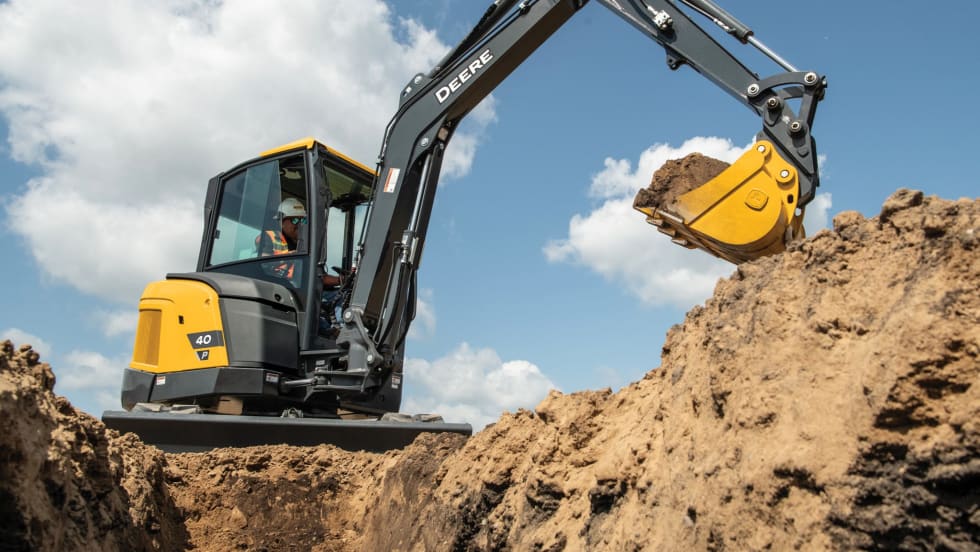
John Deere Introduces 40 P-Tier Compact Excavator
John Deere is adding a compact excavator designed for crews that need to move equipment between jobsites and handle multiple types of work with one machine. The 40 P-Tier weighs less than 10,000 pounds and offers configurable hydraulics, attachment options, and connected fleet-management capabilities.
Read More →
How Leading Fleets Improve and Why Business Plans Matter
This week, we look at what past Leading Fleet winners can teach us about making progress, plus how to build a business plan your fleet will actually use.
Read More →
Nominate a Fleet Leader for the 2027 Public Fleet Hall of Fame
Do you know a fleet leader who has made a lasting impact on the industry? Nominate this fleet professional for the 2027 Public Fleet Hall of Fame.
Read More →
Why Fleet Business Plans Need Three Perspectives
A fleet business plan should help agency leaders understand the fleet’s value, give the organization a clear direction, and establish shared expectations with customer departments.
Read More →