




City of Marietta Partners With Vocational School
The City of Marietta is dealing with a shortage of qualified technicians by working with the local technical college to obtain new recruits.
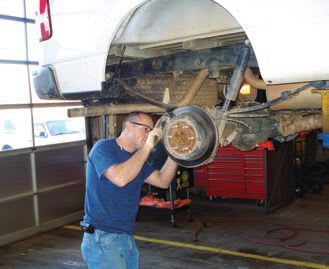
Scott Lawler, superintendent of fleet maintenance for the City of Marietta, Ga., is tackling a challenge that many municipal fleet managers will recognize. About half of the 11 technicians he supervises in the City’s fleet maintenance department are skilled veterans of the trade, constituting the long-time core of his staff, said Lawler. But what can be said about the others? They come, and they go.
"The average tenure in the City lately is two years before they’ve headed on to another repair shop in the private sector or they’ve just decided on something completely different," Lawler said. "I’ve had one go to police; I’ve had one go to fire."
Once they go, finding replacements is a challenge due to the shortage of qualified technicians. When asked to identify the reasons for the shortage, Lawler said, "These days, college is more readily available, and many people take advantage of it. We’re having to bring in people with less experience because of the shortage."
Further complicating matters is the aging existing work force. "We’re starting to get a knowledge gap due to individuals retiring," Lawler noted.
If fields such as vehicle maintenance and repair are not a first career choice for many, that might be due in part because "we’re not out there making individuals understand that a career and money can be made," Lawler said.

To heighten awareness and help cope with the shortage, Lawler is developing an arrangement with North Metro Technical College, Acworth, Ga., one of a number of schools in Georgia’s technical college system. North Metro already offers students opportunities to perform part-time, paid work for a dealer or municipality for nine months. Lawler wants Marietta to participate in the program, seeing it as a means to both develop and identify future qualified job applicants.
To that end, Lawler pitched his plan to Marietta city administrators and is optimistic they will allot the necessary funds for a paid, part-time position for one student for nine months. The City is expected to make a decision as part of its annual May budgetary process.
"We want to make sure they get paid so they get that feel of really working in the workplace," Lawler said.
To make the case to city administrators, Lawler spelled out the benefits in his presentation. These include realizing savings of as much as $2,500, he said. Those expenses can be incurred with advertising, interviewing prospective applicants, and conducting physicals and drug tests. "Any time you go through the hiring process you have a chance that you may hire an individual who just doesn’t fit the organization," he added.
The odds of that outcome can be sharply curtailed if the person has already worked part-time for nine months in the fleet maintenance department, Lawler noted. Further, the program would allow Lawler to see how an individual works and vice versa.
Even if the student is judged a desirable prospective employee, getting hired isn’t a certainty, Lawler pointed out. "It’ll boil down to whether I’ll have a position open when their nine months is up."
If the plan wins the approval of city administrators, Lawler will visit North Metro Technical College to make a presentation to students of diesel technology instructor Mike Smith.
[PAGEBREAK]

Lawler said he would inform students of the benefits and disadvantages about working in equipment maintenance for the city. On the plus side, he said, they would have an opportunity to work on a wide range of equipment — approximately 600 pieces — including lawn mowers, police and passenger cars, fire trucks, pickups, dump and utility trucks, and heavy construction equipment.
The experience can help a mechanic acquire a wide range of knowledge, "compared to working at a dealership where they would stay on one type of equipment," Lawler said. "They’re going to touch engines, air conditioning, brakes — we do all that here."
Lawler said he would also cover the advantages of full-time employment with the City of Marietta, including health and retirement benefits.
"The most appealing thing is the experience they’re going to get," and along with the benefits and the security that comes with working for a municipality, Lawler said.
The biggest drawback is most likely the difference in pay scale between public works and private industry, Lawler said. "There is a good possibility they would make more in the private sector," he acknowledged, but it’s also possible the private-industry position wouldn’t be as stable.
The benefit of such a partnership with North Metro is illustrated by an anecdote recounted on the technical college’s Web site, which features a story about a student who worked in the maintenance shop at a truck dealer. Technicians employed at the dealer were trying to determine how to use and interpret readings from an opacity meter and were encountering some difficulty. The student, who had used the same type of meter in class at the college, stepped in and demonstrated its use.
For the dealer, this was a double payback. It had donated the opacity meter used in the school’s diesel instruction program.
More Operations
Who Deserves Fleet Recognition and What Could You Teach at GFX?
Who helped shape your fleet career, and what have you learned that could help someone else?
Read More →
What’s Haunting Public Sector Fleets?
Public sector fleet challenges rarely happen in isolation, and addressing one often means understanding how it connects to another.
Read More →
Is Keeping Older Fleet Vehicles Really Saving Money?
Is keeping vehicles longer saving money, and what happens when a diagnostic test points to the wrong fix?
Read More →
How Smart Fleet Strategy Can Help Local Government Agencies Do More with Less
Keeping a vehicle longer may ease this year’s budget, but what does it cost the next one? A closer look at fleet decisions can reveal opportunities to reduce spending while protecting essential services.
Read More →
Connect with Government Fleet on LinkedIn
From industry news and fleet management strategies to conversations with peers, Government Fleet's LinkedIn page offers public-sector fleet professionals another way to stay informed and connected.
Read More →
Town of Queen Creek Named Most Successful Fleet Award Winner of Inaugural RTA Fleet Success Awards
Five fleets were honored at RTA Connect 2026 in Chicago for excellence across resource efficiency, intentional culture, risk management, and stakeholder satisfaction.
Read More →
A buyer's guide to fleet management software in 2027
Buying fleet management software in 2027 means looking beyond features and price. As fleet operations, technology and expectations evolve, this guide explores what today’s fleet professionals should consider when choosing a system that can deliver value now and adapt to what comes next.
Read More →
Hazard Alerts, Fleet Car Sales Rise and a New Shuttle Concept
Fleet car sales doubled, but the bigger picture tells a different story in this week’s roundup.
Read More →
How St. Johns County Turned Fleet Data Into Better Replacement Decisions
St. Johns County, Florida, had fleet data, but turning it into reliable decision guidance was another matter. Instead of starting over with a new fleet management system, the county connected existing tools and built a scoring system that gives managers an objective look at fleet health.
Read More →
Fleet Forward Conference Introduces One-Day Passes for 2026
New one-day registration lets fleet professionals attend Tuesday, Wednesday, or Thursday, with passes available for $249.
Read More →