




Challenges of Building a Temporary Fleet Maintenance Facility
Walter Burnett, former fleet maintenance manager for the city of Beverly Hills Calif., knows about the challenges of building a temporary fleet maintenance facility. They include space limitations, structural difficulties, budget concerns, and time management.
The city of Beverly Hills, Calif., is home to many upper-income citizens and the focus of most celebrity news. Beneath the glitz and glamour of its high-profile exterior are the internal workings of a highly productive Public Works Department.
When the need came to build a new fleet maintenance facility, a temporary structure was constructed so business could continue as usual.
“The city of Beverly Hills has 375 vehicles, which includes municipal fleet, refuse vehicles, and police,” said Walter Burnett, CAFM, until recently the city’s Public Works Fleet Maintenance Manager. (Burnett was recently named public works director for the city of Macomb, Ill.) “It is a large fleet for a city of this size, but that is because we have a high level of service. Beverly Hills is a community with a world-class reputation.”
The idea of building a new facility started long before the project was launched in 2002. “Like many things in the government sector, it has been in the works for a long time,” said Burnett. “The first director I met in 1980 recognized we needed a new facility since the
one we had, which was built in 1949, was becoming obsolete. The vehicles were getting too big for the bays and the equipment was old and tired.”
As a result of Southern California’s 1994 Northridge earthquake, damage to the original facility led to its demolition and the idea of building a temporary facility surfaced. Meanwhile, plans were made to build a new and improved permanent facility to fit the city’s fleet needs. “In 2002, we hired an architect and started working on the pre-planning and programming aspects of the project,” said Burnett.
A major factor in designing a temporary facility was correctly identifying the needs of both the fleet department and the city of Beverly Hills. “We made compromises with other aspects of the shop, but we were steadfast in certain areas critical to its operation,” said Rene Biadoma, vehicle maintenance manager.
Involving the staff became a significant part of the facility’s development. “We started internally with our fleet staff and really looked at our programming needs in terms of the number and type of bays we wanted to see,” said Burnett. “You have to know what your mechanics need.We also looked into warehousing and office space. We did some vehicle equivalency analysis and researched literature.We looked at it from many different standpoints.”
Burnett also turned to facilities in other cities as a roadmap for change. “We looked at a number of recently built facilities in the area, such as those in Corona, and Thousand Oaks, Calif. I even looked at some of the things that John McCorkhill had built at his facility in Lynchburg, Va. I tapped my NAFA network extensively,” Burnett said. {+PAGEBREAK+}
When faced with a big project, the saying goes, “Whatever can go wrong, will.” Burnett soon found out that building and running a temporary fleet maintenance facility produced four challenges:
1) Choosing the Right Structure.
The public works fleet maintenance department is staffed by 12 ASE-certified mechanics and managed by Fleet Maintenance Supervisors Craig Crowder and Jim DeNostro. When the temporary tented aluminum structure was finally erected, staff members found themselves in a bit of a pickle.
“Fabric and fire do not mix,” said Crowder. “ We found out we could not weld inside the facility. We had to build a separate structure to house our welding needs.”
The hot Southern California sun was another factor to consider. “Ventilation when weather is hot was something else that we modified,” said Crowder.
2) Space Limitations.
The citizens of Beverly Hills influence how the city uses its land. Therefore, the Public Works Department had to work with the city government and its citizens when planning the facility. Space was
limited, but the need for an adequate facility was great.
“The city government and the citizens have a pretty good working business relationship,” said Burnett. “We have been fortunate in that respect. Everybody understands the value and the need for these facilities.”
3) Budget Problems.
Constructing any big project will always have unanticipated hidden fees. Accidents onsite,weather, and time can cause budget overruns. Unnecessarily outsourcing jobs is another easy way to go over budget.
“We saved money by designing and building what we could ourselves rather than outsource the work to contractors. We managed to not go over our original budget and that was very important,” said Burnett.
4) Time Management.
“Whatever timeline you set, expect it to take a third to a half-time longer,” said Burnett. Time is essential in planning the future of a facility. Time controls everything from budgets and weather issues
to equipment wear-and-tear and employee patience.
After taking on such an endeavor, Burnett emerged with solid advice for fleet managers who choose to build a temporary maintenance facility of their own.
Give yourself a time cushion from start to finish.
Know your constraints and work within them.
Have a fleet consultant view your ideas from an architectural standpoint.
Sit down with your staff and internally plan the facility’s construction.
Stick to your guns.
“We encountered numerous challenges,” said Burnett, “but we have met them head-on.We learned from it all.”
More Operations
How Leading Fleets Improve and Why Business Plans Matter
This week, we look at what past Leading Fleet winners can teach us about making progress, plus how to build a business plan your fleet will actually use.
Read More →
Nominate a Fleet Leader for the 2027 Public Fleet Hall of Fame
Do you know a fleet leader who has made a lasting impact on the industry? Nominate this fleet professional for the 2027 Public Fleet Hall of Fame.
Read More →
Why Fleet Business Plans Need Three Perspectives
A fleet business plan should help agency leaders understand the fleet’s value, give the organization a clear direction, and establish shared expectations with customer departments.
Read More →
How Oil Analysis, Safety Technology, and Fleet Awards Drive Improvement
What happens when fleets let measured results guide their next decision?
Read More →
Emergency Response, Fleet Sales and New Technology
This week’s fleet news covers emergency preparedness, shifting vehicle sales, electric truck investments, and new tools for monitoring road conditions.
Read More →
NCDOT Adds Dash Cam Imagery to Statewide Traffic Monitoring
North Carolina transportation officials are adding another set of eyes to roads that aren't covered by fixed traffic cameras. A statewide deployment gives NCDOT access to on-vehicle imagery to verify conditions during work zones, severe weather, emergencies, and other traffic events.
Read More →
Turning a Bottleneck Into a Blueprint: How Tallahassee Rethought Police Fleet Readiness
For Tallahassee, finally receiving 87 delayed police cruisers created a new problem: how to get them on the road without creating a massive backlog. The solution would change more than the upfit process.
Read More →
AI, Police Fleet Readiness and Fire Apparatus News
See how AI, a reworked police-vehicle upfitting process, and a fire apparatus acquisition could affect public fleet operations.
Read More →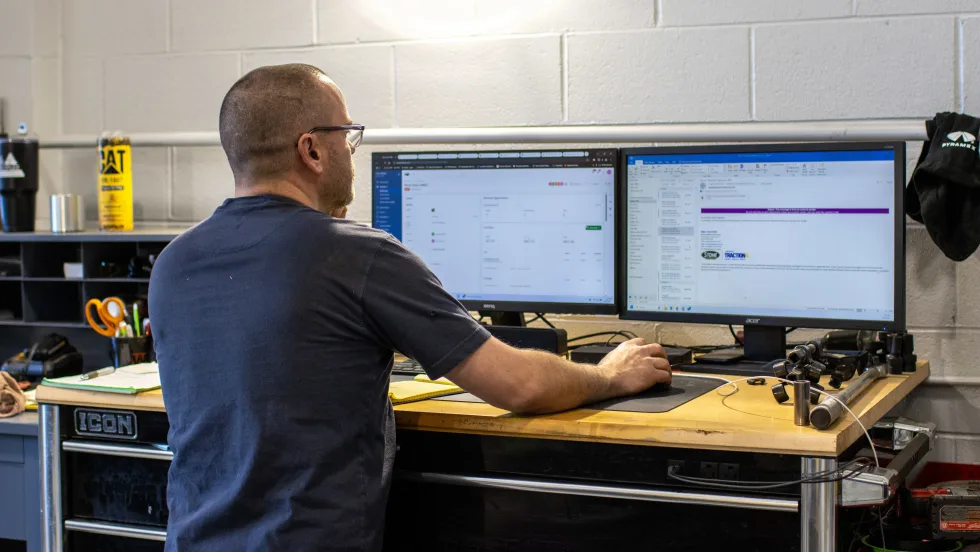
How AI and Automation Work Together to Reduce Government Fleet Downtime
As their assets age and their budgets’ purchasing power shrinks, government fleet managers are facing growing pressure to do more with less.
Read More →
Police Fleet Innovation, EV Strategy and AI
See how public fleets are rethinking police vehicle readiness, electrification, workplace culture, and driver workflows.
Read More →