




Similar Content: Two Major Principles of Retaining Technicians
Building Relationships with Tech Colleges to Reduce Talent Shortages
The benefits of becoming involved with local trade schools run both ways.

Lexi Tucker・Senior Editor
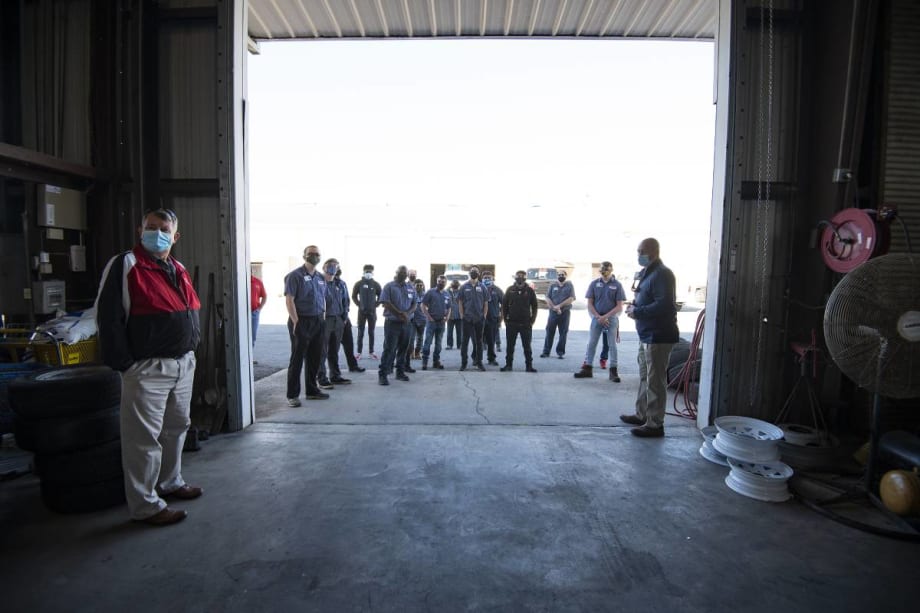
The Fleet Department had 26 students and staff from Traviss Technical College come out to the county’s main fleet facility for a two-hour tour and brief training exercise.
Photo: Polk County Board of County Commissioners
5 min to read
Lending a hand to technical colleges and trade schools isn’t just helpful to those building curriculums. It enables fleet operations in need of quality technicians to create a pipeline of promising candidates. Robert Biller, CAFM, fleet management director for Polk County, Florida, has experienced firsthand the benefits that come with developing a relationship with institutions training the technicians of tomorrow.
Making Connections
Currently, eight out of Polk County’s 32 technicians have come from local trade schools. The Fleet Department has partnered mainly with Traviss Technical College and Ridge Technical College, but also reach out to a few others in the area.
Biller stated the department has a close relationship with Traviss, which began a couple years ago through Tim Calhoun, Florida Association of Governmental Fleet Administrators’ (FLAGFA) training coordinator.
“He instructed me to visit the local automotive training facilities and find out how our facility could assist in training their students. When I got to Polk County, I did just that and Traviss welcomed us with open arms,” he said.
As a result, Biller and Operations Manager Mike Chase sit on the advisory board for the automotive and dealer curriculums at the college. Just recently, the Fleet Department had 26 students and staff from the college come out to the county’s main fleet facility for a two-hour tour and brief training exercise.
“This sparked a lot of interest, and we had several of the students in that class apply for a position that was open,” Biller explained.
When Polk County’s Fleet Department has a technician vacancy, Biller contacts one of the technical colleges and gives them a heads up to have their students watch the internet for online job postings on the county’s website.
“This way, we have a pool of trained applicants ready to apply as soon as the advertisement hits the job board. We're then able to conduct interviews fairly quickly because we don’t have to wait weeks to collect qualified applicants to interview. In fact, the last five technicians we have hired have all been fairly young and had some level of technical school training,” he explained.
Although not all applicants come from the local tech school, some have learned about the Polk County Fleet Department from former classmates or coworkers through personal social media accounts. This amplifies the fleet’s outreach to local community and technical colleges.
Mitigating Impact
Fortunately, Polk County Fleet Management has been able to fill its vacancies about as quick as its hiring process allows it to. In addition to applicants who come directly from the tech schools, it also attracts local technicians who are looking for more secure employment.
“Our pool of candidates has had enough well-qualified technicians, so we have been able to hire the right technician, not a technician ‘right now.’ We avoid that issue of having to weed somebody out after you've hired them and they end up not working out,” he said.
When students apply, Biller can receive feedback from applicants’ instructors, making it easier to learn how they performed in class and interacted with their classmates. This way, he has a better idea of who is coming through the door before the candidate is invited for an interview.
“Like all fleet operations, the number of technician positions we have always seem to be less than what we need. When we're able to fill out these positions quickly, the impact of having that vacancy is much less. We're able to fill gaps fast with the good applicants waiting in the wings,” he explained.
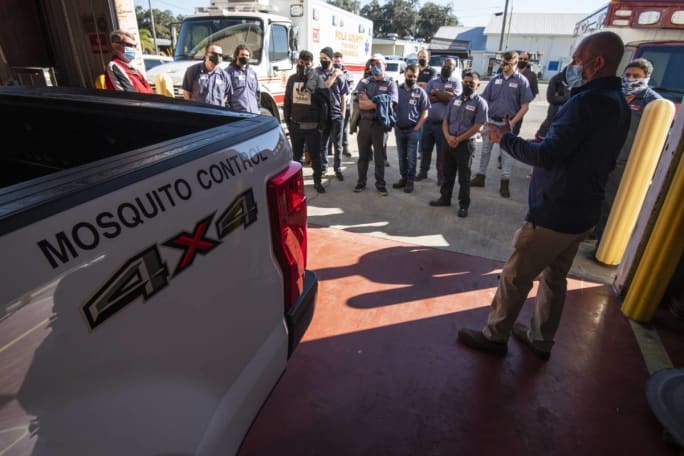
The Fleet Department has partnered mainly with Traviss Technical College and Ridge Technical College, but also reach out to a few others in the area.
Photo: Polk County Board of County Commissioners
Get Involved
Biller’s advice to other fleet managers looking to get involved is look for ways you can assist at local trade schools.
“Get out there and be responsible for helping develop programs, provide feedback, and give them information on what you're looking for in a technician. Don’t be afraid of taking in new talent straight out of school and helping to mentor and mold them. That may take some time and money, but the investment will pay off,” he said.
He also suggests creating a temporary part-time position for an intern or an on-the-job training program to give the person a chance to experience a shop environment. This will provide fleet operations with an opportunity to evaluate potential new employees. Polk County has done this and calls the position “mobile technician,” because the intern will move from place to place to get experience in different areas.
“You might have a great technician, but if they can't get along with the guys in the shop or follow the rules, it's counterproductive,” he said.
As for other enticing benefits for full-time employees, Polk County provides insurance, PTO, and holidays. Technicians can increase their hourly rate by getting paid an incentive based on the number of certifications they earn. This allows them to make up to an additional $4.20 an hour. The Polk County Fleet Department also has a four day, 10-hour workweek, making every weekend a three-day weekend.
Will the Emergence of EVs Slow the Shortage?
For the next few years, Biller believes the number of retiring technicians will outnumber new technicians entering the workforce. As electric vehicles become more prevalent, there will be fewer technicians needed to maintain each vehicle and do mechanical repairs, which may help ease shortage pains.
“Repair facilities will probably end up being cleaner since there's no waste oil or coolant. That’ll be more appealing to younger technicians that are more suited for computer and electronic diagnosis and repair. The dirtiest thing on a car will probably be a brake job,” he mentioned.
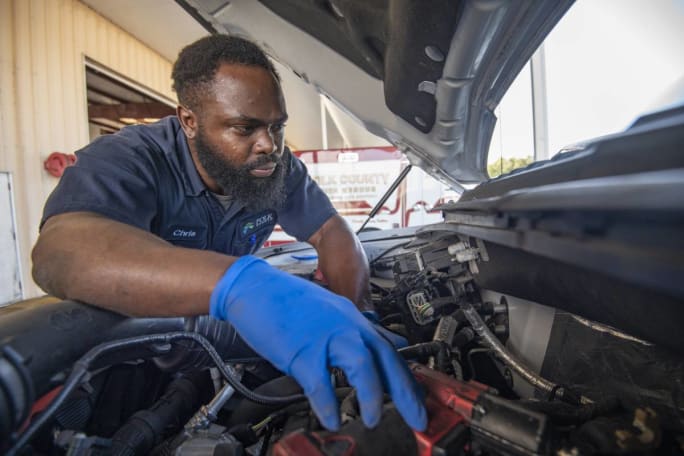
Fleet Technician Christopher Taylor works on a county vehicle.
Photo: Polk County Board of County Commissioners
Lean Into Associations
Biller noted he has learned quite a bit about hiring and developing new technicians by being a member of FLAGFA. He recommends anyone running a fleet to join whatever associations are in their area and invest in training management and administrative staff, as well as technicians.
“It keeps fleet managers from becoming stagnant. Being involved in local fleet organizations is key,” he said.
Subscribe to Our Newsletter
More Operations

Fleet Forward Conference Introduces One-Day Passes for 2026
New one-day registration lets fleet professionals attend Tuesday, Wednesday, or Thursday, with passes available for $249.
Read More →
ENC Unveils its ZAVIR Medium-Duty Shuttle
Two variants of the concept shuttles were revealed: a low-floor configuration and a high-floor configuration.
Read More →
Could Your Next Fleet Technician Start as an Intern?
What if your next technician hasn’t worked in a fleet shop yet? What fleets are doing to free up time.
Read More →
How Phoenix Is Building Its Next Generation of Fleet Technicians
With more than 8,000 vehicles and pieces of equipment to maintain, the City of Phoenix could not afford to wait for fully trained technicians to walk through the door. Instead, they revamped their entire workforce strategy and showed how public fleets can create their own talent pipeline while preparing existing employees for increasingly complex vehicles.
Read More →
What’s Slowing Your Fleet Down?
Could a change in how work gets done help your fleet return vehicles to service sooner?
Read More →
Can Public Fleets Trust the Data Driving Their Decisions?
Public fleets have more data than ever, but inconsistent records and missing information can still undermine maintenance, replacement, and cost decisions.
Read More →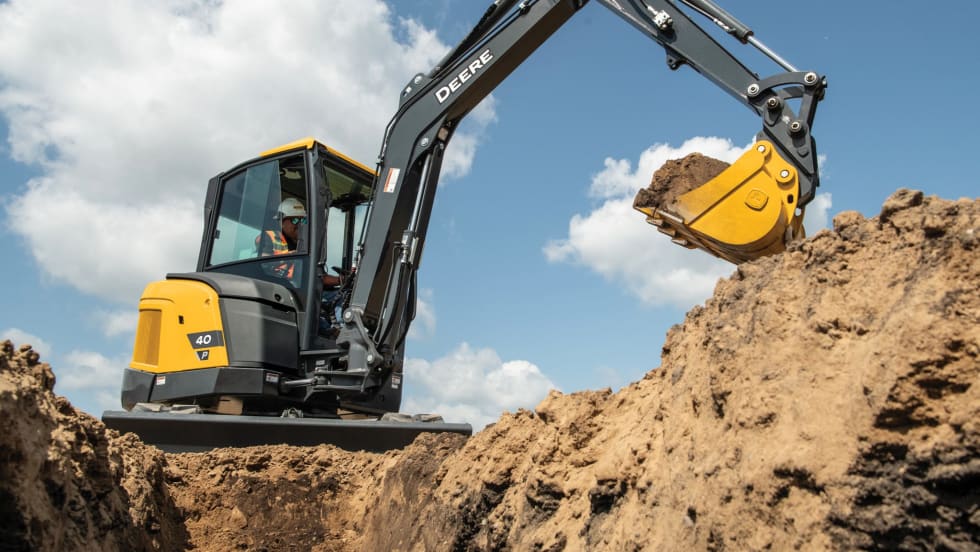
John Deere Introduces 40 P-Tier Compact Excavator
John Deere is adding a compact excavator designed for crews that need to move equipment between jobsites and handle multiple types of work with one machine. The 40 P-Tier weighs less than 10,000 pounds and offers configurable hydraulics, attachment options, and connected fleet-management capabilities.
Read More →
How Leading Fleets Improve and Why Business Plans Matter
This week, we look at what past Leading Fleet winners can teach us about making progress, plus how to build a business plan your fleet will actually use.
Read More →
Nominate a Fleet Leader for the 2027 Public Fleet Hall of Fame
Do you know a fleet leader who has made a lasting impact on the industry? Nominate this fleet professional for the 2027 Public Fleet Hall of Fame.
Read More →
Why Fleet Business Plans Need Three Perspectives
A fleet business plan should help agency leaders understand the fleet’s value, give the organization a clear direction, and establish shared expectations with customer departments.
Read More →