





Similar Content: Ford Pro Grows Leadership Team
7 Key Features on the Ford F-150 Lightning Pro for Fleets
From a large "frunk" to faster Level 2 charging, here's what government fleet managers should know about the all-electric F-150 Lightning Pro.
September 21, 2021
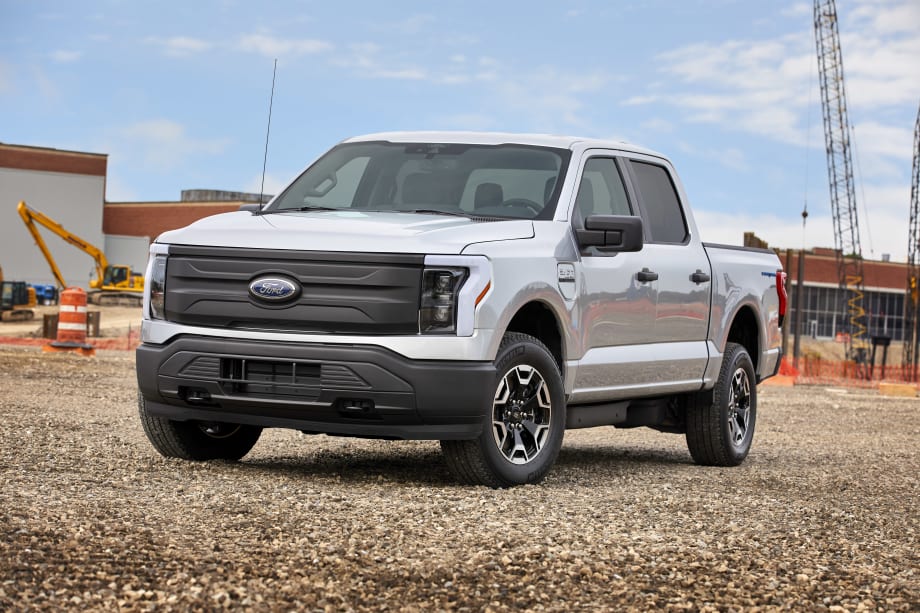
Photo: Ford
3 min to read
Fleet managers looking to electrify have been waiting for the release of the Ford F-150 Lightning Pro, the company’s first battery-electric truck, available starting spring 2022. We talked to Jasen Turnbull, F-150 Lightning brand marketing manager, on the most important features for government fleet managers.
1. The “frunk” (front trunk) offers extra storage.
It provides 14.1 cubic feet of storage and is lockable, water-tight, and holds up to 400 lbs. Two LED lights on the roof of the frunk illuminate items without casting shadows, Turnbull said. It also has four power outlets and two USB ports for easy charging and equipment use.
“It’s the largest frunk in the market,” Turnbull said, adding that it’s only a feature that battery-electric vehicles (BEVs) can provide.
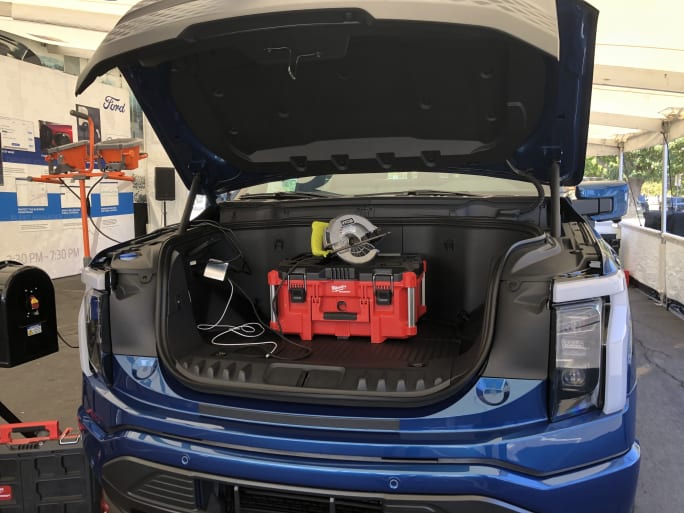
Photo: Thi Dao
2. On-board power can be used to power tools, generators, and other structures.
The F-150 hybrid was used as a generator during power outages in Texas, and this BEV offers even more. Pro Power OnBoard provides outlets in the bed, cab, and frunk that allow users to plug in generators, tools, appliances, etc. It comes standard with 2.4 kW of capability, or opt for an available 9.6 kW of power for longer work sessions. The truck will automatically adjust its range as the battery is used, and fleet managers can set up an automatic shutdown if range falls below the threshold needed for a truck to reach a charging location.
The BEV also has Ford Intelligent Backup Power through its charging port door using a wall box. This eliminates the need for extension cords, according to Turnbull.
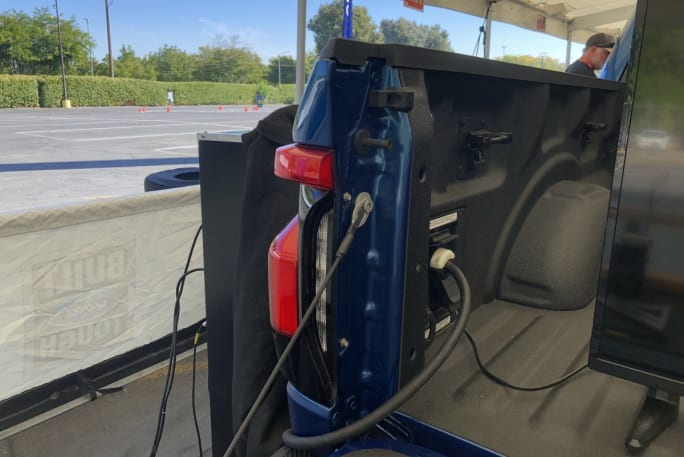
Photo: Thi Dao
3. Dual onboard chargers enable faster charging.
Dual inverters allow Level 2 charging at faster than the normal rate — because it sucks in power faster, up to 80% faster, Turnbull said. The benefit? This allows for full overnight charging and may negate the need for DC fast charging, which can degrade batteries.
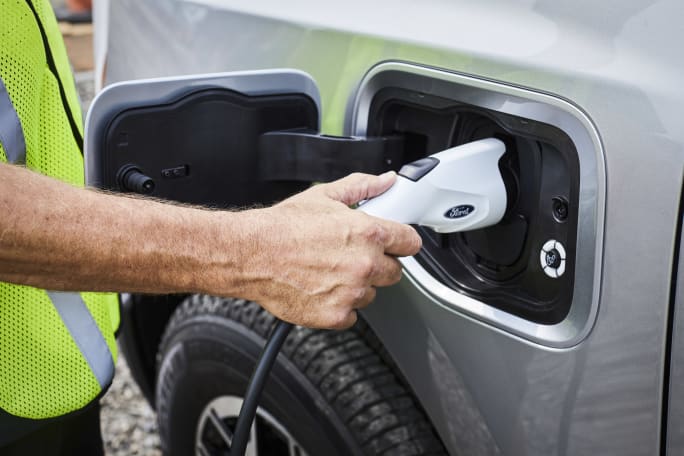
Photo: Ford
4. The standard vehicle has an estimated 230 miles of range, while an extended range version offers 300 miles.
Telematics data shows that the average F-150 commercial customer travels less than 174 miles daily. This data led Ford to develop a 230-mile range vehicle, so fleet operations don’t have to pay more for battery power they don’t need.
The vehicle’s Intelligent Range system will calculate the range needed to complete a trip, considering factors such as route, temperature, terrain, and cargo and trailer load, to ease driver range anxiety, Turnbull explained.
5. Equipment and accessories are transferrable.
The Lightning is a four-door, five-passenger vehicle with a 5-½-foot bed. Equipment and accessories from other F-150s with the same configuration can be transferred to this vehicle, eliminating the need to purchase new accessories.
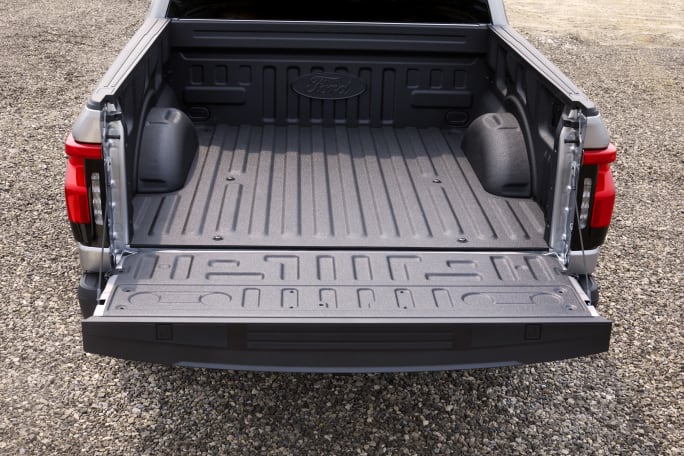
Photo: Ford
6. Ford offers energy management for cheaper charging.
Ford recently acquired Electriphi to help its commercial customers with depot charging and energy management. The system controls charging so the vehicle pulls power during the most optimal times when energy is cheaper.
7. It starts at under $40,000.
The Ford Lightning Pro has an MSRP of $39,974 for the standard range (with 426 hp) and $49,974 for the extended range (563 hp) — without federal and local incentives and rebates.
Subscribe to Our Newsletter
More Green Fleet
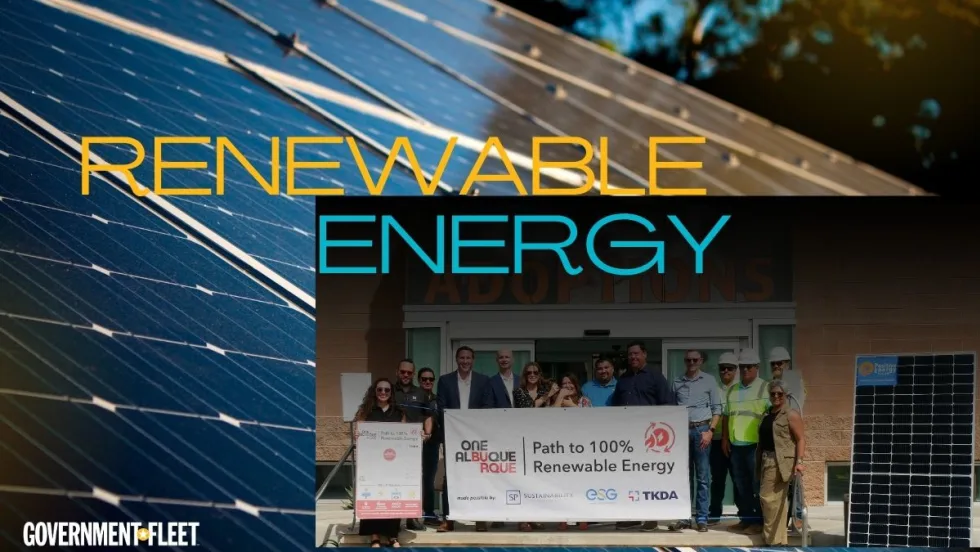
Sustainability Partners, Energy Systems Group Help Albuquerque Close the Gap on its 100% Renewable Energy Goal
The eight-site, 6 MW solar project has advanced the city toward 100% renewable energy for municipal operations.
Read More →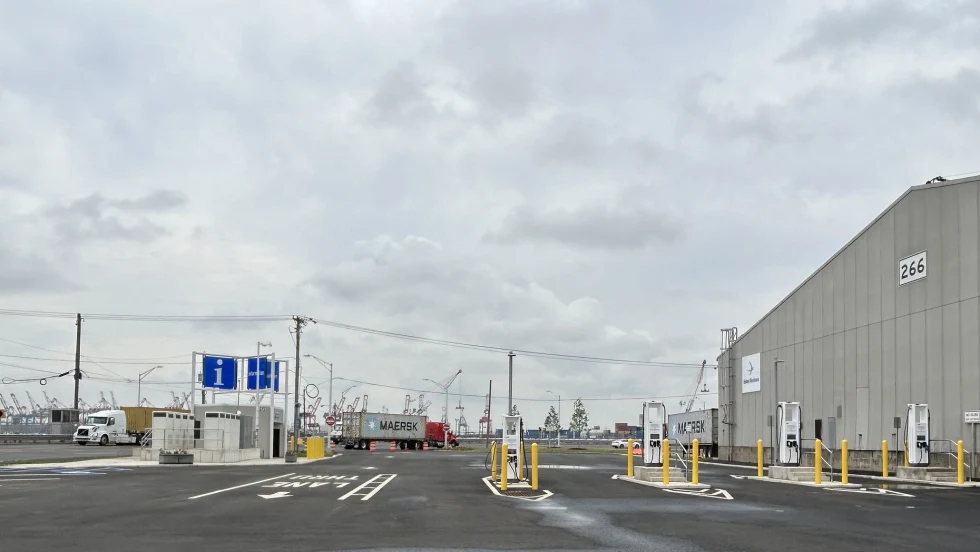
Port Authority and CALSTART Launch $45 Million Electric Truck and Charging Programs
The programs aim to boost sustainable operations across the East Coast's busiest seaport.
Read More →
Moving Government Fleets Beyond the Vehicle Purchase: EV as a Service
A discussion on how EVaaS is moving beyond pilot programs and what fleets should consider before beginning a larger deployment.
Read More →
Moving Government Fleets Beyond the Vehicle Purchase: EV as a Service
As fleets move beyond small EV pilots, Sustainability Partners CEO Adam Cain explains how EVaaS can address the infrastructure and long-term planning required for larger deployments.
Read More →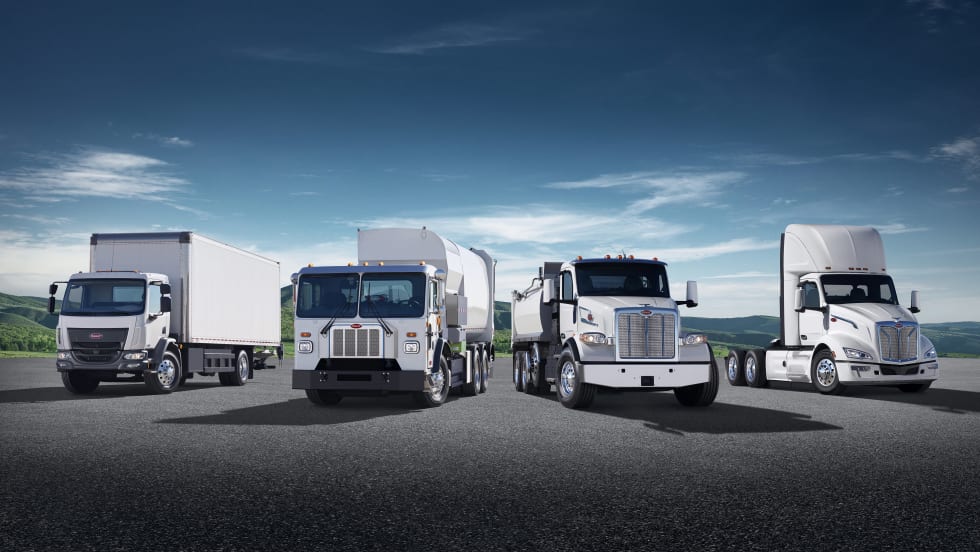
Peterbilt Expands Sourcewell Partnership with Electric Vehicle Lineup
The agreement aims to provide streamlined procurement of Peterbilt trucks for government, education, nonprofit and tribal organizations across the United States and Canada.
Read More →
EV Adoption & Charging Challenges
Where is your fleet in the journey of vehicle electrification? If you're still looking for answers to fleet electrification you've come to the right place.
Read More →
Hawaii Passes Clean Fuel Policy
Hawaii lawmakers passed clean fuel legislation that could support renewable natural gas production, biogas-powered transportation, and lower-carbon fueling options for public and commercial fleets.
Read More →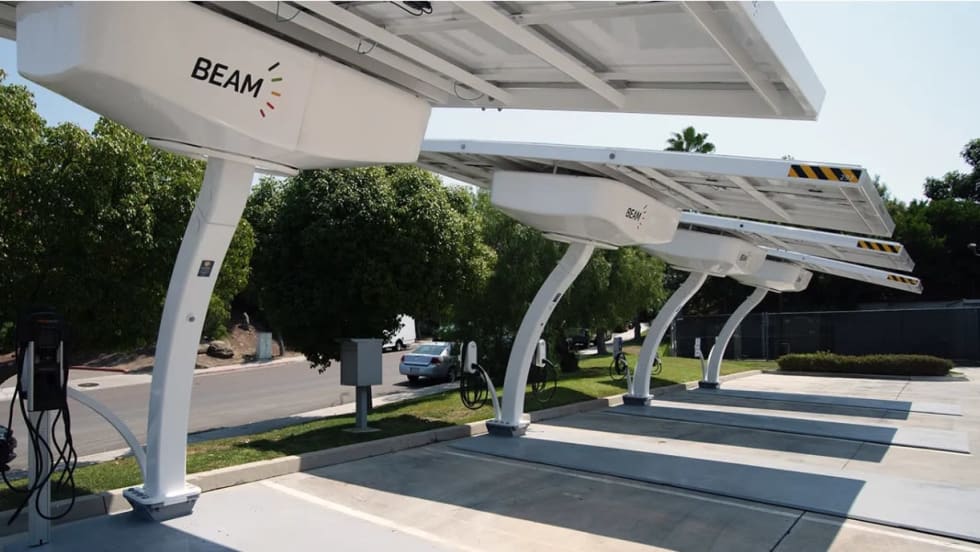
Stanislaus County Deploys Ten Beam Global EV ARC Systems to Support County Fleet Electrification
Stanislaus County deployed 10 off-grid solar-powered EV charging systems and a mobile charging trailer from Beam Global to support its electric fleet operations and emergency response flexibility.
Read More →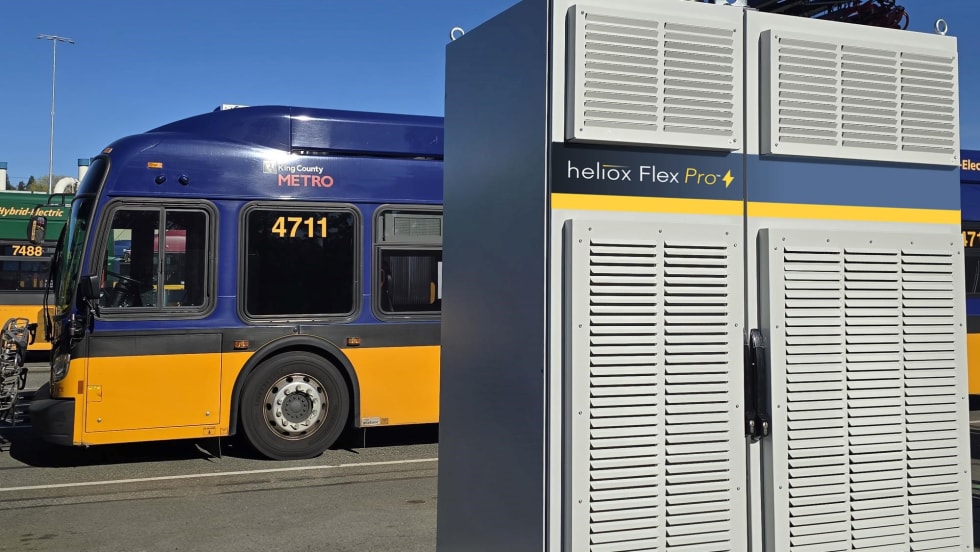
Heliox Pilots 480-kW Bus Charger with King County Metro
King County Metro is piloting Heliox’s new 480-kW Flex Pro charger to support expansion of its battery-electric bus fleet and depot charging infrastructure. The compact charging system supports pantograph and plug-in charging configurations for high-density transit operations.
Read More →