




2007 Chevrolet Police Tahoe Safely Built for Speed & Utility
Compared to its retail counterpart, the 2007 Police Tahoe is standard-equipped with a 5.3L V-8 and built lower to the ground for improved handling. Safety features provide 360-degree occupant protection.
The first SUV designed from inception as a law enforcement vehicle, the redesigned 2007 Chevrolet Police Tahoe full-size SUV delivers more power and standard safety features and enhanced performance than its predecessor. GM’s StabiliTrak electronic stability system — among Tahoe’s most innovative safety features — helps keep the vehicle on its intended path, preventing wheel slip and oversteer, by applying pressure to individual brakes.
Police vs. Retail Tahoe
Compared to its retail counterpart, Police Tahoe is lower to the ground for improved handling, especially at high speeds.
“The 2007 Police Tahoe includes a number of law enforcement-specific enhancements. These enhancements were achieved during the design phase, resulting in a Police Tahoe available to law enforcement agencies with features that set it apart from retail Tahoes,” said Bruce Wiley, manager of law enforcement and specialty vehicles for GM.
The 2007 Police Tahoe’s fully integrated electrical system enables upfitters to easily install police equipment, including light bars and police radios. With second-row seats folded flat, Police Tahoe totals 108.9 cubic feet of cargo space intended for police gear and equipment, including gun cases and haz-mat equipment.
Built for Pursuit
Police Tahoe’s standard Vortec 5.3L V-8 engine has been overhauled for 2007. At 320 horsepower and 340 lb.-ft. of torque, the 2007 engine is mated to a four-speed automatic transmission with overdrive and delivers 25 more horsepower and an additional 10 lb.-ft. of torque than the 2006 version. According to Michigan State Police law enforcement vehicle testing, the 2007 Police Tahoe reached 0-60 in 8.66 seconds.
GM’s Active Fuel Management technology results in improved fuel economy by seamlessly transferring to four-cylinder mode when V-8 power is unnecessary. The 5.3L-equipped models are E-85-capable and can achieve combined fuel economy ratings of 20.5 mpg on 2WD models.
Built for pursuit, Police Tahoe is fitted with H-rated tires (compared to S-rated on retail models) mounted on 17-inch steel wheels. Wider front and rear tracks also enhance handling and provide a lower center of gravity for improved stability.
360 Degrees of Occupant Safety
Police Tahoe’s 360-degree perimeter occupant-protection safety system and crash-avoidance technologies include standard dual-stage driver and front-passenger frontal airbags, optional roof-mounted head curtain side airbags with rollover protection for all seating rows,
four-wheel ABS brakes, and front-seat safety belt pretensioners linked to the vehicle’s sensing system that deploy during rear-end impact.
More Operations

Hazard Alerts, Fleet Car Sales Rise and a New Shuttle Concept
Fleet car sales doubled, but the bigger picture tells a different story in this week’s roundup.
Read More →
How St. Johns County Turned Fleet Data Into Better Replacement Decisions
St. Johns County, Florida, had fleet data, but turning it into reliable decision guidance was another matter. Instead of starting over with a new fleet management system, the county connected existing tools and built a scoring system that gives managers an objective look at fleet health.
Read More →
Fleet Forward Conference Introduces One-Day Passes for 2026
New one-day registration lets fleet professionals attend Tuesday, Wednesday, or Thursday, with passes available for $249.
Read More →
ENC Unveils its ZAVIR Medium-Duty Shuttle
Two variants of the concept shuttles were revealed: a low-floor configuration and a high-floor configuration.
Read More →
Could Your Next Fleet Technician Start as an Intern?
What if your next technician hasn’t worked in a fleet shop yet? What fleets are doing to free up time.
Read More →
How Phoenix Is Building Its Next Generation of Fleet Technicians
With more than 8,000 vehicles and pieces of equipment to maintain, the City of Phoenix could not afford to wait for fully trained technicians to walk through the door. Instead, they revamped their entire workforce strategy and showed how public fleets can create their own talent pipeline while preparing existing employees for increasingly complex vehicles.
Read More →
What’s Slowing Your Fleet Down?
Could a change in how work gets done help your fleet return vehicles to service sooner?
Read More →
Can Public Fleets Trust the Data Driving Their Decisions?
Public fleets have more data than ever, but inconsistent records and missing information can still undermine maintenance, replacement, and cost decisions.
Read More →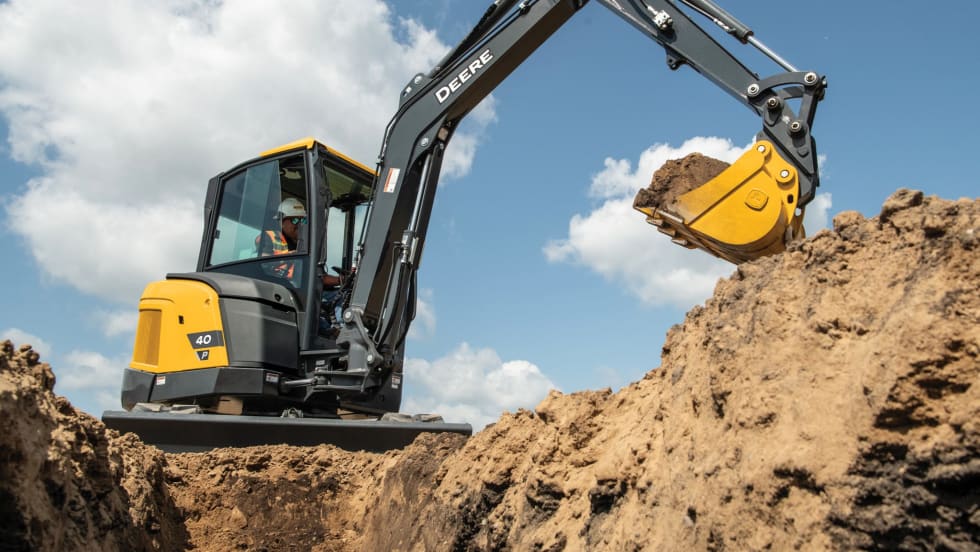
John Deere Introduces 40 P-Tier Compact Excavator
John Deere is adding a compact excavator designed for crews that need to move equipment between jobsites and handle multiple types of work with one machine. The 40 P-Tier weighs less than 10,000 pounds and offers configurable hydraulics, attachment options, and connected fleet-management capabilities.
Read More →
How Leading Fleets Improve and Why Business Plans Matter
This week, we look at what past Leading Fleet winners can teach us about making progress, plus how to build a business plan your fleet will actually use.
Read More →