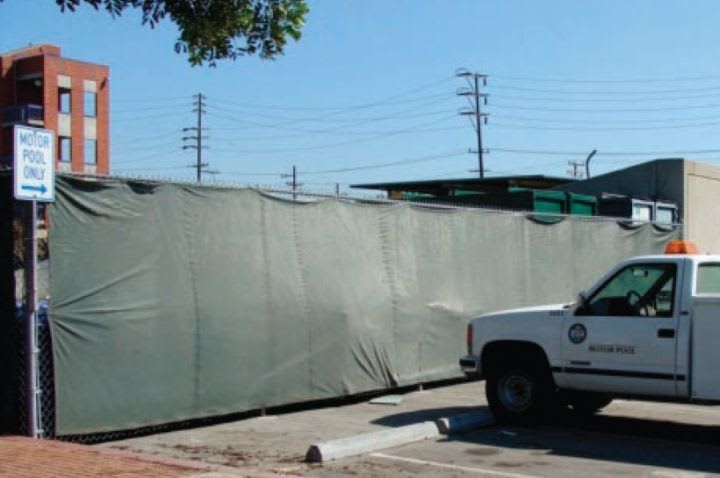
Central motor pools offer cost-effective utilization of extra fleet units. Rotated use and preventive maintenance can extend vehicle lifecycles, while units flexibly serve the collective needs of end-user departments.
Spare vehicles are considered extra units, without associated costs, presumed to sit idle, incurring no significant fuel or maintenance costs. At one time, too costly to own and operate, they were replaced with new units. Now, however, we annually review our fleet needs and wants and remove excess units without replacing them.
Replacement vehicles are funded with capital dollars. Extended service-life vehicles are funded with operating dollars. Most replaced units are auctioned off, traded in, or scrapped.
End Users Can Present Obstacles to Managing Spares End-user departments and executives can present obstacles to cost-effectively managing spare vehicle resources. Many hold on to the “best of the worst” units for backup, a spare that costs nothing to retain. They feel they can’t rent a unit because theirs are application-specific, have standardized controls, are fully marked with fleet decals, and are readily available.
Ad Loading...
But difficulties occur if the spare units are kept at the end user’s location. The units usually are idle for long periods. Whether stored inside a building or outside in a lot, an idled vehicle deteriorates through non-use and is subject to rust, corrosion, cannibalization, lack of preventive maintenance, and dead batteries due to parasitic drag from in-vehicle technologies such electronic control units, dashboard gauges, electric components amperage, and voltage draw. When finally pressed into service, the idled vehicle performance is non-dependable or even inoperable. The spare becomes despair.
Motor Pools Best Strategy for Cost-Effective Spare Utilization The best strategy is to put spare vehicles in the organization’s motor vehicle pool. Through a central motor pool system, end-user departments have a ready source to replace units temporarily out of service for excessive maintenance and repair, accidents, and/or excessive abuse. When unused for three to six months, motor pool units can be removed from service as excess and disposed of cost effectively. Fleet vehicle removal is easier in the motor pool since no single end-user claims ownership.
Idled spares cost more to own and operate than the same make and model in the central motor pool. Rotated in service through a central motor pool, spare units avoid deterioration caused by non-use.
A central motor pool ensures the spare vehicle is available, reliable, and cost effective. Operated on a first-come, first-serve basis, motor pools can factor in emergencies to determine adequate size and depth to accommodate prosecutor, sheriff, law enforcement needs, as well as public works’ snow, rain, and ice control services.
[PAGEBREAK]
Better Quality Vehicles & Skilled Technicians Today’s vehicles offer quality and design uncommon 25-20 years ago. Built to last longer in the current competitive vehicle manufacturing environment, reliable light-duty vehicles achieving 200,000 miles and heavy-duty vehicles recording 300,000 miles in an urban environment are now possible. Rural and interstate application-specific environments support even more reliable and cost-effective lifecycles.
Today’s vehicle maintenance technicians and mechanics are also better-qualified and well-trained. Their input to supervision and management, drawn from direct hands-on experience with vehicle servicing, and team buy-in make best practices even better today. We’re seeing repairs we have never seen before. For example, vehicle hydraulic brake lines were never replaced in the past because vehicle brake lines outlived the vehicle’s life. Today, vehicles last longer so component lifecycles must be extended as well.
Ad Loading...
Component lives have been extended due to better technology. Tires, brakes, steering, suspension, cooling, air conditioning, electrical lights, starters, alternators, batteries, drivelines, engines, and transmissions all last reliably longer in their application-specific environment. Warranties are better and longer, and OEMs confirm that components are lasting longer.
Fleets and organizations resemble teams. Player backups are maintained so each position has a spare according to need. However, simply because the team carries 10-12 pitchers doesn’t mean the same number of first basemen, catchers, left fielders, etc., are required as well. Fleets determine the mix and density of the motor pool content, cost-effectively serving end users with reliable spare units.
Similarly, fleet service people know “young” vehicles require different services than “mature vehicles.” Mounted equipment needs are different from chassis to chassis, and application to application. Rotating use keeps spares reliable longer and more cost effective. The central motor pool vehicle concept works best for the end user and for the company.
Chief executives should support the best qualified and experienced motor pool managers, supervisors, technicians, mechanics, laborers, and semi-skilled workers who perform their tasks efficiently and reliably through cost effective best practices due to their collective experience.
John Dolce is a fleet specialist at Wendel Duchscherer Architects & Engineers. He can be reached at johnedolce@yahoo.com.
In this monthly lookback, we’re talking about Women’s History Month coverage, the latest Government Fleet salary data, how fleet leaders are dealing with nonstop change, and more.
Safety and productivity go hand-in-hand on today’s vocational jobsites. The Freightliner 114SD Plus combines advanced driver-assist technologies with proven reliability to keep crews moving constantly from start to finish. Learn how safety by design can protect your team, reduce risk, and maximize uptime.
Isuzu and Aebi Schmidt launched a new body program that offers dealers preconfigured, work-ready trucks to streamline upfitting and reduce delivery times.
For government agencies, dash cams have moved from a nice-to-have to a necessity—not just for public safety, but also for operational efficiency and cost savings. Download the full report today for insights from fellow public sector leaders on how dash cams are reducing risk, lowering premiums, and delivering clear ROI.
Government fleet managers report steady salary growth and expanding responsibilities, but an aging workforce, technician shortages, and rising technology demands are creating new long-term challenges.
As more fleet operators have their heads turned by AV technology, the conversation shifts from possibility to operational reality. Government and public-sector fleets need to begin preparing today to ensure they’re ready for an autonomous future.
Submissions for most awards close Friday, March 13; review award categories, confirm eligibility and requirements, and wrap up your entry before the deadline.