In the cities of South Bend, Ind.; Orlando, Fla., and Littleton, Colo., markups range from 15 to 25 percent. Most want to help cover costs with markups, but one fleet manager is investigating building a revenue-generation operation.
by Steve Bennett
November 1, 2008
4 min to read
Ad Loading...
Markups for time and materials are standard for municipal fleet maintenance departments, which, as internal service funds, must recoup costs. Determining a markup amount is a matter-of-fact process, managers report. Yet, variables inevitably come into play and demand consideration.
"We have three different labor rates depending on what we’re doing," said Matt Chlebowski, director of the Central Services Division for the City of South Bend, Ind. Among other duties, Chlebowski oversees a fleet of 865 vehicles used on city streets, plus another 360 pieces, including trailers, mowers, etc.
Ad Loading...
The fleet maintenance department operates two facilities from 6 a.m. to mid-night, employing 23 full-time mechanics. Different labor rates are charged for automotive repair, heavy truck repair, and the department’s welding shop, which handles fabrication and hydraulic work.
Until this year, the department had still another labor rate for work performed in its body shop. "It was full service, with three men in there, but we found it just didn’t pay for us to stay in the business," Chlebowski said. "We outsourced that this year."
The parts markup charged to other departments is 25 percent, Chlebowski said. "Even at a 25-percent markup, the price is still much less than a dealership’s because we do get municipal discounts," he pointed out. Those discounts often are made deeper by the large volume of parts the City orders, Chlebowski said. To make sure that remains so, he said, "We check up on the vendors’ parts pricing" periodically during the course of a year.
[PAGEBREAK]
The department makes exceptions to the 25-percent markup, for example, in cases where a fire department truck needs a new pump or a public works department dump truck needs a transmission replaced.
Ad Loading...
"We don’t do transmission work in-house," Chlebowski said. "We’re not going to charge 25 percent on that huge price for making one phone call" to a dealer or manufacturer for a part that the department doesn’t have in its own inventory, he explained. Likewise, if the department installs eight new tires on a heavy truck, the customer department is not charged a 25-percent markup on the cost of the tires. Chlebowski said he reduces the markup in such cases, using his judgment to determine a fair dollar amount.
Lee Whitehurst, fleet maintenance director for the City of Orlando, Fla., reported, "We mark our parts up 15 percent. Labor is $71 an hour — that’s what we charge other departments. That’s competitive against the outside."
Whitehurst added, "If an outside transmission shop handles a transmission job and the bill is $3,000, we’ll add a 15-percent markup and charge the department."
Charging a 15-percent markup on both parts and outsourced labor has proven a fiscally sound practice, Whitehurst noted. "That has been able to keep us solid," he said. "We come in over what we’ve spent. We’re never in the red."
"Basically, the parts markup in combination with our labor rate just has to cover our overhead," said Alan Brown, fleet manager for the City of Littleton, Colo., which operates some 300 vehicles with four mechanics. "We keep our labor rate low and charge 20 percent on parts," Brown said. "It’s not a fully burdened labor rate. The parts markup makes up the difference there."
Ad Loading...
[PAGEBREAK]
The fleet managers indicated maintenance management software programs automatically calculate markups on the work orders. They use software provided by several vendors, including CCG Systems, Hansen Information Technologies, and HTE.
Because maintenance management programs archive work orders, the managers said they review past figures to pinpoint markup contributions to revenue needed to cover overhead.
Operating as an internal service fund, the fleet maintenance department "backs into" its budget, Whitehurst said. "We already know what our overhead is. Then we determine what revenue we’re going to generate based on last year’s historical data from work orders our mechanics generated," he explained.
At least one city’s fleet maintenance manager aims to turn his department into a revenue-generating operation. The manager said he and other city officials are discussing a plan to build a larger maintenance facility to offer vehicle maintenance services to nearby smaller municipalities.
Ad Loading...
The city would offer smaller communities maintenance services primarily for police and fire department vehicles, according to the plan. "That’s the majority of what these smaller cities have, other than maybe a knuckle boom truck or something like that" for use clearing trees and fallen limbs following storms, the maintenance supervisor said. Garbage collection in the surrounding communities, for example, is typically contracted to private companies, he said.
The police and fire departments of the nearby communities generally have too few vehicles to justify running their own maintenance facilities and instead have the vehicles serviced at dealer locations, said the city fleet maintenance supervisor.
"Right now, having their vehicles serviced at dealerships, they’re paying labor rates in the neighborhood of $85 to $105 per hour," the maintenance supervisor said. By comparison, his fleet department most likely will charge a $50-$70 hourly labor rate with a 20-percent markup on parts, he said.
In this monthly lookback, we’re talking about Women’s History Month coverage, the latest Government Fleet salary data, how fleet leaders are dealing with nonstop change, and more.
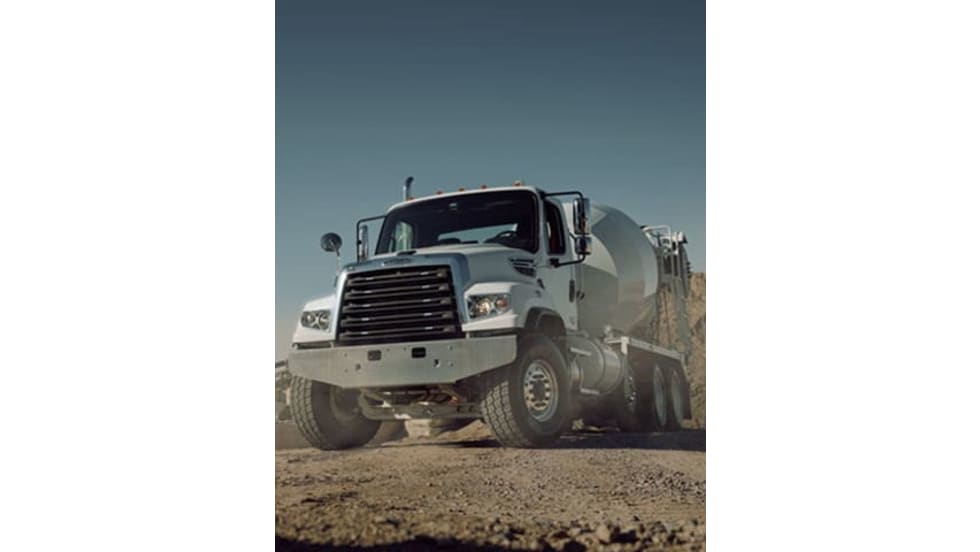
Safety and productivity go hand-in-hand on today’s vocational jobsites. The Freightliner 114SD Plus combines advanced driver-assist technologies with proven reliability to keep crews moving constantly from start to finish. Learn how safety by design can protect your team, reduce risk, and maximize uptime.
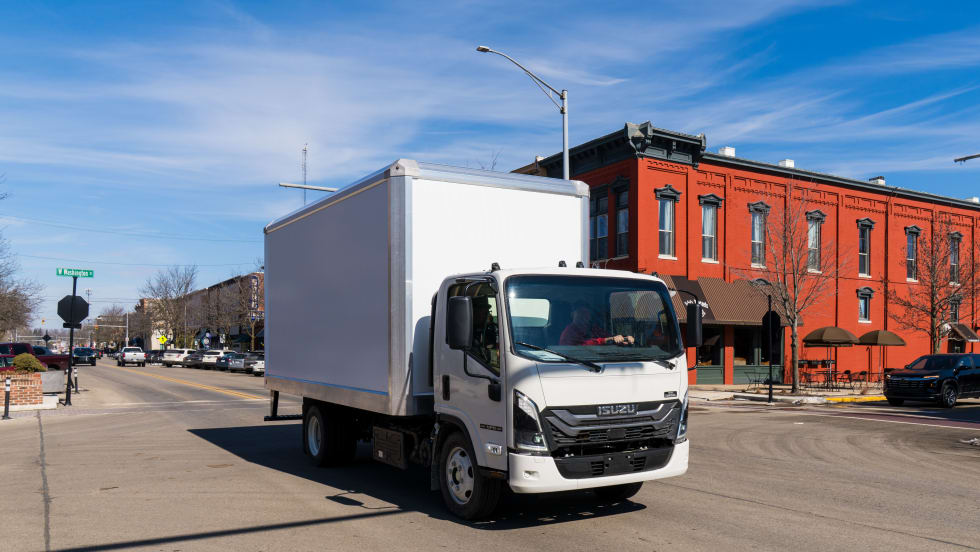
Isuzu and Aebi Schmidt launched a new body program that offers dealers preconfigured, work-ready trucks to streamline upfitting and reduce delivery times.
For government agencies, dash cams have moved from a nice-to-have to a necessity—not just for public safety, but also for operational efficiency and cost savings. Download the full report today for insights from fellow public sector leaders on how dash cams are reducing risk, lowering premiums, and delivering clear ROI.
Government fleet managers report steady salary growth and expanding responsibilities, but an aging workforce, technician shortages, and rising technology demands are creating new long-term challenges.
As more fleet operators have their heads turned by AV technology, the conversation shifts from possibility to operational reality. Government and public-sector fleets need to begin preparing today to ensure they’re ready for an autonomous future.
Submissions for most awards close Friday, March 13; review award categories, confirm eligibility and requirements, and wrap up your entry before the deadline.