Government Fleet Logo
MenuMENU
SearchSEARCH

Garden State Parkway Reduces Operating Costs Utilizing Diesel

Diesel fuel provides Garden State Parkway's vehicles with increased horsepower and torque, better fuel economy, engine longevity, and longer vehicle service intervals.

by Staff
September 1, 2004
Garden State Parkway Reduces Operating Costs Utilizing Diesel

New Jersey Garden State Parkway uses diesel engines in 90 percent of its maintenance vehicles, reducing service intervals and operating costs.

3 min to read


Ad Loading...

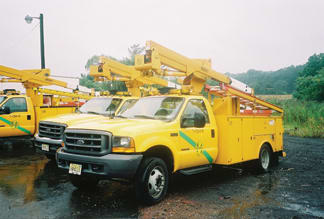
In 1992, New Jersey Garden State Parkway began using diesel engines in 32 of its fleet vehicles to combat high operating costs. Today, more than 90 percent of the fleet’s 300 maintenance vehicles run on diesel fuel. “Due to the severe service of our units and extended idling time, diesel has been a cost benefit to us,” says John Tobia, Garden State Parkway fleet manager. “Using diesel allowed us to increase our service life and, at the same time, reduce our operating cost.” Pilot Test Proved Diesel Fuel Efficiency and Cost Savings
Tobia analyzed the cost of diesel in 1992 with a pilot test of 32 pickup trucks. As each pickup was eligible for replacement, it was converted to diesel engines. In the first nine months of operation, the conversion cost was completely recouped. “We saved $332,000 in fuel and reduced maintenance costs substantially during the pilot test,” said Tobia. The Garden State Parkway fleet consists of Ford Super-Duty pickup trucks outfitted with Power Stroke diesel engines (both 7.3L and the new 6.0L) built by International, as well as International trucks used by the maintenance department. The police drive Crown Victorias and Durangos, and the administration department uses Ford, Chevy, and Dodge vehicles. Currently, only vehicles used by the maintenance department run on diesel because of the wear and tear those vehicles undergo. The effects of changing to diesel significantly impact the vehicles’ replacement cycles. Gasoline-powered pickup trucks are replaced at four years, while diesel pickups typically run two years longer, and are now replaced at six years. Diesel Fuel Provides Better Fuel Economy and Engine Longevity
Since switching to diesel engines, maintenance has been reduced and fuel economy has increased. According to Tobia, the many advantages of using diesel fuel include:

  • Increased horsepower and torque.

  • Better fuel economy.

  • Longer intervals between vehicle service, thus reducing operating cost.

  • Longevity of engines. “It is important that preventive maintenance standards are adhered to,” says Tobia. “We run a strict maintenance schedule, which further allows us to reduce operating costs.” Since switching over to diesel, the maintenance fleet has replaced fewer engines. “Since 1992, we’ve lost only three engines in our pickup fleet,” says Tobia. Fleet Looking Toward Using Biodiesel Alternative Fuel
    Tobia also pilot-tested biodiesel fuel in 1993 for a period of one year in a Ford F-250 and three International trucks with dump bodies, as well as in a John Deere articulated loader, a John Deere forklift, and a Toro mower. During the test, vehicles ran on 20-percent biodiesel (a soybean and vegetable oil blend) and 80-percent conventional diesel. “We were the first fleet in New Jersey to do a biodiesel pilot program,” said Tobia. The primary benefit of biodiesel is reduced emissions and exhaust. Tobia also noted that he had engine modifications using biodiesel. Other New Jersey agencies have adopted Garden State Parkway’s findings on biodiesel. Tobia says that because of the positive results they experienced with the biodiesel pilot program, Garden State Parkway plans to implement the use of biodiesel fuel in its vehicles to help meet future emissions regulations.

Topics:Operations
Subscribe to Our Newsletter

More Operations

executive editor with images of community and networking.
OperationsApril 1, 2026

Finding Your People | The Fleet Breakroom

Why the fleet community matters, how it helps with education and support, and why asking questions can save you more trouble than you think.

Read More →
the dispatch text with images of vehicles, women in fleet, and ev charging.
OperationsMarch 30, 2026

Women in Fleet, Salary Trends, AI, and More| The March Dispatch

In this monthly lookback, we’re talking about Women’s History Month coverage, the latest Government Fleet salary data, how fleet leaders are dealing with nonstop change, and more.

Read More →
freightliner whitepaper
SponsoredMarch 26, 2026

Safety by Design: Power and Protection in the Freightliner 114SD Plus

Safety and productivity go hand-in-hand on today’s vocational jobsites. The Freightliner 114SD Plus combines advanced driver-assist technologies with proven reliability to keep crews moving constantly from start to finish. Learn how safety by design can protect your team, reduce risk, and maximize uptime.

Read More →
Ad Loading...
Isuzu commercial box truck driving in an urban area, representing a new body program with Aebi Schmidt that provides preconfigured, work-ready trucks for fleet customers.
Operationsby News/Media ReleaseMarch 24, 2026

Isuzu Launches New Premium Body Program with Aebi Schmidt called Advantic

Isuzu and Aebi Schmidt launched a new body program that offers dealers preconfigured, work-ready trucks to streamline upfitting and reduce delivery times.

Read More →
A Samsara report cover titled 'The Exoneration Factor: How Dash Cams Reduce Risk and Deliver Clear ROI for the U.S. Public Sector,' featuring a close-up photo of a dash cam mounted on a vehicle windshield with a driver reflected in the rearview mirror and a desert road visible in the background.
SponsoredMarch 24, 2026

How Dash Cams Reduce Risk and Deliver Clear ROI for the U.S. Public Sector

For government agencies, dash cams have moved from a nice-to-have to a necessity—not just for public safety, but also for operational efficiency and cost savings. Download the full report today for insights from fellow public sector leaders on how dash cams are reducing risk, lowering premiums, and delivering clear ROI.

Read More →
paper people in pink and blue holding up signs
Operationsby Jeanny RoaMarch 23, 2026

2026 Government Fleet Salary Study: Pay Holds Strong as Workforce Pressures Mount

Government fleet managers report steady salary growth and expanding responsibilities, but an aging workforce, technician shortages, and rising technology demands are creating new long-term challenges.

Read More →
Ad Loading...
hall of fame logo with award
Operationsby Staff WriterMarch 17, 2026

Last Chance: 2026 Public Fleet Hall of Fame Nominations Close Today

Do you know a fleet leader who has made a lasting impact on the industry? Nominate this fleet professional for the 2026 Public Fleet Hall of Fame.

Read More →
The text 'the future of fleet' with an image of an autonomous car on the road and the GF logo.
OperationsMarch 14, 2026

How to Prepare Government Fleets for Autonomous Vehicle Deployment

As more fleet operators have their heads turned by AV technology, the conversation shifts from possibility to operational reality. Government and public-sector fleets need to begin preparing today to ensure they’re ready for an autonomous future. 

Read More →
Checklist with text 'cheat sheet' and female technician.
OperationsMarch 13, 2026

Autonomous Vehicles, Women in Fleet & Last Call for Entries | GovCast Shorts

On the go and want a snapshot of our top industry news? Check out Government Fleet's new video short of what's been happening.

Read More →
Ad Loading...
image showing several awards with the Government Fleet logo.
Operationsby Nichole OsinskiMarch 13, 2026

Last Day to Apply: Government Fleet Awards

Submissions for most awards close Friday, March 13; review award categories, confirm eligibility and requirements, and wrap up your entry before the deadline.

Read More →