




GSA Markets Auction Vehicles to the Public
Public auctions are well suited for the U.S. General Services Administration's low-mileage, well-maintained vehicles. GSA Fleet sales totaled about 40,000 vehicles in 2003.

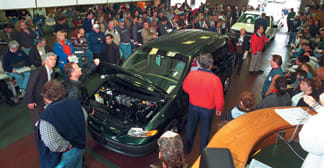
The U.S. General Services Administration (GSA Fleet) replaced 40,300 (20 percent) of its 193,000 fleet vehicles in 2003. The majority of these vehicles (about 97 percent) were sold at auction. The rest were sold directly to the state through a State Agency for Surplus Property (SASP) program.
GSA Fleet held 297 public auctions in 2003, selling an average of 130 vehicles per auction at an average purchase price of $5,300. GSA Fleet prefers auctions as the resale method of choice because of the number of vehicles turned around each year.
“Because we move our vehicles in volume, there’s really no other way to resale effectively than selling at auction,” says Lander Allin, national director of remarketing for GSA Fleet, located in Arlington, Va. “We’re selling in a very efficient marketplace. We strive to match the marketplace.”
With a nationwide team of 50, Allin manages the remarketing of a wide variety of fleet vehicles including sedans, pickups, minivans, SUVs, and extended vans, mostly Fords, Chryslers, and GM products. A small percentage of the fleet includes medium and heavy special-use vehicles. Sedans are typically replaced at 60,000 miles or four years, and light trucks, SUVs, and minivans are usually sold at five to six years or 60,000 miles.
GSA also owns 29,750 alternative-fuel vehicles (AFVs) — more than any other single organization in the United States — including sedans, pickups, buses, vans, delivery trucks, and specialty vehicles. GSA Fleet currently operates three types of AFVs including flexible-fuel vehicles containing a single fuel tank capable of operating on ethanol (E-85), gasoline, or a combination of both; bi-fuel vehicles that have two fuel systems, allowing the driver to switch between gasoline and compressed natural gas or propane; and dedicated-fuel vehicles that can only run on CNG or propane.
“We anticipate selling approximately 4,000 AFVs at auction in 2004,” says Allin. “These vehicles are an extremely good value for the buyer because they are much less expensive at the back end.”
Low-Mileage GSA Fleet Vehicles Draw Public to Auctions
GSA Fleet teams up with auction houses around the country to conduct public auctions throughout the year; however, most run from April through September when a majority of GSA Fleet vehicles are replaced. GSA Fleet works with 50 commercial auction houses nationwide and generally uses auctions in central locations. “We use the company that can do the best job selling cars for us,” says Allin. All auctions are open to the public. GSA Fleet switched from a regional auction to a national auction program three years ago, a move that helped consolidate marketing efforts and boost auction returns.
Each commercial auction house markets the GSA auction to the public and their dealer base using newspaper, radio, and television, although print comprises the bulk of the media campaign. GSA Fleet auctions draw a high number of attendees, usually 200 to 400 people. The marketing campaign focuses on the numerous benefits of GSA vehicles:
Significant savings.
No buyer’s fees.
Vehicles maintained in compliance with manufacturers’ specifications.
Low-mileage vehicles.
Well-equipped vehicles including air-conditioning, power steering, power windows and locks, and AM-FM radios.
Free auction attendance.
GSA Fleet Sales Move Online
During the last six months of 2003, GSA piloted an online auction program with AutoTrader.com and eBay Motors. “We offered GSA vehicles on the AutoTrader and eBay Web sites while vehicles were sitting at the auction house waiting for the live sale to take place,” says Allin. Vehicles were sold to the highest bidder or to the buyer who selected a “buy it now” price.
As of November 2003, GSA Fleet has sold 36 percent of the 379 vehicles offered online, with returns exceeding those from the more traditional auction house sales method. Vehicles that did not sell on the internet were offered at the auction location’s subsequent live sale. The pilot program was successful, and Allin plans to utilize the internet more often to auction GSA Fleet vehicles. The online auctions will continue to complement the live sales; Allin doesn’t foresee the internet sales replacing the live auctions.
Region 9 Uses Out-of-the-Box Auction Marketing Methods
GSA Fleet’s Region 9 remarketing department — including California, Nevada, and Arizona — frequently tests used-vehicle marketing and partnership programs.
According to Ernie Ayers, fleet vehicle sales manager for Region 9, located in Lancaster, Calif., many dealers with whom he works use GSA Fleet vehicles on their lot to attract customers. “GSA Fleet’s vehicles are one of the best hidden secrets in the used-car industry,” says Ayers. “We are slowly getting rid of the stigma of government cars being worn out, high-mileage cars. Our goal is to get our high-quality brand out to the public. We want people to think of GSA Fleet when they think of buying a used car.”
During the second quarter of FY 2003, Region 9 began working with Frontline Remarketing, Inc., on an auction marketing pilot program that complemented the existing marketing efforts each auction performs. Ayers managed the pilot program process. Approximately 1,200 GSA Fleet vehicles were sent through six auctions at various sites during the pilot program; models included the Dodge Stratus, Ford Taurus, as well as utility trucks, stake beds, box vans, and cab and chassis. “Frontline’s marketing efforts focused on public participation, an area in which some of the wholesale auction houses did not market,” says Ayers.
The pilot program garnered successful results for Region 9, including:
Increasing auction attendance by 20-40 percent.
Increasing resale values. Vehicles were auctioned 3-5 percent above usual sales prices. Before the pilot program began, Frontline researched Region 9 demographics and used the information to plan the marketing campaign. “Traditional marketing for an auction has high telemarketing turnover, and the focus is on a number of brands,” says Joe Blanco, president of Frontline Remarketing, located in Moreno Valley, Calif. “Our goal was to market an individual sale just for the GSA. We created a brand name and identity specifically for GSA.”
Trained Staff and Media Marketing Helped Test Succeed
Blanco then determined the number of support staff needed to achieve maximum geographical penetration, which included a bilingual staff. The next step involved training the staff about the unique attributes, features, and benefits of GSA Fleet vehicles.
“Great response to the customers was vital,” says Blanco. “We were able to convey to the customers that we believed in the GSA and their vehicles.”
The marketing campaign focused on the benefits of buying a GSA Fleet vehicle. The success of the pilot program was also aided by the use of various media to disseminate information, efforts that ran concurrently with the telemarketing. Broadcast faxes (in both English and Spanish) were sent to new- and used-vehicle dealers, and business owners with registered vehicles. Also, full-page and spot ads were placed in retail automotive publications in English and Spanish. Once the auctions were successfully marketed, promotions, such as a “buy-it-now” option, held during the auctions helped spur sales.
Ayers is also working on several other initiatives aimed at boosting GSA Fleet’s used-vehicle sales. They include:
A three-tier selling program, including a buy-it-now option during the inspection period, internet sales, and a live simulcast of the auction that allows online bidding.
A state agency surplus sales program, including a “live lane/live lot” system that allows GSA Fleet to post vehicles online and state surplus agencies to purchase them 24 hours a day, seven days a week. (Ayers predicts that the pilot program will begin with Auto Auction Services Corporation in the spring of 2004.)
A partnership with the Department of Energy (DOE) to secure Clean Cities Coalition help in promoting GSA AFVsales to the general public. Last March, Ayers held the first of four planned GSA Fleet Region 9 AFV auctions per year, events which the Coalition can attend and help educate consumers on public, state, and federal AFV benefits. Ayers will continue to work very closely with auction houses and commercial marketing firms on creative marketing. “Marketing is a wide-open door for us,” says Ayers. “Complacency doesn’t always get results. We’ll do what we need to get our brand out there.”
For more information on GSA Fleet auctions and vehicles, visit www.autoauctions.gsa.gov. To learn more about Frontline Remarketing, e-mail jblancoflr@aol.com.
More Operations

Is Keeping Older Fleet Vehicles Really Saving Money?
Is keeping vehicles longer saving money, and what happens when a diagnostic test points to the wrong fix?
Read More →
How Smart Fleet Strategy Can Help Local Government Agencies Do More with Less
Keeping a vehicle longer may ease this year’s budget, but what does it cost the next one? A closer look at fleet decisions can reveal opportunities to reduce spending while protecting essential services.
Read More →
Connect with Government Fleet on LinkedIn
From industry news and fleet management strategies to conversations with peers, Government Fleet's LinkedIn page offers public-sector fleet professionals another way to stay informed and connected.
Read More →
Town of Queen Creek Named Most Successful Fleet Award Winner of Inaugural RTA Fleet Success Awards
Five fleets were honored at RTA Connect 2026 in Chicago for excellence across resource efficiency, intentional culture, risk management, and stakeholder satisfaction.
Read More →
A buyer's guide to fleet management software in 2027
Buying fleet management software in 2027 means looking beyond features and price. As fleet operations, technology and expectations evolve, this guide explores what today’s fleet professionals should consider when choosing a system that can deliver value now and adapt to what comes next.
Read More →
Hazard Alerts, Fleet Car Sales Rise and a New Shuttle Concept
Fleet car sales doubled, but the bigger picture tells a different story in this week’s roundup.
Read More →
How St. Johns County Turned Fleet Data Into Better Replacement Decisions
St. Johns County, Florida, had fleet data, but turning it into reliable decision guidance was another matter. Instead of starting over with a new fleet management system, the county connected existing tools and built a scoring system that gives managers an objective look at fleet health.
Read More →
Fleet Forward Conference Introduces One-Day Passes for 2026
New one-day registration lets fleet professionals attend Tuesday, Wednesday, or Thursday, with passes available for $249.
Read More →
ENC Unveils its ZAVIR Medium-Duty Shuttle
Two variants of the concept shuttles were revealed: a low-floor configuration and a high-floor configuration.
Read More →
Could Your Next Fleet Technician Start as an Intern?
What if your next technician hasn’t worked in a fleet shop yet? What fleets are doing to free up time.
Read More →