





Want More? A Strategic Roadmap to Achieve a 100% Alternative Fuel Fleet by 2035
Stellantis EV-Native Platform to Be Used on 8 Models
The STLA Large platform will be used first for vehicles from the Dodge and Jeep brands. It initially includes battery packs with energy ratings between 85 and 118 kWh.
January 26, 2024
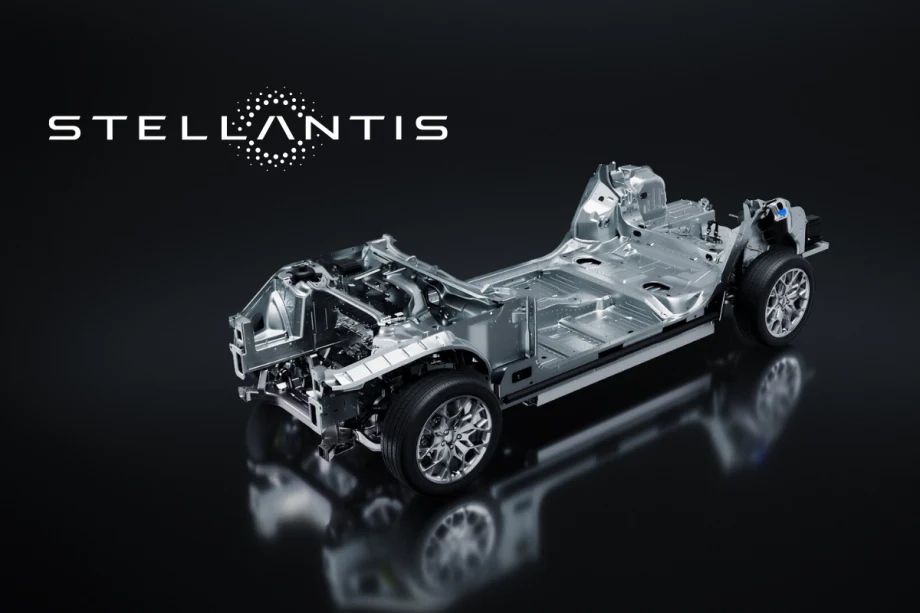
STLA Large will serve cars, crossovers, and SUVs between 2024 and 2026.
Photo: Stellantis
4 min to read
Stellantis has unveiled the latest of its battery-electric native platforms that will serve as the foundation for eight vehicles from 2024-2026.
The platform enables several capabilities including embedded energy, charging efficiency, high-performance vehicle dynamics, and Trail Rated off-road driving.
New Vehicles Coming Down the Pipeline
Full-size vehicles based on STLA Large are the core of customer demand in prime global markets and will be used first in the North American market on Dodge and Jeep brands, followed by other brands including Alfa Romeo, Chrysler, and Maserati.
The STLA Large platform is engineered with technology flexibility that enables greater levels of vehicle diversity from a base set of componentry, along with robust and cost-efficient manufacturing processes that can be duplicated in multiple assembly plants.
Upcoming products will cover a full spectrum of vehicle types, from cars to crossovers to SUVs, all of which will give customers the electric propulsion benefits of instant torque response combined with zero emissions.
Brand-specific product announcements will begin this year.
“Our goals for our STLA platforms are ambitious but this is what our customers need from us today,” Stellantis CEO Carlos Tavares said. “Creating a family of vehicles from a well-engineered set of components that is flexible enough to cover multiple vehicle types and propulsions, overperforming any of our current products, will address each of our iconic brands’ customers. The flexibility and agility of this platform is its hallmark and will be a driving force for our success in the shift to electrification in North America.”
Flexibility Enables Modifications
The platform’s flexibility enables engineers and designers to adjust the wheelbase, overall length, overall width and height, and ground clearance. A variety of suspension modules and powertrain cradles can be employed to suit vehicle specific performance objectives that include ride, handling, and comfort.
Engineers can adjust key dimensions, such as the front spindle to the driver foot, the front and rear overhang, or the passenger compartment floor, to fine-tune vehicle capabilities and performance.
Employing advanced high-strength materials, the platform is optimized for weight and rigidity.
Components within the platform are packaged to maximize usable interior space and storage. Key comfort and performance components, such as the cabin heating/cooling system, steering, braking assist, and propulsion are designed to minimize energy consumption to enhance driving range.
The flexibility includes the unibody platform’s propulsion systems. STLA Large is designed and engineered as a native BEV platform with the option of 400-volt and 800-volt electric architectures.
Three-in-one electric drive modules (EDMs) that incorporate the motor, power inverter, and gear reduction can be configured in front-wheel-drive, rear-wheel-drive, and all-wheel-drive layouts.
The power inverter employs silicon carbide semiconductor technology to minimize power losses. Propulsion system performance can be upgraded during the vehicle’s lifespan via over-the-air software updates, an emerging technology being offered on many EV models.
Based on specific vehicle objectives, STLA Large accepts drivetrain enhancements such as limited slip differentials or wheel end disconnects that can improve performance or reduce mechanical drag to improve efficiency and range.
Power and Range
The platform initially includes battery pack options with energy ratings between 85 and 118 kWh.
STLA Large targets an overall range of 500 miles for sedans and is engineered to easily accept future energy storage technologies when they reach production readiness. The initial generation of propulsion components holds the potential to deliver acceleration of 62 mph in the 2-second range.
Fast charging will add up to 4.5 kWh per minute to the 800-volt battery pack.
STLA Large also supports hybrid and internal combustion propulsion systems without compromising key vehicle capabilities. The flexibility provides a bridge for fleet customers during the transition to electric propulsion and the development of a robust and widely available charging network.
Design flexibility includes transverse and longitudinal engine mounting configurations, supporting FWD/RWD/AWD drivetrains.
STLA Large Metrics:
Overall length range: 187.6-201.8 in.
Overall width range: 74.7-79.9 in.
Wheelbase range: 113.0-121.1 in.
Ground clearance range: 5.5-11.3 in.
Maximum tire diameter: 32.6 in.
Expanding on the Stellantis Dare Forward 2030 Plan
STLA Large is one of four global BEV platforms outlined on EV Day 2021 that underpin the automaker's future products and are key to achieving the targets of the Stellantis Dare Forward 2030 strategic plan.
It is the second platform to be revealed following the release of STLA Medium in July 2023. STLA Large will be installed in several plants in Europe and North America and available in multi-energy variants, including hybrid and internal combustion.
Stellantis brands will tailor STLA Large vehicles to best fit the needs and desires of their customers.
The four Stellantis global BEV platforms – Small, Medium, Large, and Frame – are designed and engineered for extended lifecycles via the interchangeability of battery cell chemistry, EDMs, power inverters and software control.
The STLA Large platform supports Stellantis’ next-generation electrical and software-defined vehicle technologies – STLA Brain, STLA SmartCockpit, and STLA AutoDrive.
More Vehicle Research

Government Fleet Sales Fall in August Despite Year-to-Date Gain
Government fleet sales declined in August, but stronger year-to-date truck and SUV sales kept the overall 2026 total ahead of last year.
Read More →
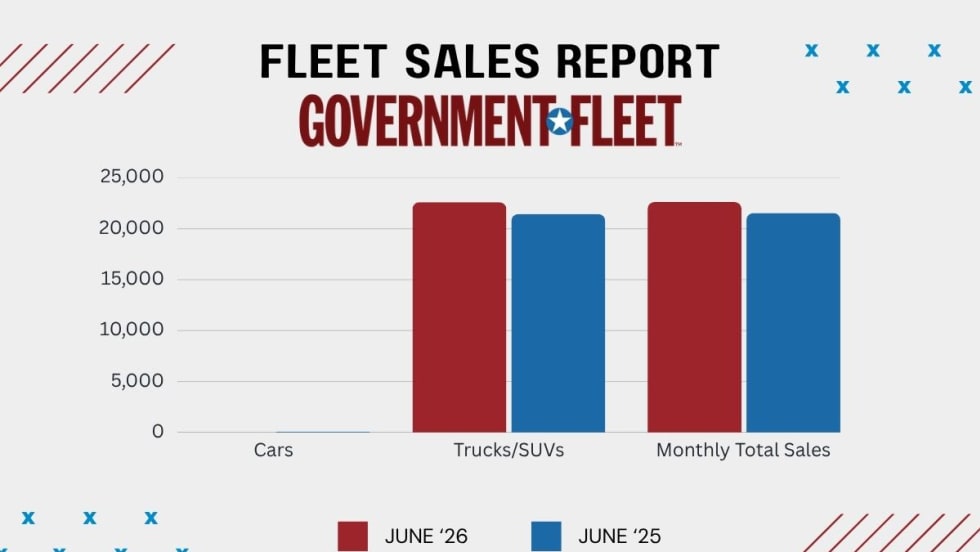
June Government Vehicle Sales See a Jump in Numbers
There were a reported 22,626 government fleet vehicles sold in June compared to 21,539 vehicles sold in June 2025.
Read More →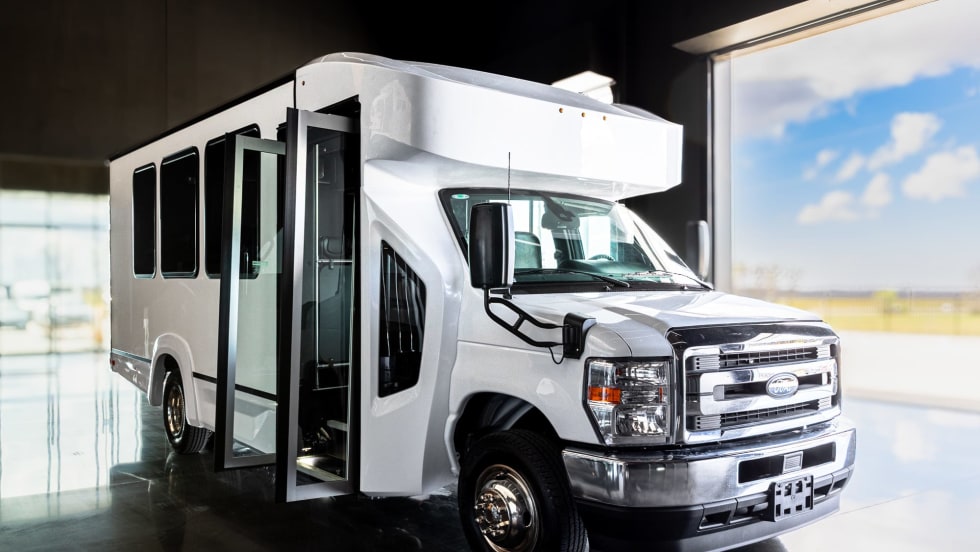
Master's Motors Introduces Shuttle Buses for Government and Commercial Fleets
Master's Motors has introduced two new shuttle bus models aimed at government and commercial fleet operators. The buses incorporate updated structural and accessibility features while offering configurable layouts for a variety of passenger transportation applications.
Read More →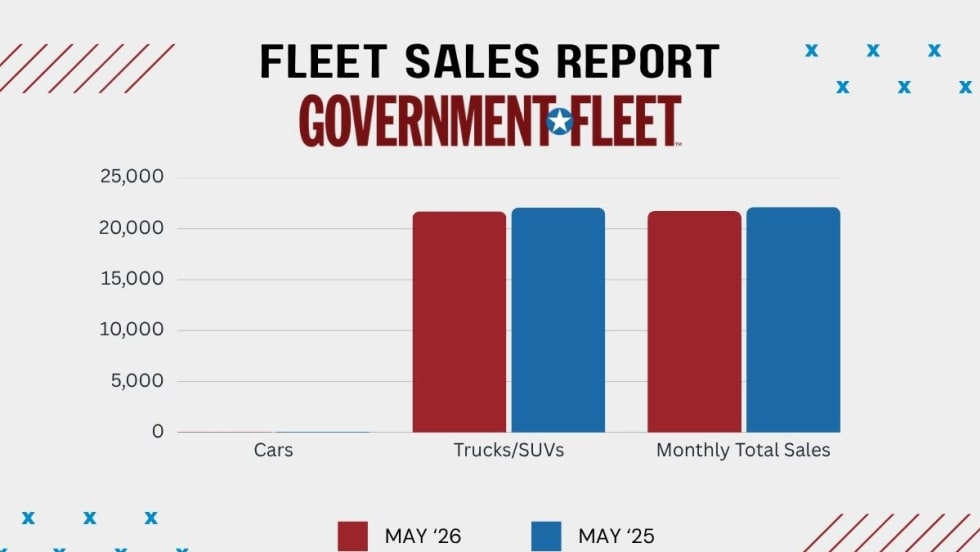
May Government Fleet Sales Slip Below 2025 Pace
Despite last month's sales increase, May vehicle numbers took a downward turn.
Read More →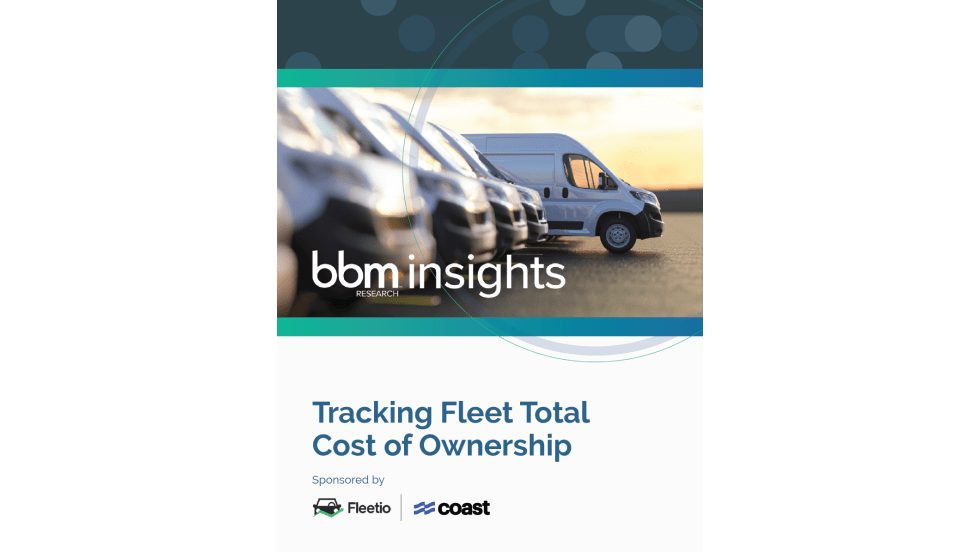
Sponsored•June 1, 2026
Are You Tracking Your Fleet's True Total Cost of Ownership?
Bobit Business Media surveyed 190 fleet professionals and found that while most fleets are tracking costs, fragmented systems and data gaps are keeping true TCO visibility out of reach. With rising pressure to control spend in an increasingly volatile environment, the gap between what fleets think they know and what the data actually shows is wider than you might expect. See how your peers are managing costs today and where the industry still has room to improve.
Read More →
April 2026 Recall Roundup: Chrysler, Lucid, & More
Are any of the vehicles in your fleet recalled? Check out the latest recalls of popular government fleet vehicles and equipment.
Read More →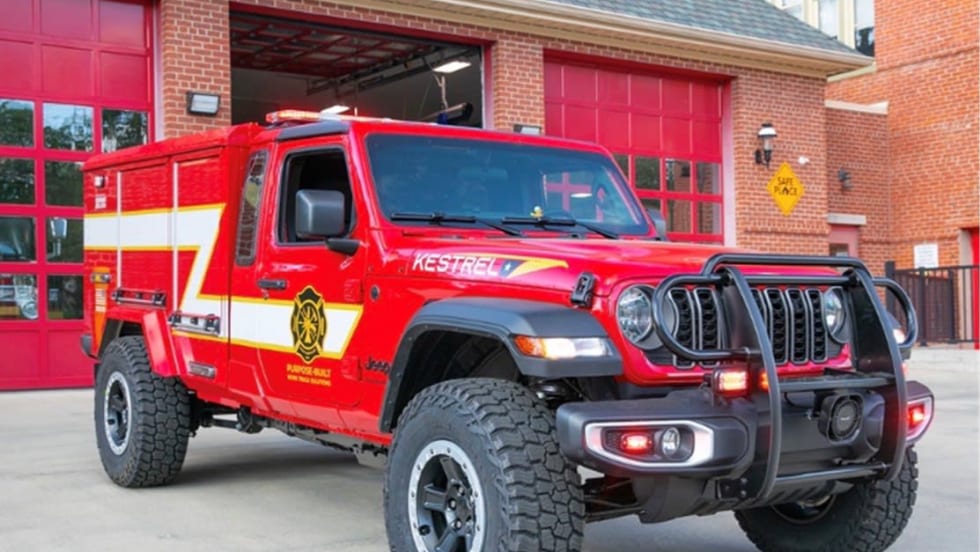
Kestrel Work Truck for First Response Debuts at FDIC 2026
Morgan Olson introduced its Kestrel platform, a compact, four-wheel-drive Class 2 work truck designed for first responders, with multiple configurations, validated safety testing, and a focus on durability and fleet lifecycle performance.
Read More →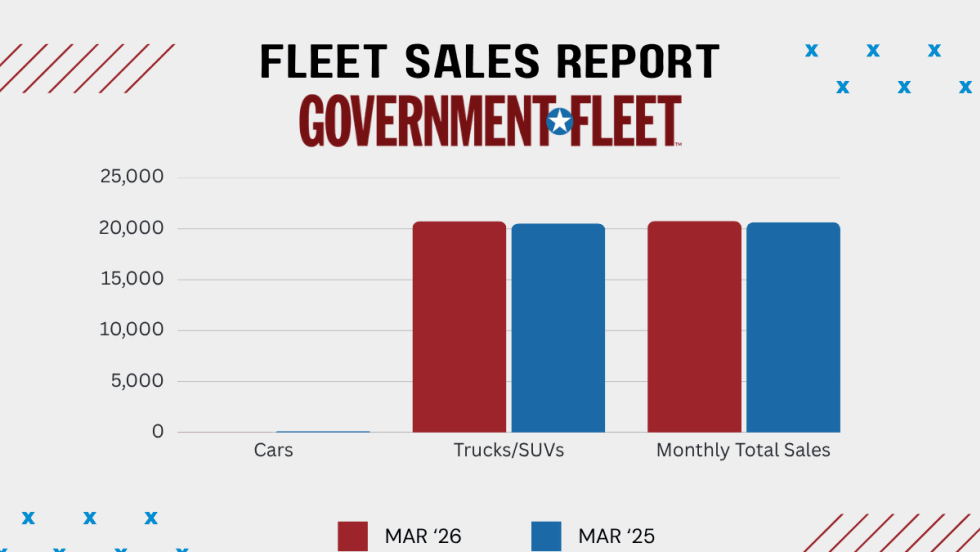
Government Fleet Vehicle Sales Rise In March
Government fleet vehicle sales increased by 1% in March, up from March 2025.
Read More →
March 2026 Recall Roundup: Ford, Kia, & More
Are any of the vehicles in your fleet recalled? Check out the latest recalls of popular government fleet vehicles and equipment.
Read More →