On December 11, 2023, Wayne Corum became the first director of facilities and fleet, which was created during the 2023-24 budgeting process, for the city of Richardson, Texas. With more than 17 years of experience in municipal government as well as time managing large commercial fleets in the private sector, Corum brings a wealth of industry experience to the table.
Corum previously served as a transportation industry consultant with T-Mobile for Business. Prior to this, he worked as the senior fleet manager for Verizon managing the seventh largest commercial fleet in the U.S.
With the city of Fort Worth, Corum started off in the city manager’s office as a senior management analyst and then more than a decade as the director of equipment services (fleet). During that time period, he served nine months as the interim director of the property management department, which was created in a reorganization to merge fleet, facilities and real property.
An Interview with Wayne Corum of Richardson, Texas
Recently, Government Fleet had the opportunity to speak with Corum about his new role, using past experience to plan ahead, and insight into the public sector fleet industry as a whole:
Government Fleet: Howdid you get into fleet and what was the journey like to this new position?
Corum: My journey into fleet started in 2001 when I was hired as a management analyst II in the city manager’s office at the city of Fort Worth, Texas. One of my first analyst projects was to create the charts and graphics for the weekly performance report used by the equipment services department.
Five years later, the equipment services director, Tom Davis, retired. In November 2006, I was selected as the director of equipment services for the city of Fort Worth where I served in that role for 11 years. In 2017, I transitioned to a role in the private sector as a senior fleet manager at Verizon. In 2021, I was recruited away from Verizon to serve as a transportation industry segment advisor for T-Mobile for Business.
Last year, as I began looking for new positions, I was attracted to returning to a public sector position because I always found my work in that sector to be more rewarding, due to the impact I was able to make. I found Richardson to be a great location for that goal, and it was especially meaningful that one of its core mottos is “Make A Difference.”
Government Fleet: What were some of the biggest lessons you’ve learned throughout your past work experience in fleet? What do you plan to carry over into this new position?
Corum: My career has been marked by the implementation of new fleet technologies. That same forward-thinking mindset will direct my actions at the city of Richardson. Initially, I will assess the current systems and processes to identify where adjustments can be made to enhance the fleet and facilities operations. Then, I will build a strategic plan to finance, acquire and implement new processes and technologies.
"We must focus on efficiently managing the preventive maintenance and repairs of existing assets..." — Wayne Corum, director of facilities and fleet, city of Richardson, Texas
Government Fleet: How do you see the modern fleet manager/director role today and what advice would you give to other fleet leaders/individuals in fleet management?
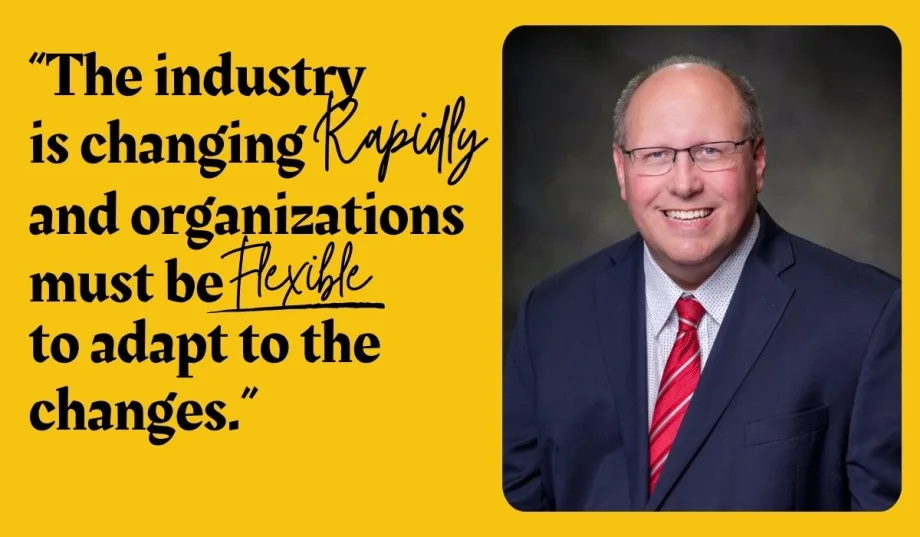
Corum: The modern fleet manager must still focus on the asset management of vehicles. Nevertheless, the types of assets are always being enhanced and re-engineered. Therefore, the modern fleet manager must stay apprised of new and future vehicle technologies. Also, it is imperative that the modern fleet manager be an advocate for training for all their staff, from technicians to parts personnel to buyers to administrative staff. The industry is changing rapidly, and organizations must be flexible to adapt to the changes.
Government Fleet: How are you planning to make a transition to your new position? What do you think will be the biggest challenge with this new role?
Corum: The transition to my new position will involve the merger of four divisions into the newly-formed facilities and fleet department. My initial focus will be on establishing a unified culture for these four separate groups – fleet maintenance, materials management, facilities maintenance, and custodial.
Both my fleet manager and facilities manager have many years of experience and lead good operations. There are a few current vacancies and some impending retirements that make recruitment a high priority during this transition. I will be actively engaged with local technical schools and industry associations to recruit new employees to join our team.
Government Fleet: What projects/goals are you going to be working on in your new role and how do you plan to tackle them as someone coming into a new role?
Corum: The four groups that will make up the facilities and fleet department have been very task focused on day-to-day activities to serve their customers. The city manager identified that these groups need a strategic leader to help them move into the future. My role as director of facilities and fleet was created for that strategic leadership role.
After creating a unified culture in our new department, we must focus on efficiently managing the preventive maintenance and repairs of existing assets (fleet and facilities). Ultimately, my goal is to establish a strategic plan for facilities and fleet that will accommodate changing technology and allow city departments to provide quality services to the residents and businesses in the community.
Government Fleet: What do you see as some present-day challenges for public sector fleets and how can fleets better navigate these challenges?
Corum: Human capital management is probably the greatest present-day challenge for public sector fleets. There are three main factors impacting human capital management. First, the changing demographic where young talent does not generally pursue a position as a tradesman or technician.
Second, the ability to train and transition skilled labor into a management role to effectively lead a work group. Third, and finally, the ability to keep up with the training needed for the ever-changing set of equipment used in new vehicles and buildings.
Government Fleet: What do you think makes a successful fleet team?
Corum: A successful fleet and facilities team must have two things. First, every organization must have a vision. It will be my responsibility to facilitate our group to identify our vision and then lead them to fulfill that vision. Secondly, everyone must take ownership of their individual role and responsibilities to make the larger team successful. Everyone must focus daily to improve how they do their individual tasks to make the collective group great.