





Similar Content: Report: 97% of Federal Fleet Buses, Light-Duty Vehicles Could Be Replaced by EVs by 2030
ZETA: USPS Shows Bias in Reasoning for ICE Vehicles
The United States Postal Service's released a draft environmental impact statement (EIS) regarding its plan to acquire gas-powered fleet vehicles, which the Zero Emission Transportation Association (ZETA) claims shows biased reasoning.
September 2, 2021

The current USPS delivery fleet primarily consists of the Grumman Long Life Vehicle (LLV).
Photo via Pixabay
3 min to read
The United States Postal Service (USPS) recently released its draft environmental impact statement (EIS) regarding its plan to acquire new gas-powered next-generation delivery vehicles (NGDVs) in the coming decade. The Zero Emission Transportation Association (ZETA), a coalition advocating for electric vehicles, claims that “the EIS demonstrates a clear, illogical commitment to internal combustion engine vehicles (ICEVs) over battery electric vehicles (BEVs), which hinges on outdated and incorrect information.” The group will engage in the public comment process.
ZETA’s critiques of the EIS include:
USPS proposes replacing 50,000 to 165,000 of its 218,000 vehicles over the next 10 years, and it compares acquiring either 90% ICEVs and 10% BEVs or 100% BEVs. It doesn’t consider any other ICEV/BEV fleet compositions, such as the 25% ICEV and 75% BEV fleet composition proposed in the Postal Vehicle Modernization Act (H.R.1636).
The EIS report acknowledges that the 100% BEV fleet would release 200% fewer direct and indirect greenhouse gas (GHG) emissions than a 90% ICEV and 10% BEV option, but it nevertheless dismisses electrification. Instead, it argues that the 90% ICEV and 10% BEV scenario is justified because it would release fewer emissions than the current 30-year old fleet.
The report claims the 100% BEV scenario would be too expensive. However, its cost calculation uses nickel manganese batteries, which are more expensive, less common, and less efficient than the industry-standard lithium-ion batteries. It ignores its own analysis of the social cost of carbon.
The USPS claims that BEVs are incapable of handling the distance, weather conditions, or charging requirements on up to 12,500 of the USPS’s 232,000 routes. However, ZETA states this is only 5.4% of the USPS’s total routes — and it is only planning on replacing 22.9% to 75.6% of its fleet over the next 10 years. Its remaining vehicles could easily cover these routes, or it could purchase a small percentage of new, fuel-efficient ICEVs to cover these routes.
The EIS does not present evidence that these 12,500 routes cannot be driven by BEVs. ZETA claims that even the low 70-mile range estimate the USPS used for BEVs exceeds the USPS’s 22-mile average route length, so BEVs should be able to cover most routes even if cold weather reduced battery life.
The EIS’ statement that charging infrastructure is too expensive is not supported by calculations or assumptions. It also ignores President Biden’s plan to build at least 500,000 charging stations nationwide as well as BEV battery efficiency development over the next 10 years.
In recent months, ZETA has strongly criticized Postmaster General Louis DeJoy’s decision to sign a $6 billion contract with Oshkosh Defense to build USPS’s new generational delivery vehicles. ZETA also outlined a roadmap for USPS electrification and endorsed the Postal Service Vehicle Modernization Act, which would provide an additional $6 billion for the USPS should it commit to electrifying at least 75% of the delivery fleet. This bill would give the USPS more funding for electrification than Postmaster DeJoy has previously estimated is necessary to electrify the fleet.
ZETA is a coalition advocating for 100% EV sales by 2030. Its members include utility companies and EV automakers, including Workhorse, which filed a formal complaint regarding the USPS contract earlier this year.
More Green Fleet
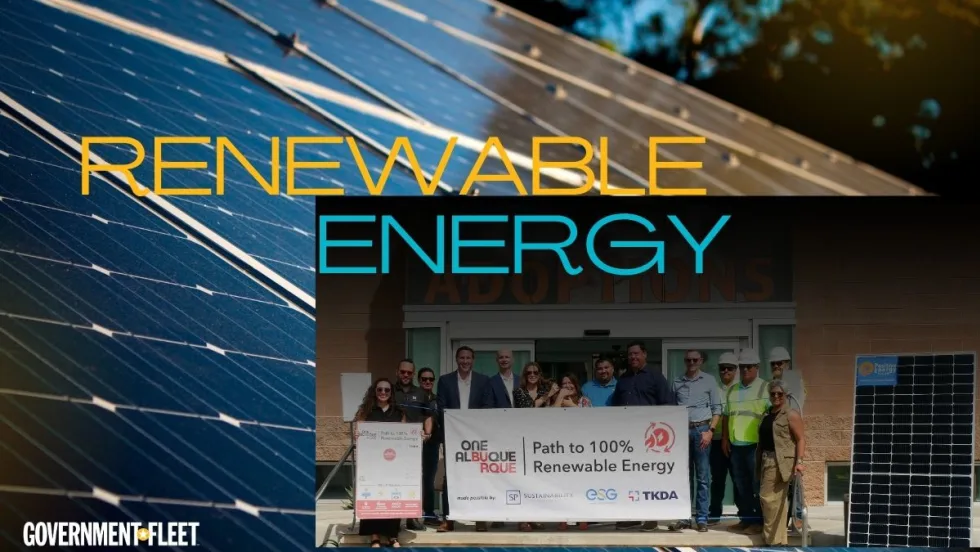
Sustainability Partners, Energy Systems Group Help Albuquerque Close the Gap on its 100% Renewable Energy Goal
The eight-site, 6 MW solar project has advanced the city toward 100% renewable energy for municipal operations.
Read More →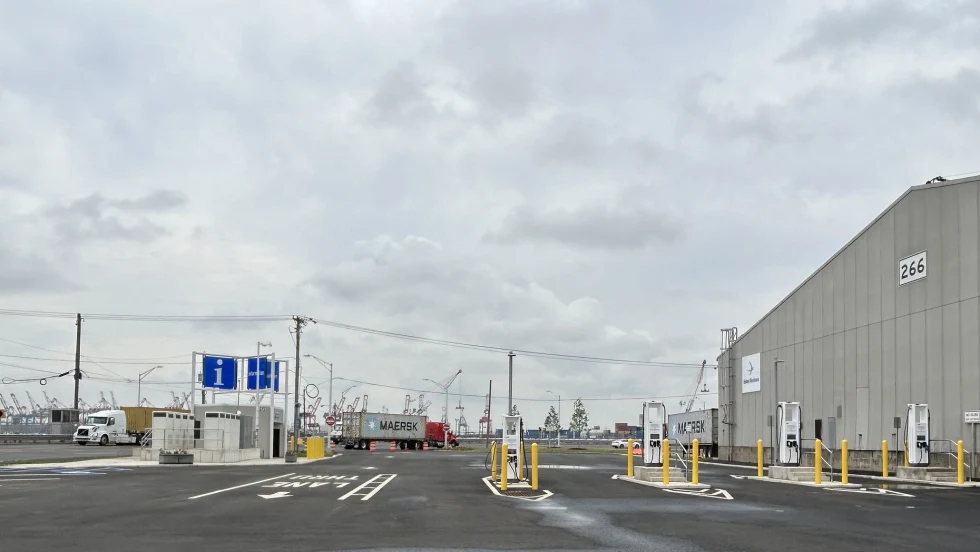
Port Authority and CALSTART Launch $45 Million Electric Truck and Charging Programs
The programs aim to boost sustainable operations across the East Coast's busiest seaport.
Read More →
Moving Government Fleets Beyond the Vehicle Purchase: EV as a Service
A discussion on how EVaaS is moving beyond pilot programs and what fleets should consider before beginning a larger deployment.
Read More →
Moving Government Fleets Beyond the Vehicle Purchase: EV as a Service
As fleets move beyond small EV pilots, Sustainability Partners CEO Adam Cain explains how EVaaS can address the infrastructure and long-term planning required for larger deployments.
Read More →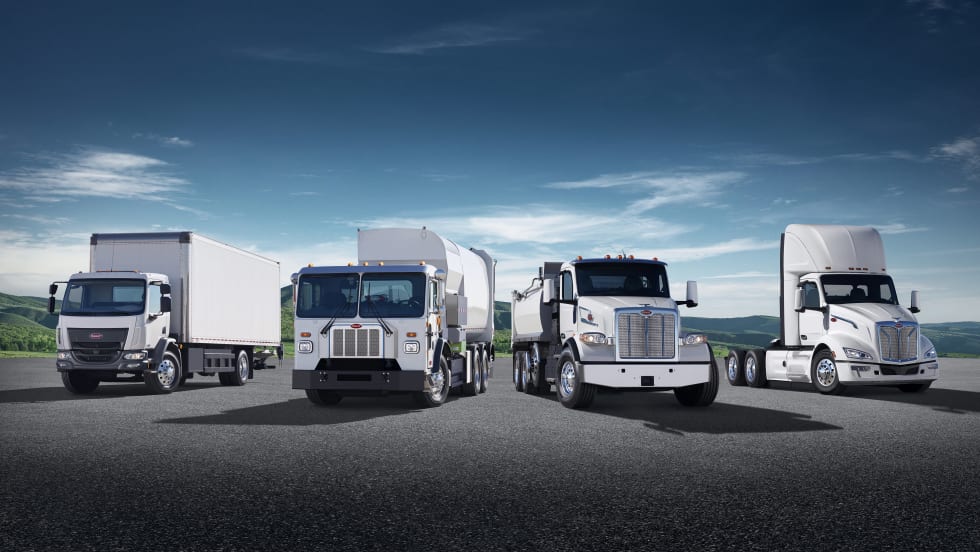
Peterbilt Expands Sourcewell Partnership with Electric Vehicle Lineup
The agreement aims to provide streamlined procurement of Peterbilt trucks for government, education, nonprofit and tribal organizations across the United States and Canada.
Read More →
EV Adoption & Charging Challenges
Where is your fleet in the journey of vehicle electrification? If you're still looking for answers to fleet electrification you've come to the right place.
Read More →
Hawaii Passes Clean Fuel Policy
Hawaii lawmakers passed clean fuel legislation that could support renewable natural gas production, biogas-powered transportation, and lower-carbon fueling options for public and commercial fleets.
Read More →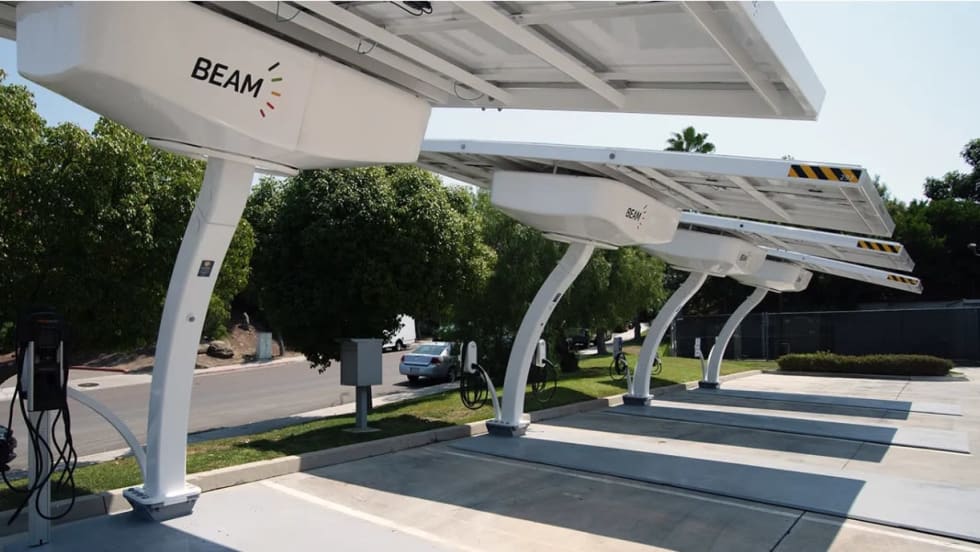
Stanislaus County Deploys Ten Beam Global EV ARC Systems to Support County Fleet Electrification
Stanislaus County deployed 10 off-grid solar-powered EV charging systems and a mobile charging trailer from Beam Global to support its electric fleet operations and emergency response flexibility.
Read More →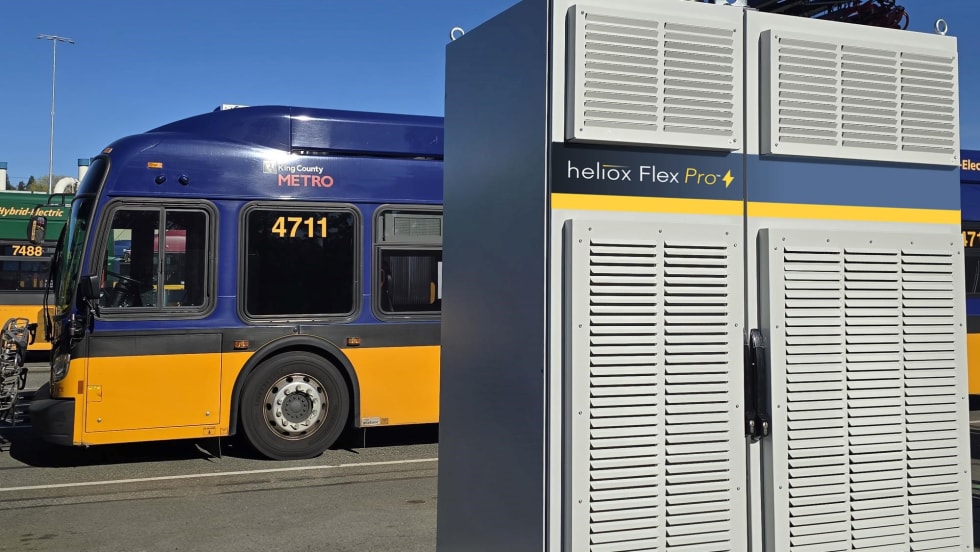
Heliox Pilots 480-kW Bus Charger with King County Metro
King County Metro is piloting Heliox’s new 480-kW Flex Pro charger to support expansion of its battery-electric bus fleet and depot charging infrastructure. The compact charging system supports pantograph and plug-in charging configurations for high-density transit operations.
Read More →