




Va. Exceeds Alt-Fuel Fleet Goals
The Commonwealth of Virginia’s state and local government agencies have transitioned 319 fleet vehicles to alternative fuels, exceeding Governor Terry McAuliffe’s goal of transitioning 300 vehicles by the end of the administration.
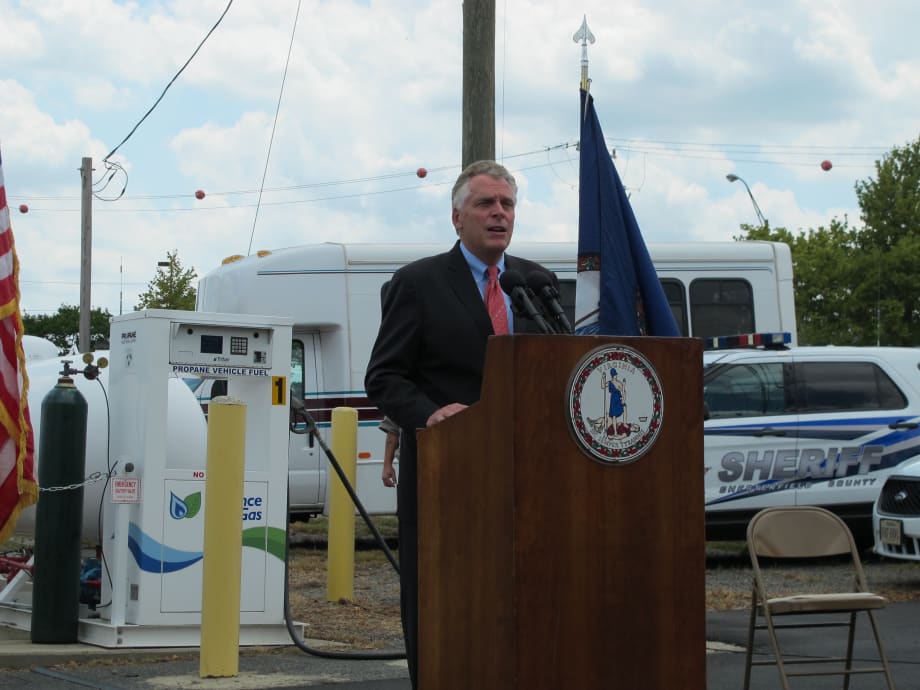
Photo of Gov. McAuliffe courtesy of Virginia Department of General Services
Photo of Gov. McAuliffe courtesy of Virginia Department of General Services
An initiative to adopt alternative fuels in public fleets across Virginia has passed its target. In 2014, Virginia Governor Terry McAuliffe originally set a goal to transition 300 vehicles to alternative fuels across the commonwealth by the end of his administration in 2018. McAuliffe announced this week that 319 vehicles have made the transition so far, including 36 within the state fleet.
State and local vehicles that have been transitioned include: light-duty propane autogas vehicles, such as trucks, vans and police interceptors; heavy-duty propane autogas vehicles, such as school buses; compressed natural gas vehicles, including sedans and refuse haulers; and electric sedans.
“With our 2014 energy plan, we set out to expand access to alternative fuel vehicles in a way that was cost effective for the Commonwealth and that leveraged best practices from the private sector,” McAuliffe said. “These vehicles reduce air pollution and greenhouse gas emissions, cut down on gasoline costs and support our Commonwealth’s growing alternative fuels industry, leading to job growth here at home and more sustainable transportation solutions. This is a great step forward and we will continue to work to make Virginia’s the cleanest and most innovative vehicle fleet in the nation.”
State agencies have supported this goal by establishing the public-private contracts that made possible the installation of propane and compressed natural gas (CNG) infrastructure and the purchase of vehicle conversions. These contracts, combined with DGS contracts for new CNG, propane, and electric vehicles, paved the way for state agencies and local public bodies to have easy access to alternative fuel solutions.
Governor McAuliffe also awarded Chesterfield County with the Governor’s Green Fleet Award for its leadership in the alternative fuels transition by implementing 50 vehicles and five advanced fueling stations that allow state and local vehicles to visit and refuel.
More Operations

A buyer's guide to fleet management software in 2027
Buying fleet management software in 2027 means looking beyond features and price. As fleet operations, technology and expectations evolve, this guide explores what today’s fleet professionals should consider when choosing a system that can deliver value now and adapt to what comes next.
Read More →
Hazard Alerts, Fleet Car Sales Rise and a New Shuttle Concept
Fleet car sales doubled, but the bigger picture tells a different story in this week’s roundup.
Read More →
How St. Johns County Turned Fleet Data Into Better Replacement Decisions
St. Johns County, Florida, had fleet data, but turning it into reliable decision guidance was another matter. Instead of starting over with a new fleet management system, the county connected existing tools and built a scoring system that gives managers an objective look at fleet health.
Read More →
Fleet Forward Conference Introduces One-Day Passes for 2026
New one-day registration lets fleet professionals attend Tuesday, Wednesday, or Thursday, with passes available for $249.
Read More →
ENC Unveils its ZAVIR Medium-Duty Shuttle
Two variants of the concept shuttles were revealed: a low-floor configuration and a high-floor configuration.
Read More →
Could Your Next Fleet Technician Start as an Intern?
What if your next technician hasn’t worked in a fleet shop yet? What fleets are doing to free up time.
Read More →
How Phoenix Is Building Its Next Generation of Fleet Technicians
With more than 8,000 vehicles and pieces of equipment to maintain, the City of Phoenix could not afford to wait for fully trained technicians to walk through the door. Instead, they revamped their entire workforce strategy and showed how public fleets can create their own talent pipeline while preparing existing employees for increasingly complex vehicles.
Read More →
What’s Slowing Your Fleet Down?
Could a change in how work gets done help your fleet return vehicles to service sooner?
Read More →
Can Public Fleets Trust the Data Driving Their Decisions?
Public fleets have more data than ever, but inconsistent records and missing information can still undermine maintenance, replacement, and cost decisions.
Read More →
John Deere Introduces 40 P-Tier Compact Excavator
John Deere is adding a compact excavator designed for crews that need to move equipment between jobsites and handle multiple types of work with one machine. The 40 P-Tier weighs less than 10,000 pounds and offers configurable hydraulics, attachment options, and connected fleet-management capabilities.
Read More →