




Trucks See Highest Depreciation in Year
The average depreciation change last week for trucks fell 0.46 percent, the largest drop for trucks in nearly a year, indicating that the fall price declines might finally be in full gear.
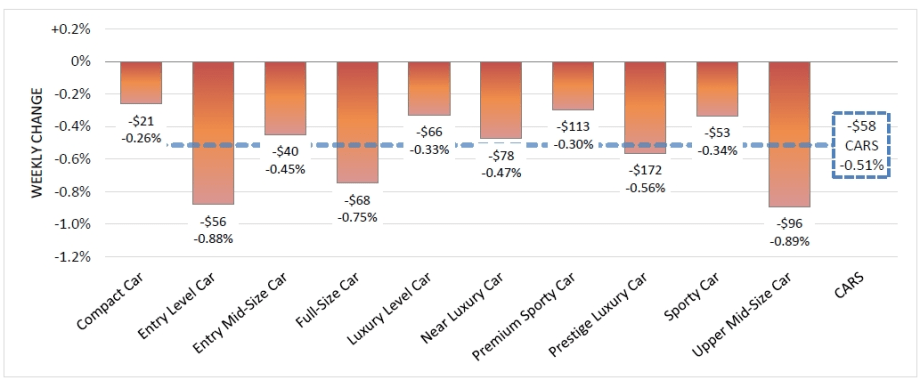
Model-Years: 2007-2013, Volume Weighted Wholesale Average Values, Weekly Change from 9/11/15 to 9/18/15 (SOURCE: Black Book)
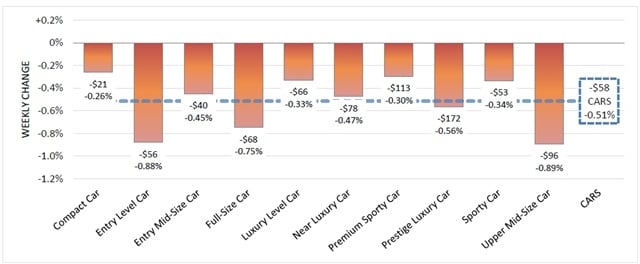
Model-Years: 2007-2013, Volume Weighted Wholesale Average Values, Weekly Change from 9/11/15 to 9/18/15 (SOURCE: Black Book)
Depreciation is picking up across the board for both cars and trucks; however, it is especially the case for trucks, with the average depreciation change last week falling 0.46 percent, the largest drop for trucks in nearly a year indicating that the fall price declines might finally be in full gear, according to the weekly "Used Car Market Report" from Black Book,
“It’s beginning to feel like fall and along with the decreasing temperatures outside, we are seeing decreasing values across all our segments,” said Anil Goyal, vice president of Automotive Valuation and Analytics at Black Book.
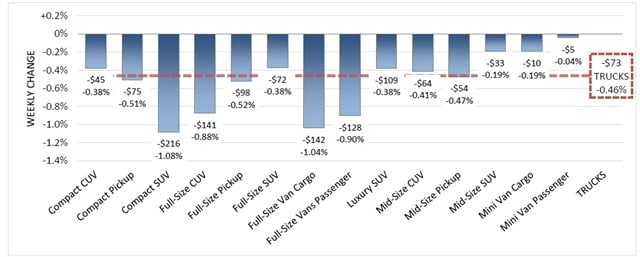
Model-Years: 2007-2013, Volume Weighted Wholesale Average Values, Weekly Change from 9/11/15 to 9/18/15 (SOURCE: Black Book)
Overall, the volume-weighted car values decreased by 0.51 percent for the week ending Sept. 22. This is the highest depreciation rate seen since the third week of July, according to Black Book. Segments that suffered the largest depreciation last week include Upper Mid-Size Car, Entry Level Car and Full-Size Car with declines of minus 0.89 percent, minus 0.88 percent, and minus 0.75 percent respectively.
Overall, the volume-weighted truck values decreased by 0.46 percent this past week. This is the largest truck segment depreciation rate seen since October 2014, according to Black Book. Compact SUV, Full-Size Cargo Van and Full-Size Passenger Vans saw depreciation greater than 1 percent. Mid-Size SUV, Mini Van Cargo and Mini Van Passenger experienced only small decreases in value.
More Remarketing

Missouri County Enters Partnership for Vehicle Leasing and Sales
In a recent development focused on improving operational efficiency, Franklin County, Missouri, has entered into agreements with Enterprise Fleet Management.
Read More →
The State of the Vehicle Market Today
What is the state of the vehicle market today? What are you thinking about when deciding to order vehicles? What might be some of the considerations for vehicle replacement? Find answers to these questions and more on this episode of GovCast.
Read More →
The State of the Vehicle Market Today
Answers around the state of the vehicle market, what to consider when ordering vehicles, and more.
Read More →
Sold! Why You Should Use Auctions for Used Fleet Vehicles
A seasoned government fleet manager shares why using auctions to sell used vehicles can be valuable.
Read More →
Using Online Auctions to Fill Gaps in Fleets
Commercial fleets are constantly dealing with canceled vehicle orders. Government fleets can help meet these needs – and cash in – by selling their used vehicles and heavy equipment.
Read More →
NYC Faces Lawsuit Over New Vehicle Auction Contract
The city's previous contractor argues it was not made aware of a new contract DCAS was working on for 10 months. It also argues the new contract will cost the city $6 million more.
Read More →
4 Tactics to Exploit Delivery Delays & High Resale Values Now
A panel at GFX suggested tactics for fleet managers to take advantage of the current long vehicle delivery delays and astounding resale values.
Read More →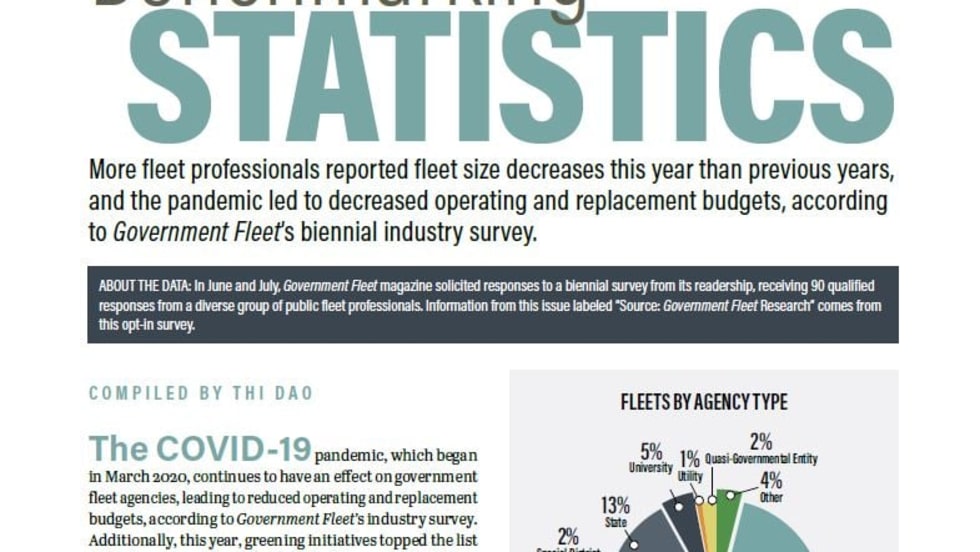
2021 Benchmarking Statistics
This report covers public sector fleet operations statistics for 2021, taken from Government Fleet's biennial industry survey.
Read More →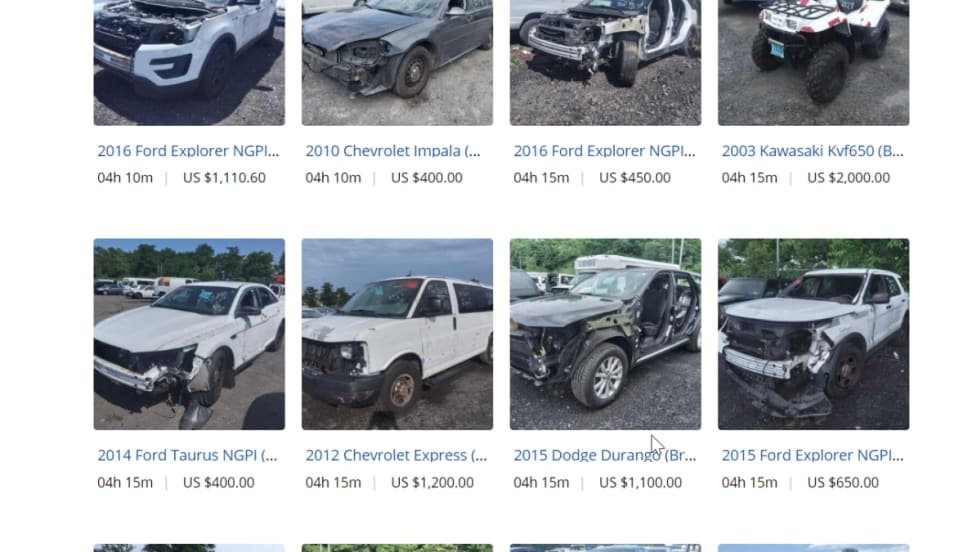
NYC Posts Record Fleet Revenue with Strong Resale Values
For fiscal-year 2021, New York City DCAS brought in $15.75 million in revenue between the sale of used vehicles and pursuit of restitution when private vehicles damage fleet vehicles.
Read More →
The Effect of COVID-19 on Remarketing
The onset of the pandemic put a pause on live auctions and shifted sales online. Is it a trend that’s here to stay?
Read More →