





Want more content like this? Read the new vehicle roundup: Refuse Truck Edition
Oregon City Adds Zero-Emissions Refuse Vehicle to Fleet
The zero-emissions Model 520EV will provide recycling and waste collection services for the city of Portland and advance its environmental sustainability initiatives.
November 14, 2023
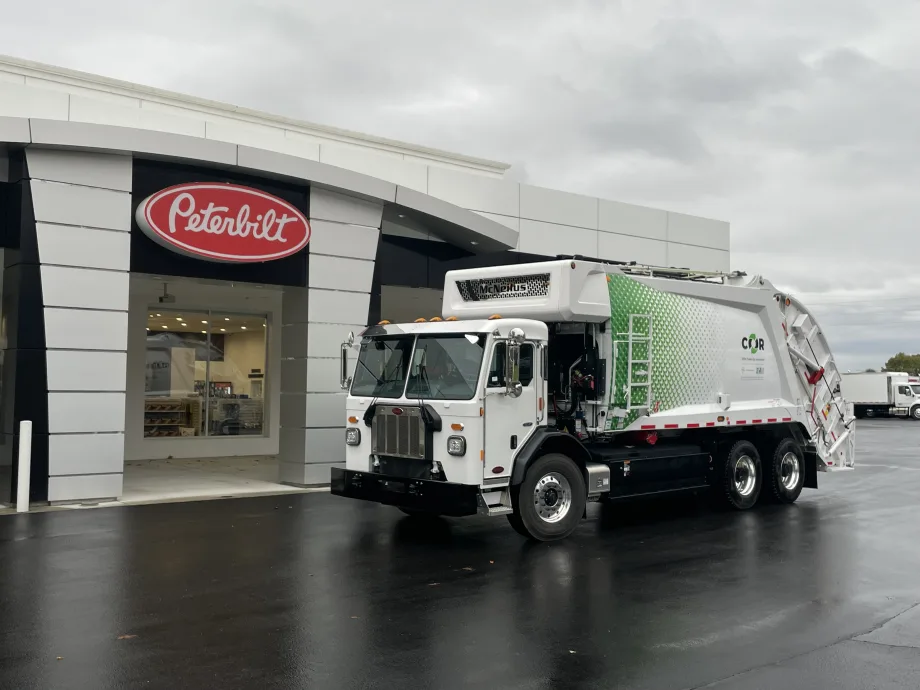
The Model 520EV is equipped with a McNeilus rear loader and can complete a full day of bin collections on a single charge, showcasing its efficiency and productivity.
Photo: Peterbilt
1 min to read
Peterbilt has finalized the delivery of a Model 520EV refuse vehicle to Portland, Oregon's Disposal & Recycling operation. The zero-emissions Model 520EV will provide recycling and waste collection services for the city of Portland and advance its environmental sustainability initiatives.
Leaders from Portland's Disposal & Recycling, Portland General Electric Company, the city of Portland, McNeilus and Peterbilt recently gathered to reveal the new Model 520EV and celebrate this electrification milestone. Local media had the opportunity to ride along with the emission-free vehicle to experience the Model 520EV’s first pickup in Northwest Portland as part of a public unveiling event.
The Model 520EV Capabilities for Fleets
The Model 520EV is equipped with a McNeilus rear loader and can complete a full day of bin collections on a single charge. It provides extended operating range to COR Disposal & Recycling in addition to regenerative braking to enhance safety and optimized vehicle performance.
Specs
Class:8
GCWR:66,000 lbs.
Used for:Right-Hand Side Loader and Rear Loader Refuse Collection
Max Horsepower:670 hp (500kw)
Front Axle & Suspension:20,000 - 23,000 lbs.
Rear Axle & Suspension:46,000 lbs.
Est Daily Range:80 - 120 Miles Per Charge (1,100 Bin Pickups)
Minimum Charge Time:3 Hours
More Operations

What Can Disappear After a Fleet Crash?
This week, we look at drone footage, what fleets should document before repairs begin, and share a quick poll.

Does Your Government Fleet Handle Refuse and Waste Operations? Take Our Poll
Government Fleet wants to hear from public-sector fleet professionals about their responsibilities for refuse collection and waste management equipment.

Fleet Replacement Decisions, Waste Fleet Technology and the GFX Deadline
Is your next vehicle the right fit, can your records settle a missed pickup dispute, and what could your fleet teach others at GFX 2027?

Is Delaying Fleet Replacement Really Saving Money?
Could delaying replacement cost your fleet more than it saves? This week’s recap takes a closer look, plus an update on GFX 2027.

What Government Fleets Are Missing About Their True Costs
What are fleet budgets missing, and how can agencies use the data they already collect to make a stronger case for change?

Rethinking Fleet Decisions From the Budget Office to the Shop
This October we looked back at how public fleets are reconsidering familiar processes and using what they learn to make better decisions.

Who Owns the Message on a Refuse Truck?
Refuse trucks can carry public messages into neighborhoods, but keeping those messages current takes planning and clear responsibility.

Who Deserves Fleet Recognition and What Could You Teach at GFX?
Who helped shape your fleet career, and what have you learned that could help someone else?

What’s Haunting Public Sector Fleets?
Public sector fleet challenges rarely happen in isolation, and addressing one often means understanding how it connects to another.

Is Keeping Older Fleet Vehicles Really Saving Money?
Is keeping vehicles longer saving money, and what happens when a diagnostic test points to the wrong fix?