




Similar Content: WisDOT Freeway Service Vehicles Have New Look, Sponsor
New Jersey Safety Patrol Vehicles Have New Sponsor
The New Jersey Department of Transportation Safety Service Patrol has a new sponsor. The sponsorship offsets operational costs and includes the insurance company’s logo on the fleet of incident management vehicles.
by Staff
March 14, 2022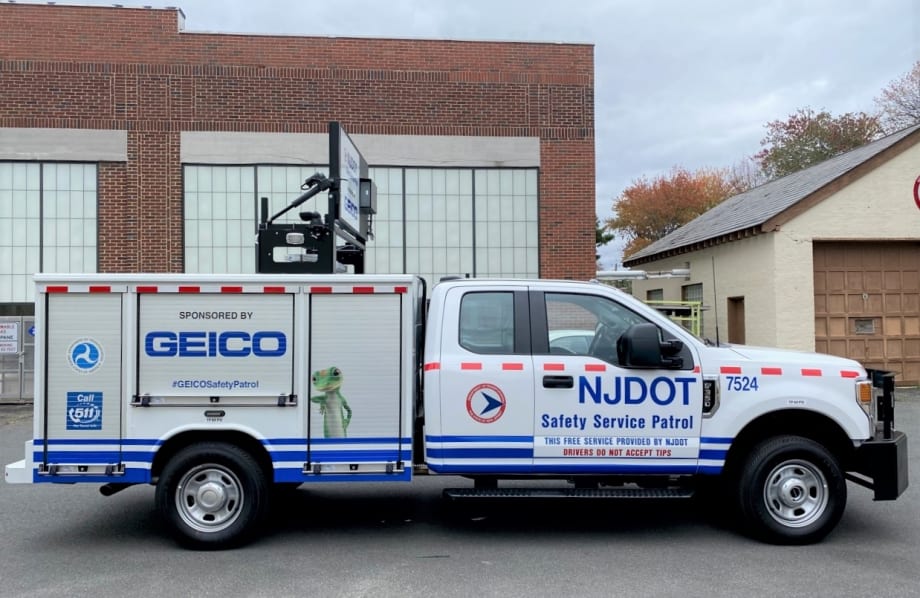
The New Jersey Department of Transportation (NJDOT) Safety Service Patrol assists motorists whose vehicles have become disabled because of a crash or a mechanical failure, and provides safety for emergency responders.
Photo: NJDOT
2 min to read
The New Jersey Department of Transportation (NJDOT) Safety Service Patrol has a new sponsor — GEICO. The sponsorship offsets operational costs and includes the insurance company’s logo on the fleet of incident management vehicles.
The Safety Service Patrol (SSP) was created in 1994 as a free service to assist motorists whose vehicles have become disabled because of a crash or a mechanical failure, and to provide safety for emergency responders. The SSP patrols 225 miles of interstate and state highways throughout New Jersey, extending to over 394 miles during the winter season. It responds to an average of about 55,000 incidents each year; operators help keep drivers safe by changing flat tires, jump-starting cars, providing minimal amounts of fuel, removing debris from the road, and making small safety repairs.
“Public-private partnerships, like this one between the New Jersey Department of Transportation and GEICO, are an effective tool in providing motorists on our roadways with a high level of service and safety,” NJDOT Commissioner Diane Gutierrez-Scaccetti said. “With GEICO’s support, motorists and first responders can be assured that our dedicated SSP drivers will be on the road to assist them in times of need.”
In addition to assisting motorists, the SSP works with the New Jersey State Police and other first responders to clear incidents and control traffic around incident scenes and weather-related emergencies to make sure roadways remain open and passable. This also helps reduce secondary crashes and has the additional benefit of alleviating congestion.
The GEICO sponsorship allows the NJDOT to improve SSP facilities, conduct research, and purchase new and innovative tools. Official highway signs informing motorists of the patrolled routes will now feature the GEICO logo. The service is provided free of charge through the sponsorship with GEICO and funding from the Federal Highway Administration.
More Operations

What Can Disappear After a Fleet Crash?
This week, we look at drone footage, what fleets should document before repairs begin, and share a quick poll.

Does Your Government Fleet Handle Refuse and Waste Operations? Take Our Poll
Government Fleet wants to hear from public-sector fleet professionals about their responsibilities for refuse collection and waste management equipment.

Fleet Replacement Decisions, Waste Fleet Technology and the GFX Deadline
Is your next vehicle the right fit, can your records settle a missed pickup dispute, and what could your fleet teach others at GFX 2027?

Is Delaying Fleet Replacement Really Saving Money?
Could delaying replacement cost your fleet more than it saves? This week’s recap takes a closer look, plus an update on GFX 2027.

What Government Fleets Are Missing About Their True Costs
What are fleet budgets missing, and how can agencies use the data they already collect to make a stronger case for change?

Rethinking Fleet Decisions From the Budget Office to the Shop
This October we looked back at how public fleets are reconsidering familiar processes and using what they learn to make better decisions.

Who Owns the Message on a Refuse Truck?
Refuse trucks can carry public messages into neighborhoods, but keeping those messages current takes planning and clear responsibility.

Who Deserves Fleet Recognition and What Could You Teach at GFX?
Who helped shape your fleet career, and what have you learned that could help someone else?

What’s Haunting Public Sector Fleets?
Public sector fleet challenges rarely happen in isolation, and addressing one often means understanding how it connects to another.

Is Keeping Older Fleet Vehicles Really Saving Money?
Is keeping vehicles longer saving money, and what happens when a diagnostic test points to the wrong fix?