





Similar Content: NYC Sanitation Department to Buy 7 Mack LR Electric Trucks
Mercedes-Benz Tests eEconic BEV for Refuse Use
Mercedes-Benz Trucks is developing the battery-electric eEconic for municipal operations in multiple intensive trial series.
July 27, 2021
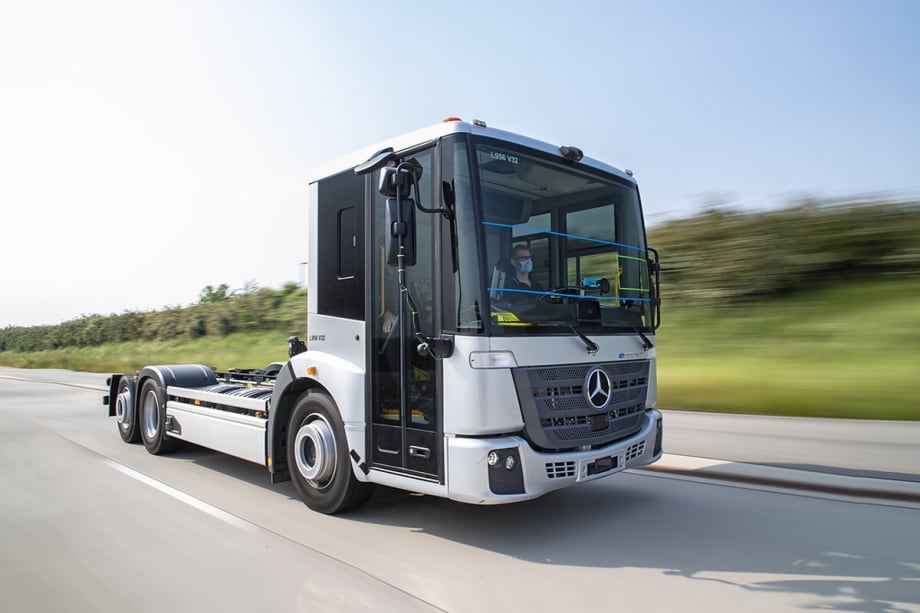
The eEconic is ideally suited for its role as a refuse collection vehicle, according to Mercedes-Benz Trucks.
Photo: Mercedes-Benz
2 min to read
Mercedes-Benz Trucks is pushing ahead with the development of the battery-electric eEconic for municipal operations in multiple intensive trial series. The test engineers’ focus is on trials of the vehicle’s safety, performance, and durability. The eEconic will also have to prove itself in tests of the batteries and the electric powertrain in summer and in winter. The vehicle is also being subjected to additional testing concepts such as noise measurements, electromagnetic compatibility (EMC), and test drives on the rough road.
Once the tests have been concluded, the eEconic will head for the next step — customer trials in real-life operation. The start of series production of the eEconic in Mercedes-Benz’ Wörth plant is scheduled for the second half of 2022.
The eEconic’s vehicle architecture benefits from Daimler Trucks’ global platform strategy. The low-floor truck is based on the eActros for heavy-duty distribution operations. The eEconic, in its configuration as a refuse collection vehicle, will in the future be able to cover the vast majority of the Econic’s typical refuse collection routes without needing to recharge en route, and will be carbon-neutral and quiet.
“We are subjecting the eEconic to an extremely wide range of test series, and the results to date have shown that we are on the right track with our concept," said Ralf Forcher, head of Mercedes Benz special trucks. " The eEconic is ideally suited for its designated role as a refuse collection vehicle. The high proportion of stop-and-go driving, reliably plannable daily routes averaging 100 kilometers, and the charging of the batteries at the customers’ depots add up to an ideal application for the mission profile of the battery-electric low-floor truck.”
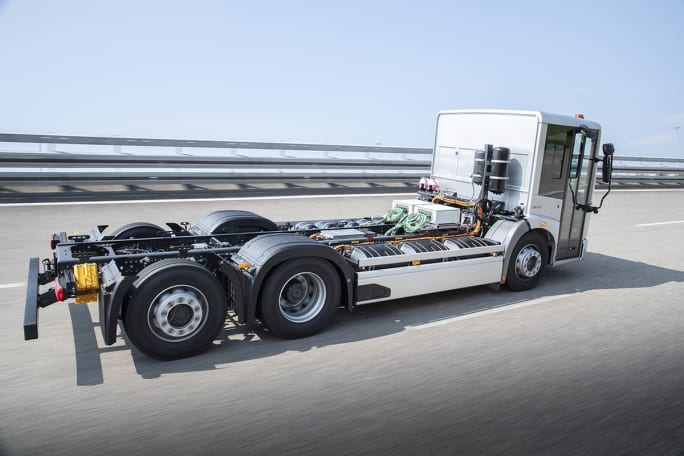
The battery of the eEconic series-production model will be equipped with three battery packs, each with an energy capacity of around 105 kWh.
Photo: Mercedes-Benz
The eEconic, with a gross vehicle weight rating of 27 tons, will initially be launched on the market in its configuration as a refuse collection vehicle with the wheel configuration 6x2/ NLA. The technological heart of the eEconic is the drive unit — an electric axle with two integrated electric motors and a two-speed transmission. The battery of the eEconic series-production model will be equipped with three battery packs, each with an energy capacity of around 105 kWh. Both liquid-cooled motors generate a continuous output of 330 kW as well as a top performance of 400 kW. In addition, when driving with foresight, electrical energy can be recovered through recuperation — a major advantage, especially in the stop-and-go operation of refuse collection. At the end of the daily routes, the batteries of the electric truck can be recharged with up to 160 kW.
More Green Fleet
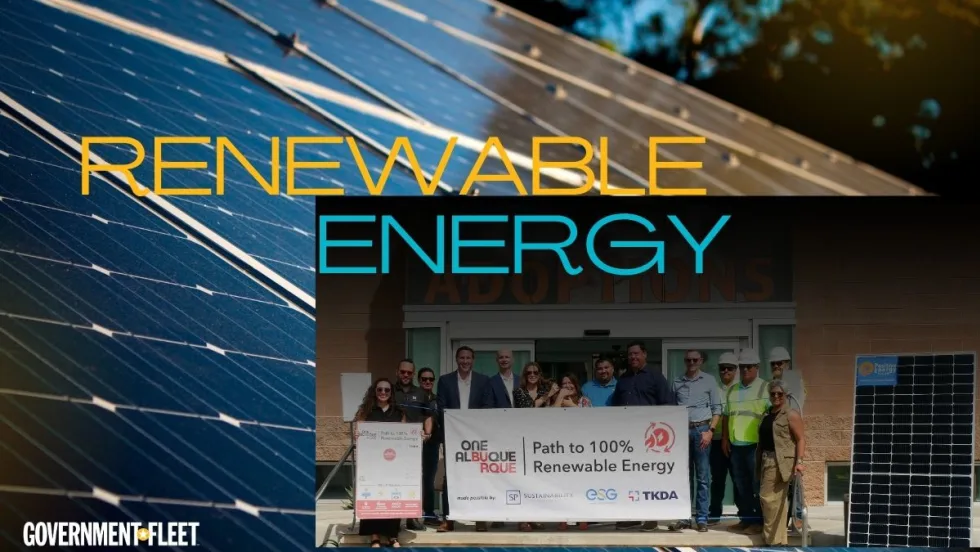
Sustainability Partners, Energy Systems Group Help Albuquerque Close the Gap on its 100% Renewable Energy Goal
The eight-site, 6 MW solar project has advanced the city toward 100% renewable energy for municipal operations.
Read More →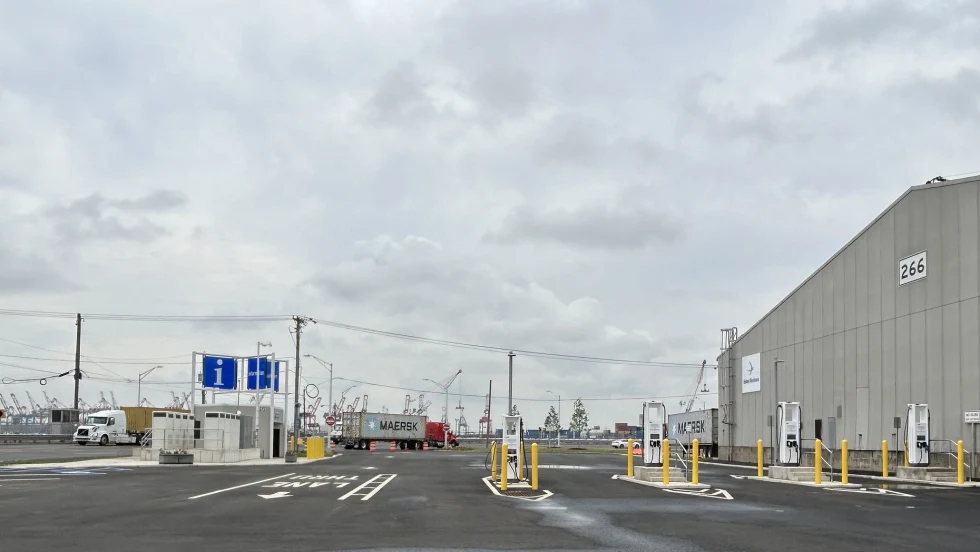
Port Authority and CALSTART Launch $45 Million Electric Truck and Charging Programs
The programs aim to boost sustainable operations across the East Coast's busiest seaport.
Read More →
Moving Government Fleets Beyond the Vehicle Purchase: EV as a Service
A discussion on how EVaaS is moving beyond pilot programs and what fleets should consider before beginning a larger deployment.
Read More →
Moving Government Fleets Beyond the Vehicle Purchase: EV as a Service
As fleets move beyond small EV pilots, Sustainability Partners CEO Adam Cain explains how EVaaS can address the infrastructure and long-term planning required for larger deployments.
Read More →
Peterbilt Expands Sourcewell Partnership with Electric Vehicle Lineup
The agreement aims to provide streamlined procurement of Peterbilt trucks for government, education, nonprofit and tribal organizations across the United States and Canada.
Read More →
EV Adoption & Charging Challenges
Where is your fleet in the journey of vehicle electrification? If you're still looking for answers to fleet electrification you've come to the right place.
Read More →
Hawaii Passes Clean Fuel Policy
Hawaii lawmakers passed clean fuel legislation that could support renewable natural gas production, biogas-powered transportation, and lower-carbon fueling options for public and commercial fleets.
Read More →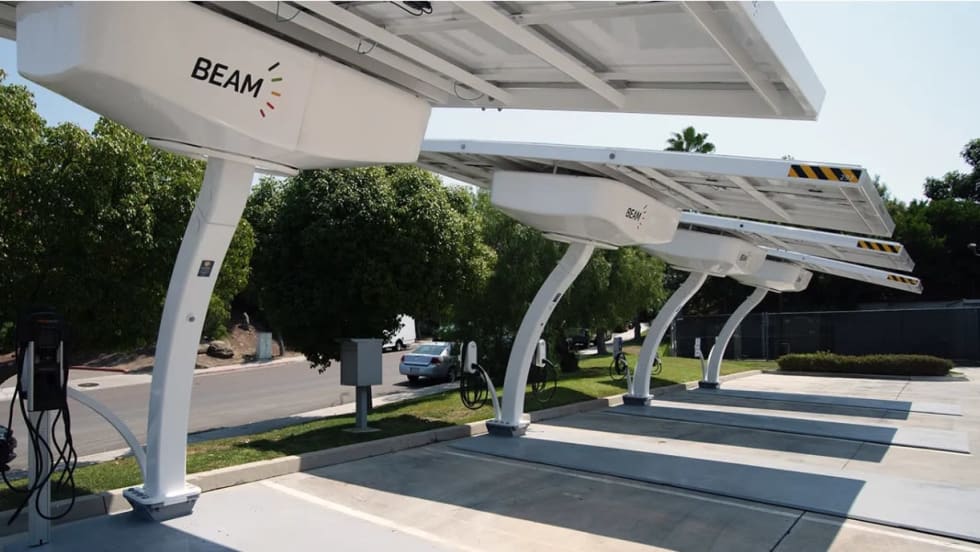
Stanislaus County Deploys Ten Beam Global EV ARC Systems to Support County Fleet Electrification
Stanislaus County deployed 10 off-grid solar-powered EV charging systems and a mobile charging trailer from Beam Global to support its electric fleet operations and emergency response flexibility.
Read More →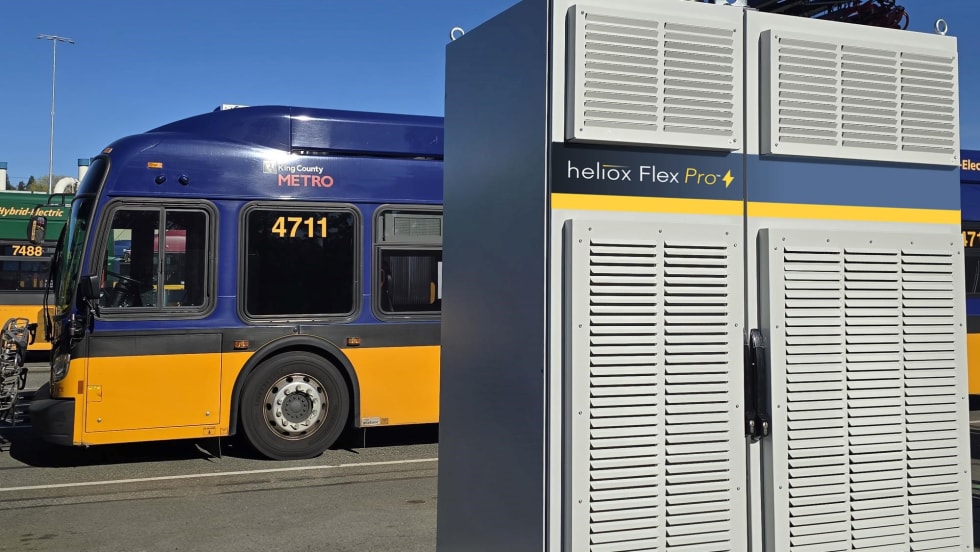
Heliox Pilots 480-kW Bus Charger with King County Metro
King County Metro is piloting Heliox’s new 480-kW Flex Pro charger to support expansion of its battery-electric bus fleet and depot charging infrastructure. The compact charging system supports pantograph and plug-in charging configurations for high-density transit operations.
Read More →