





Keep Reading: Implementing Green Policies & Switching to EVs
Detroit Transitions Municipal Parking Department to Fully Electric Fleet
This is the first of what will be a larger movement to convert to electric and hybrid vehicles as part of the city’s shift toward greater sustainability.
March 19, 2023
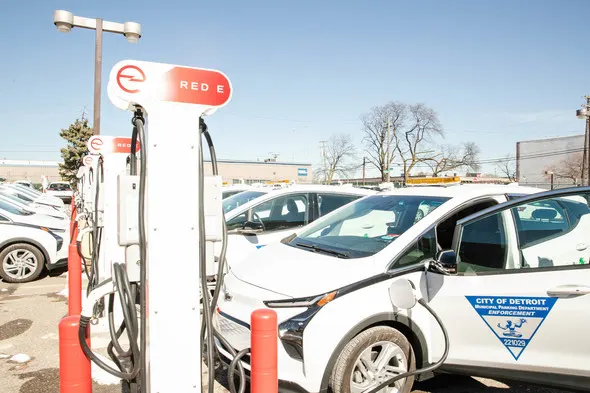
Detroit's Municipal Parking Department now has a fleet of 48 electric vehicles and 25 Level 2 charging stations.
Photo: City of Detroit
2 min to read
Detroit's Municipal Parking Department has become the first city department to fully convert its fleet to all electric. According to Mayor Mike Duggan, this is the first of what will be a larger movement to convert to electric and hybrid vehicles as part of the city’s shift toward greater sustainability.
Last year, DDOT unveiled its first four all-electric buses; currently the city has over 250 electric and hybrid vehicles in the fleet. Detroit is now working toward converting the city’s active fleet of over 3000 vehicles to electric or hybrid vehicles. The city announced the addition of 48 new Chevy Bolt EVs and 25 on-site Level 2 charging stations.
The new fleet was deployed the week of March 15, and residents can spot the new vehicles by the decals outfitted to illustrate the fleet’s 100% electric, zero emissions capacity.
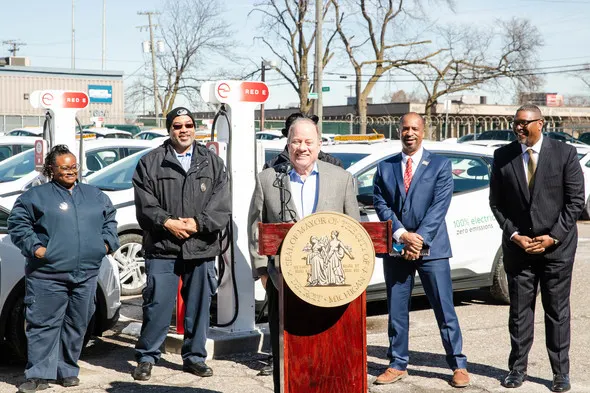
Municipal Parking Enforcement Officers, Mayor Duggan, Council Member Scott Benson and Keith Hutchings, Municipal Parking Department Director announcing the city's first all EV fleet.
Photo: City of Detroit
“This is our first major step toward converting city vehicles to more environmentally friendly and sustainable technologies, and I’m proud of our Municipal Parking Department and Director Keith Hutchings for leading the way,” Duggan said. “Electric vehicles are going to become the new standard everywhere, and we are going to support this transition in many ways.”
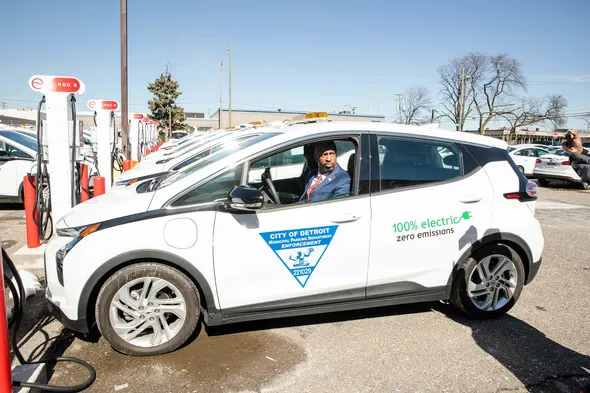
City Council Member Scott Benson takes one of the new MPD electric vehicles for a test drive.
Photo: City of Detroit
There will not be any operational changes to the parking enforcement service and the entire staff has been trained to operate the electric vehicles. Director Keith Hutchings said that some MPD officers drive up to 150 miles per day and a fully charged Bolt has a range of more than 200 miles. He added, however, that officers are instructed to return the vehicles to the charging stations upon a thirty-percent charge to ensure the staff’s safety and efficiency.
“The transition should be pretty seamless, because the vehicles will recharge overnight and have enough range to get through the next day, without having to stop,” Hutchings said.
Hutchings added that Kelley Blue Book recognized the Chevrolet Bolt EX as the #1 Best Electric Cars of 2023, with an estimated EV range of 259 miles. The city of Detroit worked with DTE Energy to improve infrastructure at the charging site and to obtain a rebate that reduced the city’s cost for installing the charging infrastructure.
Funding for the new fleet and infrastructure came from the city’s general fund:
Vehicle Cost: $26,211.00 per vehicle capitalized in a monthly lease payment of $501.02 per vehicle.
EV Infrastructure: $429,500.35 / 25 EV charging stations = $17,180.01 per charging station
Vehicle Technology and Upfitting: $1,348,830.00 / 48 vehicles = $28,100.62 per vehicle
More Green Fleet
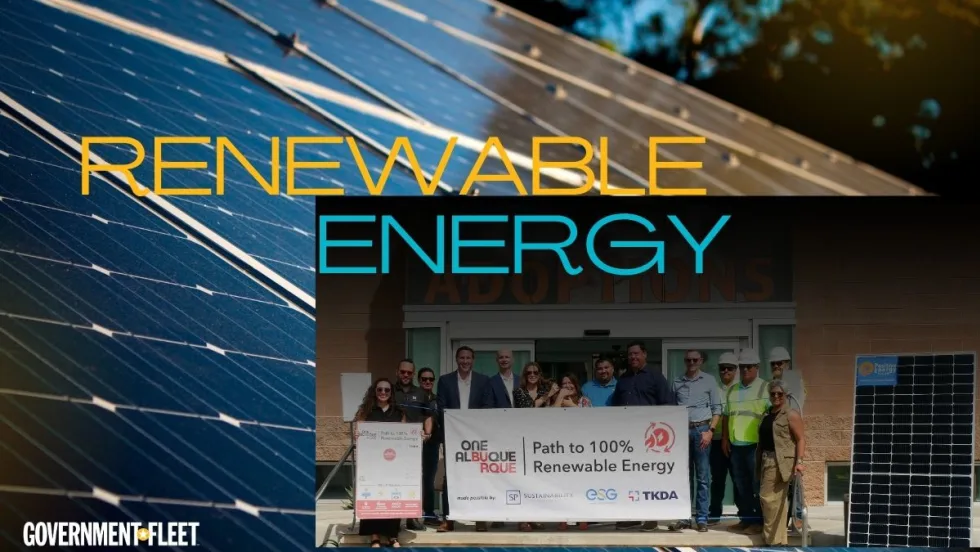
Sustainability Partners, Energy Systems Group Help Albuquerque Close the Gap on its 100% Renewable Energy Goal
The eight-site, 6 MW solar project has advanced the city toward 100% renewable energy for municipal operations.
Read More →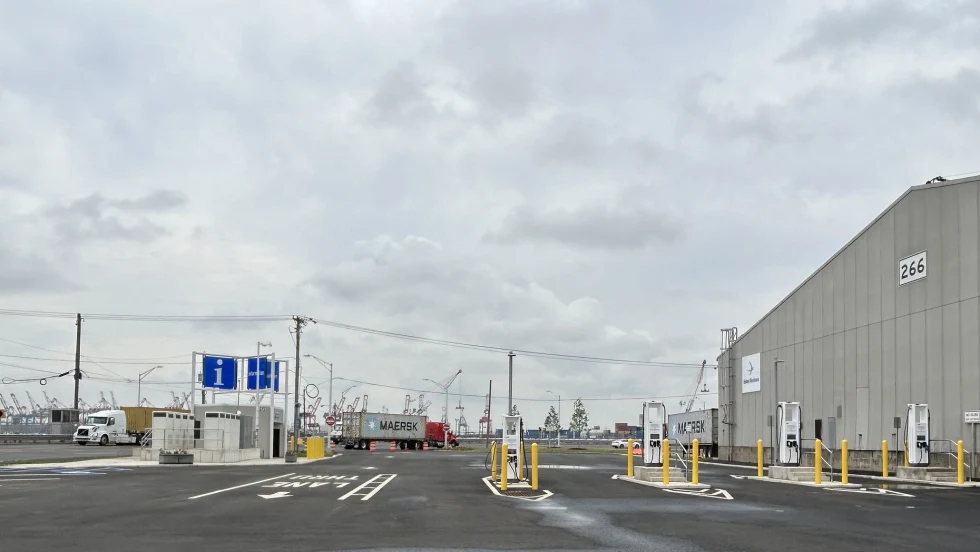
Port Authority and CALSTART Launch $45 Million Electric Truck and Charging Programs
The programs aim to boost sustainable operations across the East Coast's busiest seaport.
Read More →
Moving Government Fleets Beyond the Vehicle Purchase: EV as a Service
A discussion on how EVaaS is moving beyond pilot programs and what fleets should consider before beginning a larger deployment.
Read More →
Moving Government Fleets Beyond the Vehicle Purchase: EV as a Service
As fleets move beyond small EV pilots, Sustainability Partners CEO Adam Cain explains how EVaaS can address the infrastructure and long-term planning required for larger deployments.
Read More →
Peterbilt Expands Sourcewell Partnership with Electric Vehicle Lineup
The agreement aims to provide streamlined procurement of Peterbilt trucks for government, education, nonprofit and tribal organizations across the United States and Canada.
Read More →

EV Adoption & Charging Challenges
Where is your fleet in the journey of vehicle electrification? If you're still looking for answers to fleet electrification you've come to the right place.
Read More →
Hawaii Passes Clean Fuel Policy
Hawaii lawmakers passed clean fuel legislation that could support renewable natural gas production, biogas-powered transportation, and lower-carbon fueling options for public and commercial fleets.
Read More →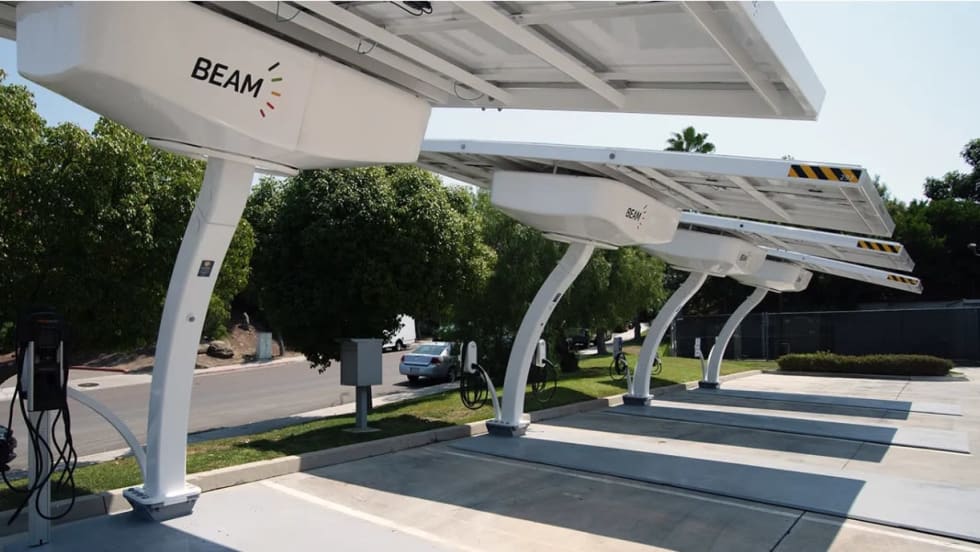
Stanislaus County Deploys Ten Beam Global EV ARC Systems to Support County Fleet Electrification
Stanislaus County deployed 10 off-grid solar-powered EV charging systems and a mobile charging trailer from Beam Global to support its electric fleet operations and emergency response flexibility.
Read More →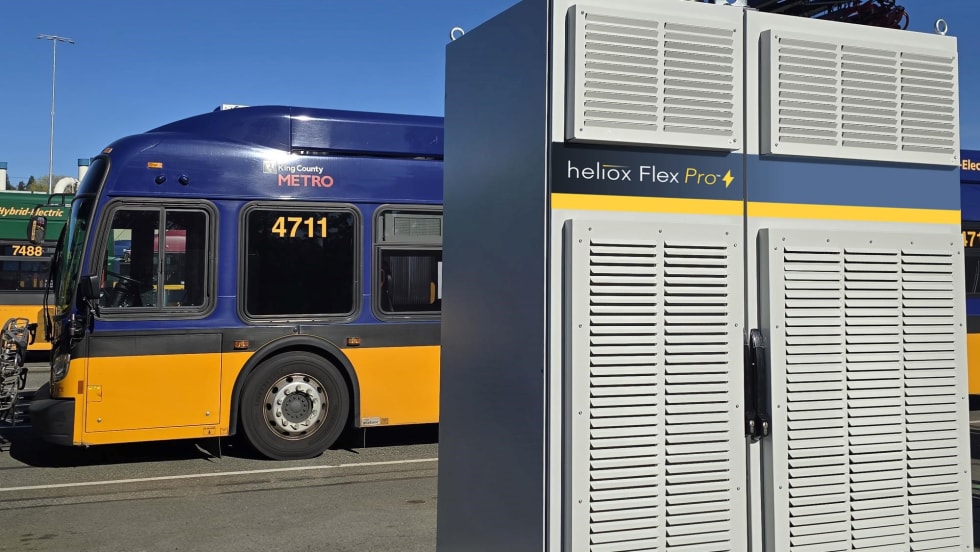
Heliox Pilots 480-kW Bus Charger with King County Metro
King County Metro is piloting Heliox’s new 480-kW Flex Pro charger to support expansion of its battery-electric bus fleet and depot charging infrastructure. The compact charging system supports pantograph and plug-in charging configurations for high-density transit operations.
Read More →