




Denver’s Driving Change Program Reduces Vehicular CO2 Emissions
DENVER - Driving Change, the world’s first Internet-based vehicular greenhouse gas (GHG) tracking system, announced significant reductions in GHG emissions by the City and County of Denver as a result of online feedback on how driving behaviors impact the environment and fuel costs.
DENVER - Driving Change, the world’s first Internet-based vehicular greenhouse gas (GHG) tracking system, announced significant reductions in GHG emissions by the City and County of Denver as a result of online feedback on how driving behaviors impact the environment and fuel costs.
In March 2008, Denver launched a pilot test of Driving Change which uses telemetry technology to send vehicle operating information over the Internet to a GHG management system that provides each participating driver with individualized, online emissions and driving dashboards. These dashboards provide drivers with details of their carbon dioxide (CO2) emissions, a breakdown of driving habits that cause excess carbon emissions, including idling and aggressive driving events (hard braking, fast starts), and the cost of excess fuel consumed.
There are 160 City vehicles and 240 citizen vehicles that have participated in the pilot. According to the United States Environmental Protection Agency, motor vehicles are the fastest growing source of CO2. It has been estimated that GHG from vehicles accounts for 30% of the City and County of Denver’s total carbon footprint. The GHG management system was provided by Enviance, Inc., a California based company, and the telemetry was provided by Cartasite, Inc., a Denver-based company.
In addition to having 30 employees participate in Driving Change, Denver-based EnCana Oil & Gas (USA), Inc (NYSE: ECA) underwrote the program.
Findings from the Driving Change Denver pilot program demonstrate that:
Measurement improves performance:From May through November, there was a 10% overall driving improvement in participating vehicles in Denver (as measured by CO2/mile). This includes reductions in engine idling, fast accelerations and fast stops.
Tracking driving behavior has a great impact on engine idling: From May through November, idling decreased by more than 35% among participating vehicles, which equates to a reduction of 5 minutes of idling (or a little less than 1 pound of CO2) per vehicle, for every hour of operation.
Driver education works: As Driving Change participants were educated in the program’s goals and tracked their results, they became more likely to turn their vehicles off. For example, participating
Denver drivers provided with more extensive education reduced engine idling more than 40% through the end of November.
According to Denver Mayor John Hickenlooper, “Once the Driving Change system revealed and quantified the idling issue, we were able to use the system to target the problem and measure our success in reducing this wasteful practice, allowing us to reduce greenhouse gas emissions and save money on fuel at the same time.”
“Driving Change is another example of Mayor Hickenlooper’s efforts to make Denver a truly sustainable city. We are honored to have provided the telemetry technology that made it possible to extend GHG management to the automobile,” said David Armitage, CEO and President of Cartasite, Inc.
“Having provided the first Internet-based GHG management system to the commercial sector in 2005, it is exciting to prove that the GHG management power of the Enviance System can be extended to tackle vehicular GHG,” said Lawrence Goldenhersh, CEO and President of Enviance. “Through his leadership, Mayor Hickenlooper has provided the world with an important insight on how biofeedback and the Internet can be combined to tackle the GHG. And with idle time reduced 35%, the gasoline savings amounts to hundreds of thousands of dollars per year for a fleet of 2000 vehicles confirming that what’s good for the planet is also good for the bottom line.”
More information on the Driving Change pilot program is available at www.drivingchange.org.
More Green Fleet

Sustainability Partners, Energy Systems Group Help Albuquerque Close the Gap on its 100% Renewable Energy Goal
The eight-site, 6 MW solar project has advanced the city toward 100% renewable energy for municipal operations.
Read More →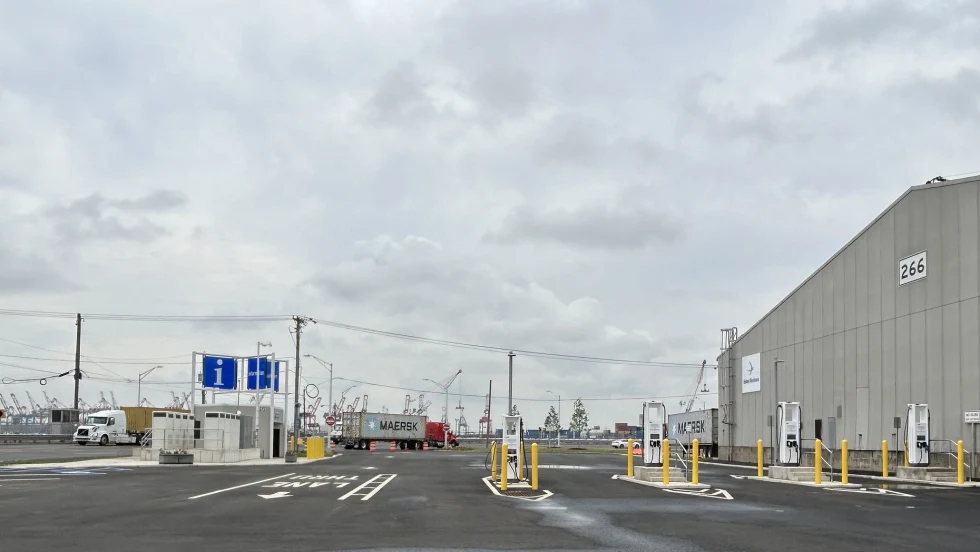
Port Authority and CALSTART Launch $45 Million Electric Truck and Charging Programs
The programs aim to boost sustainable operations across the East Coast's busiest seaport.
Read More →
Moving Government Fleets Beyond the Vehicle Purchase: EV as a Service
A discussion on how EVaaS is moving beyond pilot programs and what fleets should consider before beginning a larger deployment.
Read More →
Moving Government Fleets Beyond the Vehicle Purchase: EV as a Service
As fleets move beyond small EV pilots, Sustainability Partners CEO Adam Cain explains how EVaaS can address the infrastructure and long-term planning required for larger deployments.
Read More →
Peterbilt Expands Sourcewell Partnership with Electric Vehicle Lineup
The agreement aims to provide streamlined procurement of Peterbilt trucks for government, education, nonprofit and tribal organizations across the United States and Canada.
Read More →

EV Adoption & Charging Challenges
Where is your fleet in the journey of vehicle electrification? If you're still looking for answers to fleet electrification you've come to the right place.
Read More →
Hawaii Passes Clean Fuel Policy
Hawaii lawmakers passed clean fuel legislation that could support renewable natural gas production, biogas-powered transportation, and lower-carbon fueling options for public and commercial fleets.
Read More →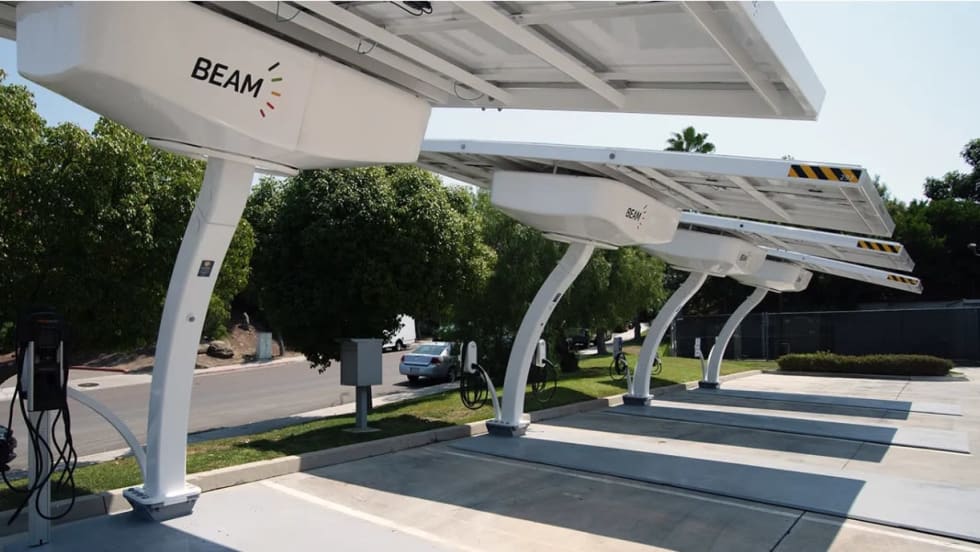
Stanislaus County Deploys Ten Beam Global EV ARC Systems to Support County Fleet Electrification
Stanislaus County deployed 10 off-grid solar-powered EV charging systems and a mobile charging trailer from Beam Global to support its electric fleet operations and emergency response flexibility.
Read More →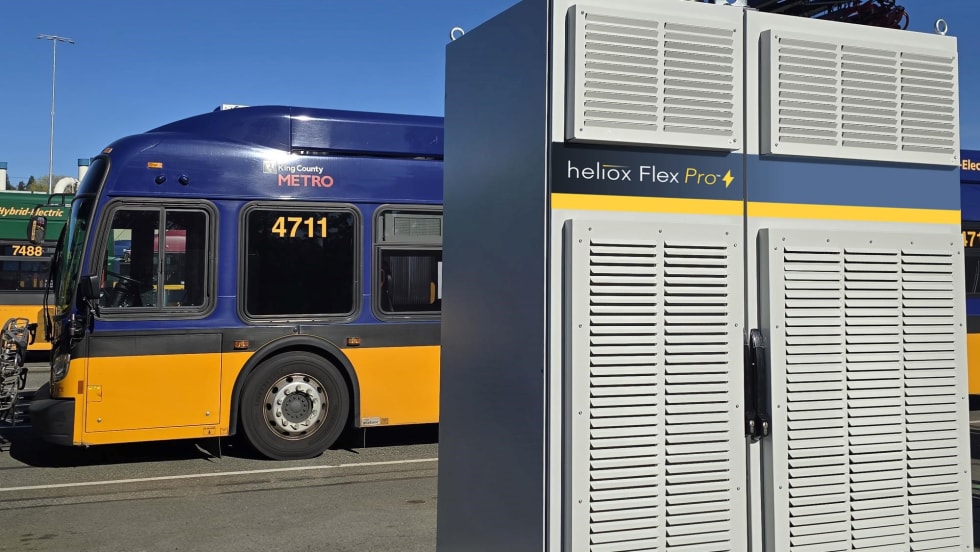
Heliox Pilots 480-kW Bus Charger with King County Metro
King County Metro is piloting Heliox’s new 480-kW Flex Pro charger to support expansion of its battery-electric bus fleet and depot charging infrastructure. The compact charging system supports pantograph and plug-in charging configurations for high-density transit operations.
Read More →