





Similar Content: White House, EPA Press USPS to Reconsider Gas-Powered Vehicle Purchasing Plan
16 States Sue USPS Over Gas-Powered Delivery Vehicle Purchase Plan
New York City Mayor Eric Adams said the purchasing plan "fails to comply with even the National Environmental Policy Act's most basic requirements," calling for the Postal Service to vacate it.
April 29, 2022
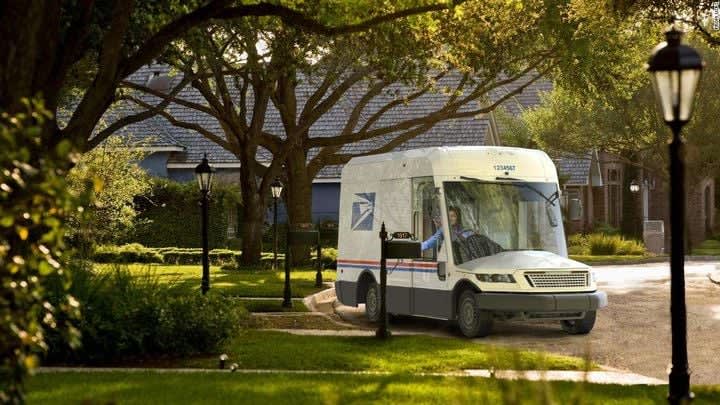
Photo: USPS
3 min to read
More than a dozen states, the District of Columbia, and environmental groups are suing the United States Postal Service (USPS) over its plan to purchase thousands of internal combustion engine (ICE) delivery trucks. Last month, the Postal Service announced it placed its first order of Next Generation Delivery Vehicles (NGDVs). The first order was for 50,000 vehicles, with at least 10,000 of them being battery electric vehicles.
The USPS has the nation's largest civilian vehicle fleet, with more than 212,000 vehicles. Many of them are more than 30-years-old, lacking basic safety features, said Postmaster General and USPS CEO Louis DeJoy in a news release.
The following states and groups joined the lawsuit: California, New York, Pennsylvania, Connecticut, Delaware, Illinois, Maine, Maryland, Michigan, New Jersey, New Mexico, North Carolina, Oregon, Rhode Island, Vermont, Washington, District of Columbia, City of New York, and the Bay Area Air Quality Management District.
New York City Mayor Eric Adams and New York City Corporation Counsel Sylvia Hinds-Radix distributed a press release about the lawsuit, saying the purchasing plan, "fails to comply with even the National Environmental Policy Act's most basic requirements," calling for the Postal Service to vacate its purchasing plan.
“Justifying the purchase of gas guzzling, pollution-belching vehicles that contribute to climate change and harm public health by using a flawed analysis, the Postal Service has chosen to be part of the problem rather than working towards a solution and I applaud Mayor Adams and Corporation Counsel Hinds-Radix for joining the fight to reverse this unlawful decision,” said New York City Chief Climate Officer Rohit T. Aggarwala in the release.
The members of the lawsuit argue the USPS's Final Environmental Impact Statement (EIS) violated the National Environmental Policy Act and say the plan should be set aside for the following reasons:
The USPS violated well-established legal precedent by signing contracts with a defense contractor to procure the vehicles before releasing its draft environmental review;
The USPS failed to consider reasonable alternatives to its proposed action and arbitrarily rejected any consideration of vehicle fleets with a greater percentage of electric vehicles;
The USPS’s environmental review failed to properly consider air quality, environmental justice, and climate impacts of purchasing a primarily gas powered fleet;
The Final EIS failed to ensure the scientific integrity of its analysis by relying on unfounded assumptions and failing to provide the source of the data it considered; and
The Final EIS is inconsistent with state policies to reduce fossil fuel consumption and to encourage the development and use of clean vehicles.
The Postal Service has previously pointed to funding issues as its reasoning for not planning to order more battery-powered NGDVs. The USPS does not receive government aid.
In December, President Joe Biden issued an executive order asking the U.S. government to buy only EVs for the federal fleet by 2035. While the USPS was exempt from the order, a spokesperson told GF that the Postal Service hopes to follow the same precedent.
President Biden’s spending and climate bill would award $6 billion for USPS to purchase electric delivery vehicles and infrastructure. With the funding, USPS has said all delivery fleet acquisitions could feasibly be electric by 2028, and a corresponding 70% of the entire delivery fleet could be EVs by 2030. The bill is stalled on Capitol Hill.
The first NGDVs are expected to begin appearing on carrier routes in late 2023.
More Green Fleet
Sustainability Partners, Energy Systems Group Help Albuquerque Close the Gap on its 100% Renewable Energy Goal
The eight-site, 6 MW solar project has advanced the city toward 100% renewable energy for municipal operations.
Read More →
Port Authority and CALSTART Launch $45 Million Electric Truck and Charging Programs
The programs aim to boost sustainable operations across the East Coast's busiest seaport.
Read More →
Moving Government Fleets Beyond the Vehicle Purchase: EV as a Service
A discussion on how EVaaS is moving beyond pilot programs and what fleets should consider before beginning a larger deployment.
Read More →
Moving Government Fleets Beyond the Vehicle Purchase: EV as a Service
As fleets move beyond small EV pilots, Sustainability Partners CEO Adam Cain explains how EVaaS can address the infrastructure and long-term planning required for larger deployments.
Read More →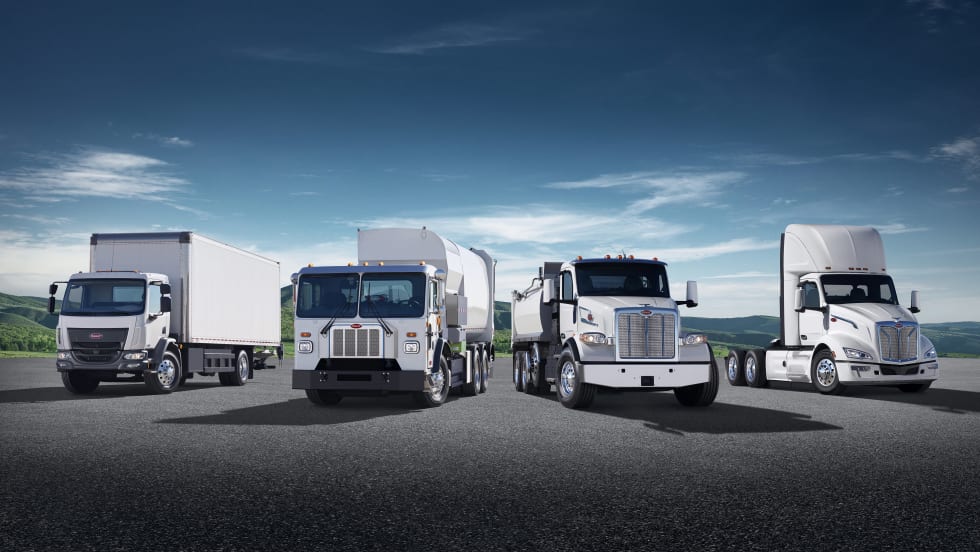
Peterbilt Expands Sourcewell Partnership with Electric Vehicle Lineup
The agreement aims to provide streamlined procurement of Peterbilt trucks for government, education, nonprofit and tribal organizations across the United States and Canada.
Read More →
EV Adoption & Charging Challenges
Where is your fleet in the journey of vehicle electrification? If you're still looking for answers to fleet electrification you've come to the right place.
Read More →
Hawaii Passes Clean Fuel Policy
Hawaii lawmakers passed clean fuel legislation that could support renewable natural gas production, biogas-powered transportation, and lower-carbon fueling options for public and commercial fleets.
Read More →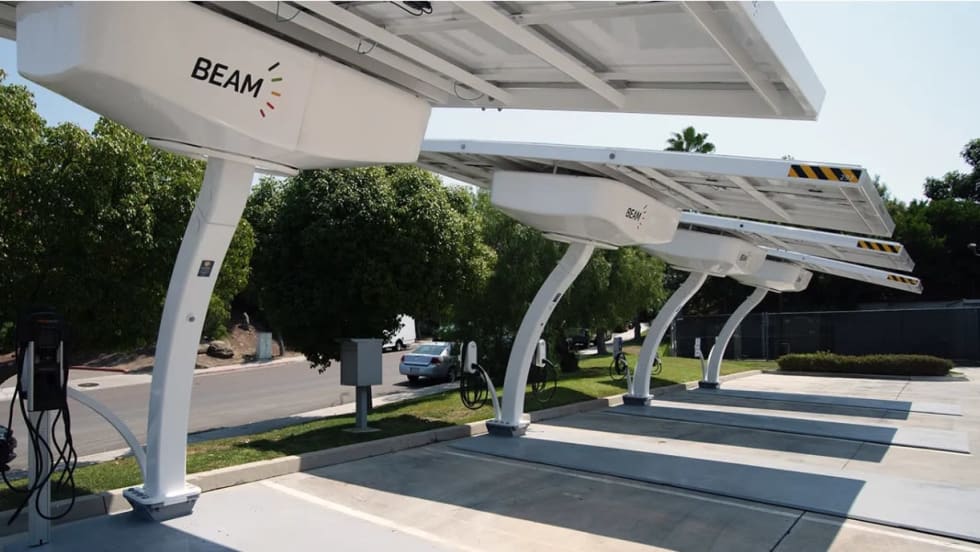
Stanislaus County Deploys Ten Beam Global EV ARC Systems to Support County Fleet Electrification
Stanislaus County deployed 10 off-grid solar-powered EV charging systems and a mobile charging trailer from Beam Global to support its electric fleet operations and emergency response flexibility.
Read More →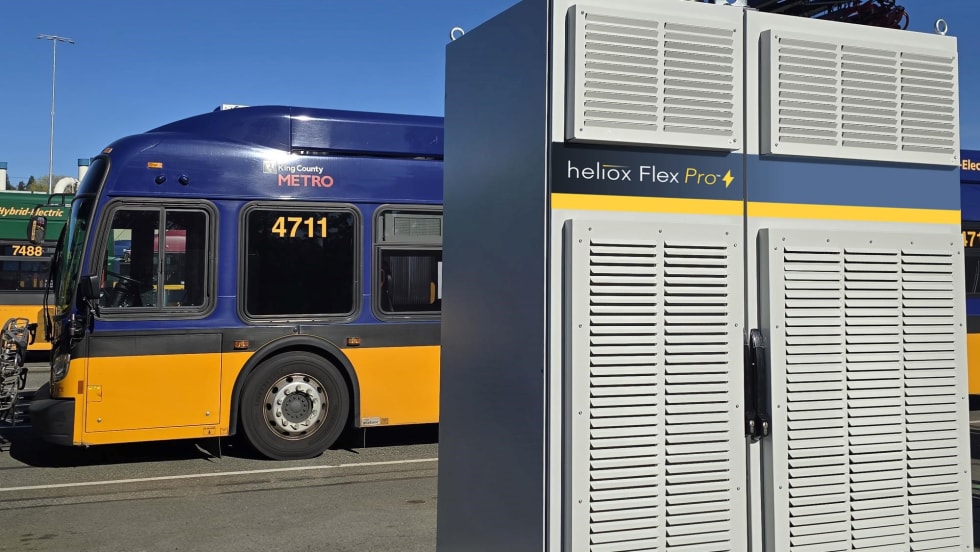
Heliox Pilots 480-kW Bus Charger with King County Metro
King County Metro is piloting Heliox’s new 480-kW Flex Pro charger to support expansion of its battery-electric bus fleet and depot charging infrastructure. The compact charging system supports pantograph and plug-in charging configurations for high-density transit operations.
Read More →