




Mark Stevens Named Fleet Manager of the Year
Customer trust, dedicated employees, and progressive procedures push the City of Sacramento, Calif., fleet manager to take his turn in the limelight.
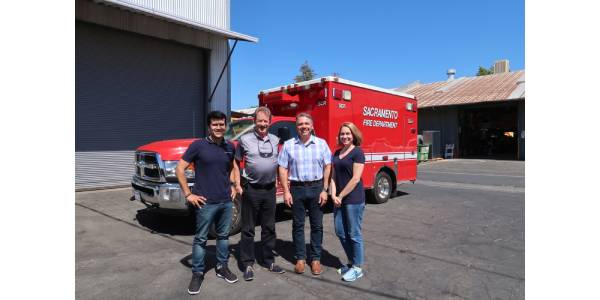
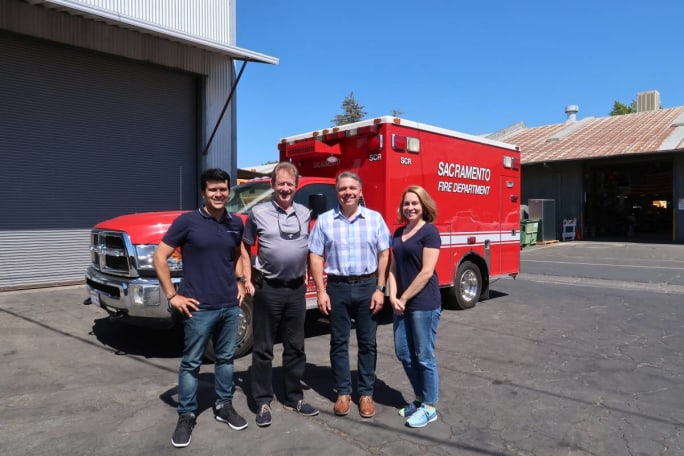
Mark Stevens (second from left) is pictured here with some of the Sacramento fleet administrative staff (l-r): Kin Morales, program specialist; Ron Kammerer, operations general supervisor; and Alison Kerstetter, program specialist.
PHOTOS: CITY OF SACRAMENTO
Initially, Mark Stevens, fleet manager for the City of Sacramento, Calif., didn’t consider applying for the Public Sector Fleet Manager of the Year award. After he learned he’d been nominated, it took some encouragement to take the next step. “I thought about it and decided to apply, as I wanted the ability to recognize and promote some of the processes and procedures we are utilizing here in Sacramento, and I felt this would be a great platform to do that,” he said. It’s a good thing he did, because on June 16, he was named Public Sector Fleet Manager of the Year, an award sponsored by GovPlanet.
Even being named a finalist was “a bit overwhelming,” he said. “I have never been one looking for the limelight and have always let my actions speak for themselves, so being named a finalist is quite humbling for me.” Stevens’ actions clearly do speak for themselves, resulting in the Fleet Manager of the Year honor.
Building Customer Trust
Even though Stevens operates a high-performing fleet that has garnered some impressive accolades, his work still has its trials. “Gaining trust from our customers has been and is always a challenge,” he said. Although challenging, Stevens recognizes the importance of building that trust, and the team has done the work to do so: communicating openly with customers, keeping them informed of what the fleet operation is doing and how, and establishing regular meetings to discuss issues and concerns on both sides of the table. This work has paid off.
“We are very proactive with our customers and have instilled a level of trust that allows fleet to guide our operations in ways that improve efficiency and reduce costs,” Stevens explained.
While Stevens puts in the effort to build ties with customers, he also holds them accountable to playing their own role in running a high-performing fleet. He often asks this question — and acts on it: “Is there something the customer can be doing differently that would help operations and minimize the cost and downtime of vehicles and equipment?”
For instance, when the fleet operation was having a problem with vehicles being turned in for services, Stevens decided to use the city’s fuel management system to notify users that their vehicle services were due within the next 30 days — a notice drivers see at fuel dispensers each time they fuel up. After 30 days, fuel was cut off until the vehicle was brought in for service (although in an emergency, the shop supervisor could override the system to dispense fuel). “After a brief period of understanding the new procedure, we have had great success in scheduling vehicles for service,” Stevens said.
While customer accountability is important, Stevens said serving the customer is central to any fleet operation’s success. “The number one point is to include your customer in your processes and your decisions and recognize you are there to meet their needs, not the other way around,” he said. “With that principal thought in mind, you will be successful in making changes and improving your operations.”
Employing Employee Scorecards
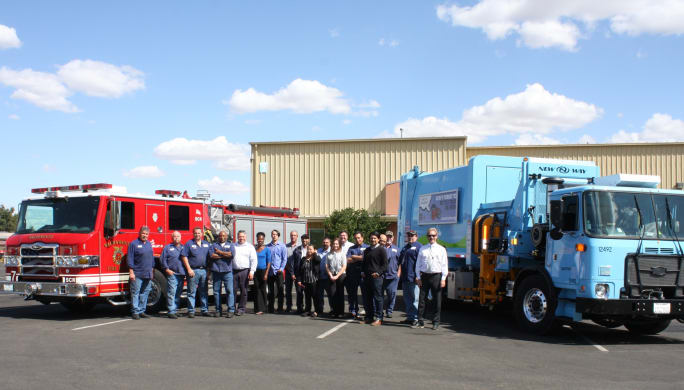
City of Sacramento fleet employees know how they are performing through an employee scorecard that tracks labor hours and indirect hours. This also allows fleet management to track the productivity and efficiency of shop operations.
PHOTOS: CITY OF SACRAMENTO
Accountability isn’t reserved for customers — it applies to fleet employees, too. While many fleets may employ driver scorecards, the fleet instituted an employee scorecard before Stevens took over that tracks direct labor hours as well as indirect hours. The scorecard also includes the actual shop average of billable hours for all technicians at each location.
“In the end, an employee has a percentage of direct billable hours we utilize for budgetary applications,” Stevens said. “This benefits our fleet, as we are able to know and project our direct labor hours to anticipate, on a quarterly basis, if we are meeting our projected budget or falling short. By knowing exactly what our billable hours are, we are better able to forecast future trends and historical trends in the budget process.”
The scorecard also allows the fleet to evaluate employee performance and maintain a high level of productivity.
“The employee productivity expectations are on record, and I believe most employees want to know how they are performing. This tool affords us the opportunity to do just that,” Stevens said. “As a top tier fleet, you have to know your numbers, and it starts with the productivity and efficiency of your shop operations.”
Making Sustainable Advances
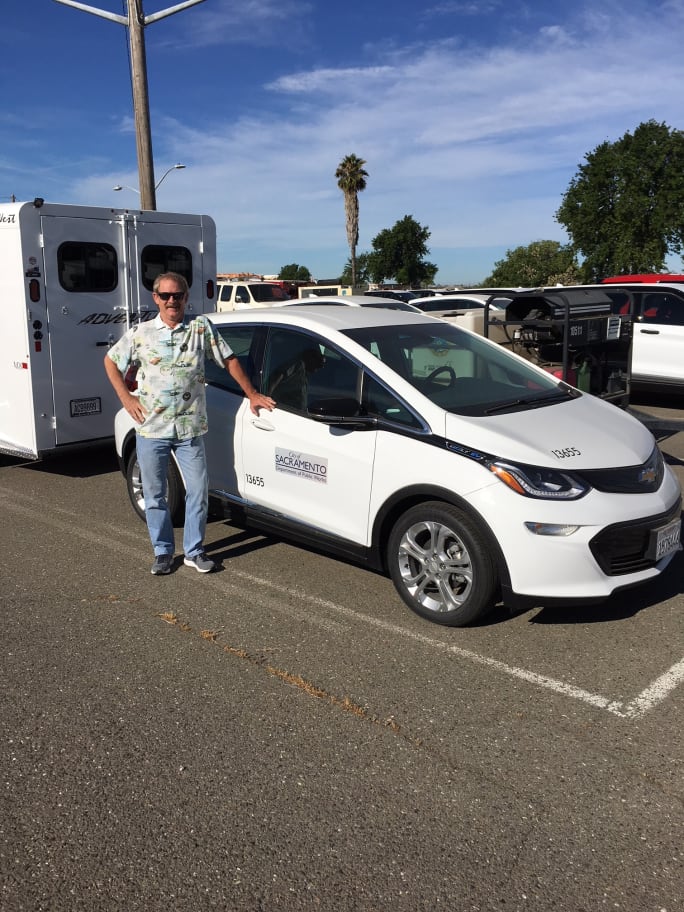
One of Mark Stevens’ proudest accomplishments is helping transition from six electric vehicles (EVs) to an anticipated 100 in the fleet by the end of the year.
PHOTOS: CITY OF SACRAMENTO
While Stevens has implemented a number of successful fleet policies and procedures, he said he is proudest of the fleet’s sustainability policy and the goals associated with it. In just three years, the fleet went from operating six electric vehicles (EVs) to nearly 100 full-time EVs that will be in service by the end of 2020. Stevens has also worked with the Police Department to replace the standard patrol vehicle with a fully functional hybrid patrol vehicle. “I believe the ability to change the culture to EVs and reduce emissions is a commitment from our customers and a direct reflection of our Fleet Division’s dedication and trust,” he said.
The fleet continues to innovate with EVs. A pilot project is currently underway that aims to reduce or eliminate the need for large-scale electrical infrastructure when deploying an EV fleet. The pilot includes retrofitting EVs with batteries that can be charged and replaced automatically. When a battery needs to be replaced, customers simply drive up to a pod that holds and charges batteries. A robot senses the vehicle, moves underneath it, removes the battery, places it in the pod to be charged, then pulls a charged battery and places it back into the vehicle. Pods are portable and require just a 220-volt hookup.
“I see this technology being a viable form of battery replacement in the future while minimizing the need for expensive infrastructure,” Stevens said. “The fleet vehicle is a perfect candidate, as the vehicles typically all return to the same base of operation at the end of the day and would be able to take advantage of the pod technology. This is just one of many new ideas that may spawn new thoughts and ways to advance technology as EVs continue to advance.”
The Secrets Behind Stevens’ Success
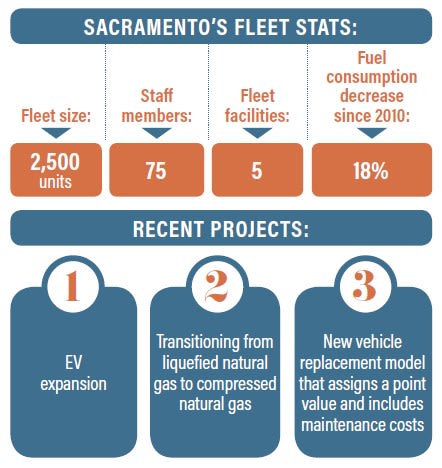
When asked what advice he would offer other fleet managers, Stevens said communication is critical. “You won’t be successful if you don’t communicate with your staff and customers. Listen to complaints and try to understand where and why the complaint originated,” he said. “Don’t be afraid to ask questions as to why something is being done a certain way; there is always room for improvement. And don’t be afraid to make changes. Sometimes it is hard, but necessary.”
Even though Stevens is indeed in the limelight following his Public Sector Fleet Manager of the Year win, he credits his team for the success. “I don’t view this award as a personal one, but rather a testament to the fleet operation as a whole. My staff is second to none, and without their dedication and professionalism, the City of Sacramento Fleet Division would not be one of the top-tier fleet operations in the country today,” he said. “I would like to thank my tremendous staff and customers at the city for the opportunity they have provided. I am truly blessed to be in this position here in the City of Sacramento.”
More Operations

Fleet Forward Conference Introduces One-Day Passes for 2026
New one-day registration lets fleet professionals attend Tuesday, Wednesday, or Thursday, with passes available for $249.
Read More →
ENC Unveils its ZAVIR Medium-Duty Shuttle
Two variants of the concept shuttles were revealed: a low-floor configuration and a high-floor configuration.
Read More →
Could Your Next Fleet Technician Start as an Intern?
What if your next technician hasn’t worked in a fleet shop yet? What fleets are doing to free up time.
Read More →
How Phoenix Is Building Its Next Generation of Fleet Technicians
With more than 8,000 vehicles and pieces of equipment to maintain, the City of Phoenix could not afford to wait for fully trained technicians to walk through the door. Instead, they revamped their entire workforce strategy and showed how public fleets can create their own talent pipeline while preparing existing employees for increasingly complex vehicles.
Read More →
What’s Slowing Your Fleet Down?
Could a change in how work gets done help your fleet return vehicles to service sooner?
Read More →
Can Public Fleets Trust the Data Driving Their Decisions?
Public fleets have more data than ever, but inconsistent records and missing information can still undermine maintenance, replacement, and cost decisions.
Read More →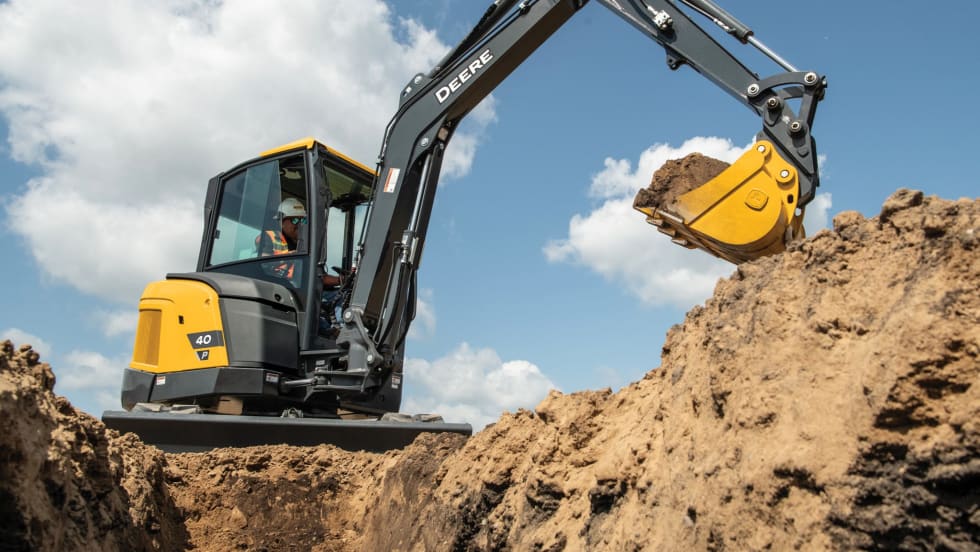
John Deere Introduces 40 P-Tier Compact Excavator
John Deere is adding a compact excavator designed for crews that need to move equipment between jobsites and handle multiple types of work with one machine. The 40 P-Tier weighs less than 10,000 pounds and offers configurable hydraulics, attachment options, and connected fleet-management capabilities.
Read More →
How Leading Fleets Improve and Why Business Plans Matter
This week, we look at what past Leading Fleet winners can teach us about making progress, plus how to build a business plan your fleet will actually use.
Read More →
Nominate a Fleet Leader for the 2027 Public Fleet Hall of Fame
Do you know a fleet leader who has made a lasting impact on the industry? Nominate this fleet professional for the 2027 Public Fleet Hall of Fame.
Read More →
Why Fleet Business Plans Need Three Perspectives
A fleet business plan should help agency leaders understand the fleet’s value, give the organization a clear direction, and establish shared expectations with customer departments.
Read More →