




Green Fleet Initiatives Mushroom
Public fleets have been steadily increasing the use of alt fuels through “greening” initiatives. Together, these cities, counties, federal departments, and states are working to help keep the air clean for years and generations to come.

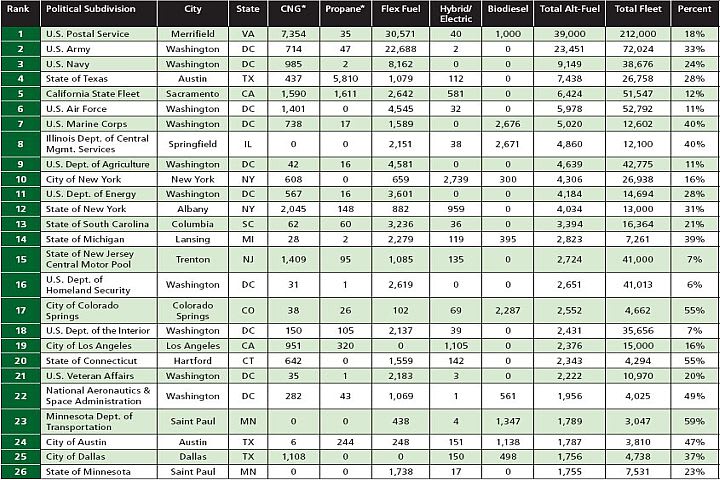
Public sector fleets are leading the charge in alt-fuel usage. These 50 public sector fleets manage 178,974 alt-fuel vehicles.
From backhoes used by Las Vegas employees to compact cars driven by building inspectors on their rounds, the City has more alternatively-fueled vehicles in its fleet than any other large city in America.
According to a study by SustainLane, Las Vegas ranks first among the 50 largest cities in the U.S. in implementing alternative-fuels programs.
Las Vegas has its own fueling station that powers 88 percent of the city’s 1,058 vehicles with compressed natural gas (CNG), biodiesel, hydrogen enriched compressed natural gas, flex-fuel, and hybrid-electric.
Las Vegas has 88 percent of its fleet running on alternative fuels. The City has also purchased 85 hybrid vehicles, which replaced small pickup trucks that got 13 miles per gallon.
Eighty-five percent of the petroleum fuel powering vehicles in New York state is imported from Canada, Mexico, Saudi Arabia, Nigeria, and Venezuela.
Prompted by the last three U.S. Presidents’ desires to clean air, create local jobs, and reduce dependency on imported fuel, New York City has acquired more than 1,700 Generation 1 and 2 Toyota Prius and Ford Escape Hybrids. Prius fuel economy in NYC was reported at 40 mpg. About 100 Ford Escape Hybrids have also been placed in cab service, achieving about 17 mpg — about a 40 percent improvement over Ford Crown Victoria taxis.
Also, NYC’s Sanitation Department has six refueling stations running that supply E-85 fuel, purchased through Sprague Energy, Inc. NYC has also replaced many of its gasoline- or diesel-powered off-road equipment with electric battery vehicles, such as the GEM Car. These vehicles are used by the Parks Department or where they can travel a maximum of 25 mph.
New Jersey’s hybrid fleet is comprised of 91 Toyota Prius and 44 Ford Escape Hybrids. New Jersey reports a savings of about 600 gallons per vehicle per year, compared to a conventional vehicle. Prius fuel economy was reported at 48 mpg.
New Jersey is a leader in biodiesel with the Medford School District in central N.J. The school bus fleet has displaced 20 percent of its petroleum with biodiesel since 1997, with no problems.
The N.J. Department of Transportation headquarters now dispenses B-20, along with several municipalities. New Jersey has also purchased 1,409 bi-fuel CNG vehicles.
Sixteen percent of Colorado’s state vehicle fleet runs on something other than straight gasoline. That number is expected to skyrocket in coming years as Gov. Bill Ritter launches an ambitious program to reduce petroleum usage in state vehicles by 25 percent by June 2012. This goal is part of the state’s Greening of Government Initiative.
State officials are looking at many options, including replacing the fleet with "green" vehicles, a reduction in the number of vehicles, limits on miles driven by workers, and an incentive program to get state employees to take mass transit to work.
Greening the fleet has already started as 192 of the 780 new cars and trucks purchased by the state during the fiscal year that ended June 30, 2007 are flex-fuel vehicles, meaning they can run on gasoline or a blend of gas and as much as 85-percent ethanol.
The fleet also includes 62 hybrid-electric cars and 250 diesel-powered trucks capable of running on B-20.
Local governments across the country are responding with policies to combat global warming and lower pollution as public awareness has increased, and going green has become more acceptable.
Counties from Washington to Virginia have put in place a wide range of plans that include everything from alternative-fuel vehicles to "green purchasing policies" that require energy-efficient light bulbs, recycled paper and pens made out of recycled plastic.
Maricopa County, Ariz., will replace its fleet of vehicles with hybrids and other fuel-efficient vehicles. Over time, the County’s 2,000 cars, sport/utility vehicles, and trucks will be swapped for less-polluting vehicles rated by the Environmental Protection Agency’s (EPA) Green Vehicle Guide.
Instead of making purchasing decisions based mostly on cost, supervisors will weigh environmental costs before they approve funding for new vehicles.
The County’s fleet travels 25 million miles a year and puts out more than 30 million lbs. of emissions, both pollutants and greenhouse gases.
County officials estimate they could cut that down by between three million and 15 million lbs. a year, depending on how much they can afford spending on the more-efficient cars, which tend to cost more.
The cost estimate of replacing all 312 of the County’s small and mid-size cars with the most-efficient vehicles is $7 million over one decade. Under that scenario the County would save about $1.1 million in fuel costs and reduces emissions by 1.3 million lbs.
The County’s fleet includes 32 classes of vehicles, ranging from small compact cars such as Ford Focuses, to large SUV Suburbans to heavy-duty semitractor-trailers. Vehicles are replaced when they reach 10 years or 100,000 miles.
The City of San Francisco completed a yearlong project to convert its entire fleet of diesel vehicles — from ambulances to street sweepers — to biodiesel.
Using virgin soy oil bought from producers in the Midwest, officials state that all of the City’s 745 diesel vehicles are now powered with biodiesel.
Hawaii is taking a big step toward becoming a "green" state with the a new policy enacted with the Hawaiian Electric Company (HECO) in association with the Natural Resources Defense Council.
The new policy will ensure the state’s electric companies — Hawaiian Electric, Maui Electric, and Hawaii Electric Light — will purchase biodiesel fuel only produced from locally grown sustainable feed stocks.
The electric companies in Hawaii make up the largest utility that utilizes petroleum diesel fuel in the country. Once the switch has been completed, they will become the largest user of biodiesel in the U.S. The State will purchase palm oil in compliance with the rules established by the International Roundtable on Sustainable Palm Oil.
All City-owned vehicles, including dump trucks and garbage trucks in Chattanooga, Tenn., now run on B-20 biodiesel. City officials report they made the switch to help preserve the environment and save nearly $50,000 per year, due to biodiesel costing 25-50 cents less per gallon than diesel fuel.
The City of Roanoke has converted 365 pieces of equipment — 100 percent of its diesel vehicles and equipment — to biodiesel. This includes school buses, trucks, fire trucks, front-end loaders, as well as assorted smaller equipment. The Town of Blacksburg planned to convert 100 percent of its Public Works Department diesel-powered fleet by August 2007. Virginia Tech will also convert the majority of its Physical Plant Operations fleet to biodiesel.
As part of a clean-fleet initiative, Boston’s fleet converted to a biodiesel fuel blend. City officials believe the environmental and fuel independence benefits are worth the increase in cost.
Boston’s Mayor Thomas Menino has a green building initiative that promotes resource-efficient, environmentally responsible buildings. When it comes to the City’s fleet, his thinking is no different. Menino’s clean fleet initiative is already in full swing, and all diesel-powered vehicles now use a 5-percent biodiesel/ultra-low sulfur diesel (ULSD) blend.
The City’s fleet uses about 800,000 gallons of diesel fuel per year. The use of B-5 with ULSD will reduce the particulate emissions by approximately 15 percent, with similar or greater reduction in emissions of carbon monoxide and hydrocarbons.
The Alabama state government is switching its fleet of vehicles to ethanol and is trying to make it easier for consumers to find alternative fuels. Gov. Bob Riley said the state is spending $324,000 to install a 12,000-gallon E-85 fuel tank and two pumps at the motor pool.
The motor pool, which provides vehicles for state employees to use on trips across the state, has 132 of its 207 vehicles that can use flex fuel, and all of its future purchases will be flex-fuel capable. Next, fuel stations for alternative fuels will be installed at the Department of Transportation’s (DOT) pumping stations for its equipment. About 2,000 of DOT’s 3,000 vehicles are flex-fuel capable.
More than half of Ann Arbor’s 400-vehicle fleet runs on biodiesel or natural gas. With the help of a federal grant, the City plans to install a pump for E-85, a blend of 85-percent ethanol and 15-percent gasoline.
Lansing operates more than half of its 600-vehicle fleet on biodiesel. The City plans to purchase two electric vehicles for parking enforcement. Lansing has six vehicles than can run on E-85, but needs a convenient fueling station to make using the fuel practical.
Massachusetts state officials will drive 10 hybrid vehicles as part of a pilot program to introduce plug-in hybrid technology to the Commonwealth’s vehicle fleet. Energy and Environmental Affairs Secretary Ian Bowles said the pilot program features sedans and SUVs, retrofitted to plug-in technology that uses rechargeable batteries.
Westchester County, N.Y., has added 30 hybrid vehicles to its county fleet. The acquisition of the Toyota Prius and Camry Hybrids brings the number of hybrid vehicles in the County’s fleet to 103. This accounts for about 33 percent of the County’s 320 fleet vehicles, excluding police and emergency vehicles.
Westchester County has also been testing four hybrid-powered buses on its Bee-Line bus system routes throughout the County since July 2007. The County plans on buying as many as 100 more buses to replace standard buses over the next two years.
The University of North Carolina, Charlotte (UNCC) is building a fleet of alternatively-fueled vehicles to comply with a state mandate that says 75 percent of all state motor fleets operate on alternative fuel by January 2009.
The university has added 51 low-speed, battery-electric vehicles to its motor fleet since 2005, and plans to add at least 90 more. UNCC added 24 Global Electric Motorcars (GEM) since 2005 to the fleet that includes 24 Club Cars, two Trolleys, one EZGO Electric Vehicle, and two Columbia Par Car Summit neighborhood electric vehicles.
GEM was selected because the line of electric vehicles can be licensed to operate on 35 mph roads. The vehicles also have automotive safety restraints, four-wheel braking, automotive tires, and built-in rollover protection.
More Articles

Could Your Next Fleet Technician Start as an Intern?
What if your next technician hasn’t worked in a fleet shop yet? What fleets are doing to free up time.
Read More →
What’s Slowing Your Fleet Down?
Could a change in how work gets done help your fleet return vehicles to service sooner?
Read More →
Can Public Fleets Trust the Data Driving Their Decisions?
Public fleets have more data than ever, but inconsistent records and missing information can still undermine maintenance, replacement, and cost decisions.
Read More →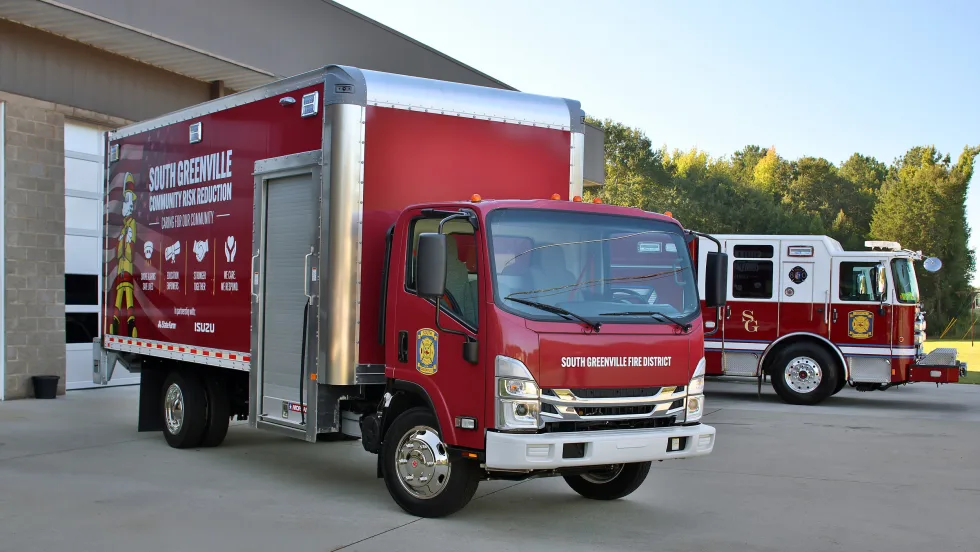
Isuzu Donates New N-SERIES NRR Truck to South Greenville Fire District to Support Community Outreach
Isuzu NRR equipped with Morgan truck body and PALFINGER liftgate will help support fire safety education, community engagement and outreach programs throughout Southern Greenville County.
Read More →
How Phoenix Is Building Its Next Generation of Fleet Technicians
With more than 8,000 vehicles and pieces of equipment to maintain, the City of Phoenix could not afford to wait for fully trained technicians to walk through the door. Instead, they revamped their entire workforce strategy and showed how public fleets can create their own talent pipeline while preparing existing employees for increasingly complex vehicles.
Read More →
Freeing Technicians for Higher-Priority Repairs
Could paid interns help public fleets free up experienced technicians for more complex repairs?
Read More →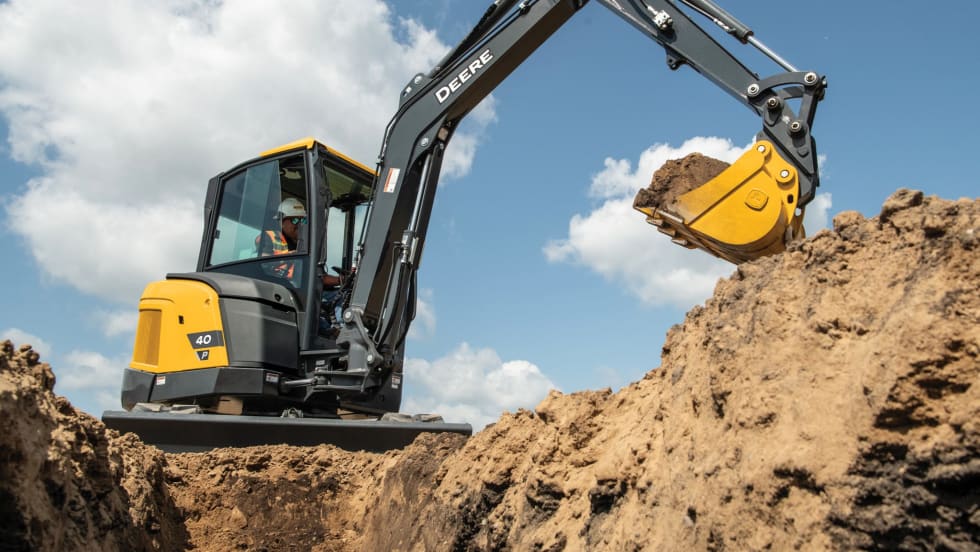
John Deere Introduces 40 P-Tier Compact Excavator
John Deere is adding a compact excavator designed for crews that need to move equipment between jobsites and handle multiple types of work with one machine. The 40 P-Tier weighs less than 10,000 pounds and offers configurable hydraulics, attachment options, and connected fleet-management capabilities.
Read More →
How Leading Fleets Improve and Why Business Plans Matter
This week, we look at what past Leading Fleet winners can teach us about making progress, plus how to build a business plan your fleet will actually use.
Read More →
Nominate a Fleet Leader for the 2027 Public Fleet Hall of Fame
Do you know a fleet leader who has made a lasting impact on the industry? Nominate this fleet professional for the 2027 Public Fleet Hall of Fame.
Read More →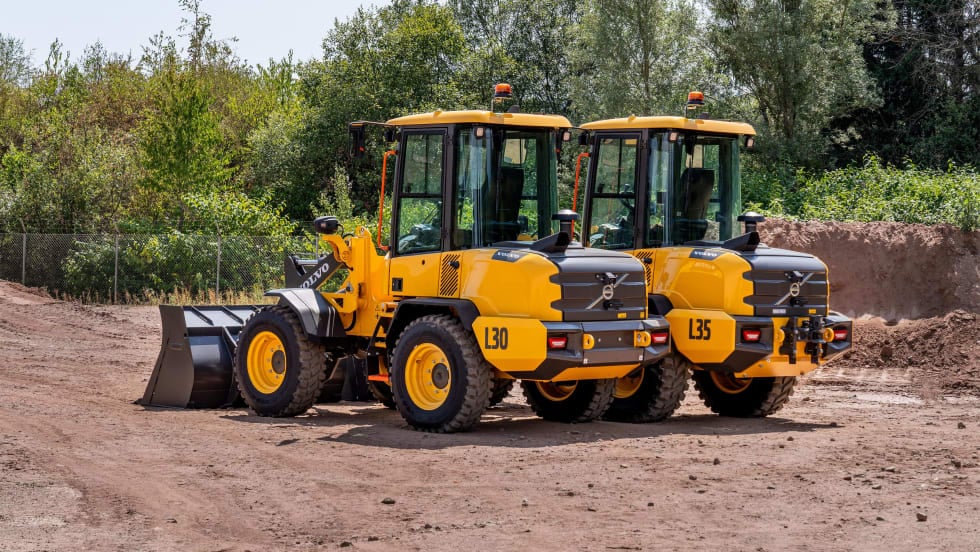
Volvo Updates L30 and L35 Compact Wheel Loaders With Redesigned Rear Frame
The updates aim to provide customers with more flexibility to use the machines for different jobs while improving service access and everyday operation.
Read More →