




Want More? Fleet Management in a Wireless World, Leveraging Options to Lower Your Costs
How Embracing Change Can Drive Your Fleet Operations Forward
A fleet manager shares why welcoming change in your operations is necessary, and how it can help you maximize efficiency.

Christy Grimes・Former Senior Editor

By embracing change, public fleet agencies can position themselves as leaders in the industry and contribute to building a more efficient, sustainable, and customer-centric system for the communities they serve.
Photo: Canva/Government Fleet
4 min to read
Change is never easy, but it is inevitable. That’s especially true in public fleet, where external factors and new technology heavily affect operations. It’s important to embrace change to keep your department running smoothly.
That’s what David Fint, administrative branch manager for the Kentucky state office of fleet management has done. When Government Fleet asked him the most exciting thing happening in fleet right now, his response was simply, “change.”
The Evolution of Vehicle Management
If there’s one thing Fint has seen throughout his time working with cars, it’s change. He grew up around cars; his family owned a salvage yard. From a young age, Fint pulled parts for customers.
As he grew up, he continued working under the hood. His father owns and operates a collision repair facility.
“That’s where I really cut my teeth on vehicle repairs,” Fint said.
He began his career in the state government in 2007, managing a fleet of 180 vehicles for the Kentucky Department of Agriculture.
In 2015, he moved to the Office of Fleet Management as a supervisor in the maintenance garage. In 2018, he moved to the operations side as a supervisor, overseeing the help desk. Then in 2022, Fint moved to the position he’s in today.
Fint’s team is implementing change in several ways, and it’s something he’s excited to watch.
“We’re moving forward on many fronts all at once and it’s all in the right direction,” Fint said.
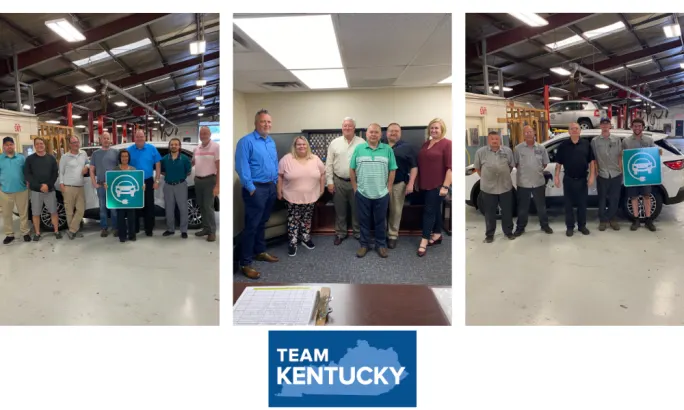
The state of Kentucky's fleet operation owns and/or maintains nearly 4,400 vehicles across Kentucky. Pictured in the left and center photos are the Customer Service & Administrative Support Branch. Pictured on the right is the Maintenance Branch.
Photos: David Fint
Growing Efficiency with Fleet Technology
The state’s fleet operation, which owns and/or maintains nearly 4,400 vehicles across Kentucky, is working to increase its productivity by using more technology. Earlier this year, the department implemented a new fleet management software system from AssetWorks.
“This software is going to allow us to manage our fleet more effectively and efficiently. It is also going to automate our 225-vehicle statewide motor pool,” Fint explained.
Additionally, the department just opened its first KeyValet location. It’s an automated motor pool system from AssetWorks that allows customers to reserve, pick up, and drop off a vehicle without the need for staff to get involved.
The department also uses telematics to boost efficiency and gain more insights into its vehicles. Fint said the technology is essential.
“Telematics is a must! Not only to track the vehicle; but the ability to see any information related to the specific vehicle is a game changer for fleet managers,” Fint said. “The ability to run a single report and pull engine codes or tire pressures, even the fuel level in the vehicle, is critical to maintaining your fleet."
Fint suggested seeking out technology that can automate as much information as possible, like vehicle mileage, maintenance, etc.
“[That] information is critical to properly maintaining a large fleet,” he said.
Managing Staffing Shortages by Building Talent
Like most other fleets, the state of Kentucky is struggling with a staffing shortage.
“Having the right and sufficient personnel is the single most important key to effectively managing a fleet. We’ve made significant strides towards building a very strong and effective team over the recent years, but we’re still working to sustain that growth and retain the talent and expertise we have been able to secure,” Fint said.
But what happens when you can’t find employees with the skills necessary to complete the task? You help younger techniciansbuild the talent and skills needed.
“It’s become incredibly difficult to attract automotive technicians with advanced skills and experience. Instead, we’ve begun to focus on hiring motivated and promising young technicians, and [have committed] to challenging and working with them to grow their skills and experience over time.”
Fint said he’s pleased with his recent new hires and the progress they are making, telling Government Fleet that they’re doing, “great things for us and our customers.”
Preparing for the Transition to EVs
One of the biggest changes Fint said he’s seen since starting in this industry is the movement to electric vehicles (EVs).
The state fleet department is transitioning some of its vehicle inventory to EVs, as well as purchasing charging infrastructure.
Last year, the department added two charging stations to its service garage. Currently, contractors are installing another 20 charging stations at two state facilities.
Additionally, the department is requesting funding to install another 165 charging stations at various state office locations in 2025.
Driving Toward the Future
Embracing change helps public fleets drive toward the future. Fint has learned firsthand that it allows fleet managers to unlock a range of benefits including improved efficiency, enhanced sustainability, and better alignment with evolving societal needs.
While challenges may arise, the potential rewards far outweigh the status quo.
By embracing change, public fleet agencies can position themselves as leaders in the industry and contribute to building a more efficient, sustainable, and customer-centric system for the communities they serve.
Subscribe to Our Newsletter
More Operations
Could Your Next Fleet Technician Start as an Intern?
What if your next technician hasn’t worked in a fleet shop yet? What fleets are doing to free up time.
Read More →
What’s Slowing Your Fleet Down?
Could a change in how work gets done help your fleet return vehicles to service sooner?
Read More →
Can Public Fleets Trust the Data Driving Their Decisions?
Public fleets have more data than ever, but inconsistent records and missing information can still undermine maintenance, replacement, and cost decisions.
Read More →
How Phoenix Is Building Its Next Generation of Fleet Technicians
With more than 8,000 vehicles and pieces of equipment to maintain, the City of Phoenix could not afford to wait for fully trained technicians to walk through the door. Instead, they revamped their entire workforce strategy and showed how public fleets can create their own talent pipeline while preparing existing employees for increasingly complex vehicles.
Read More →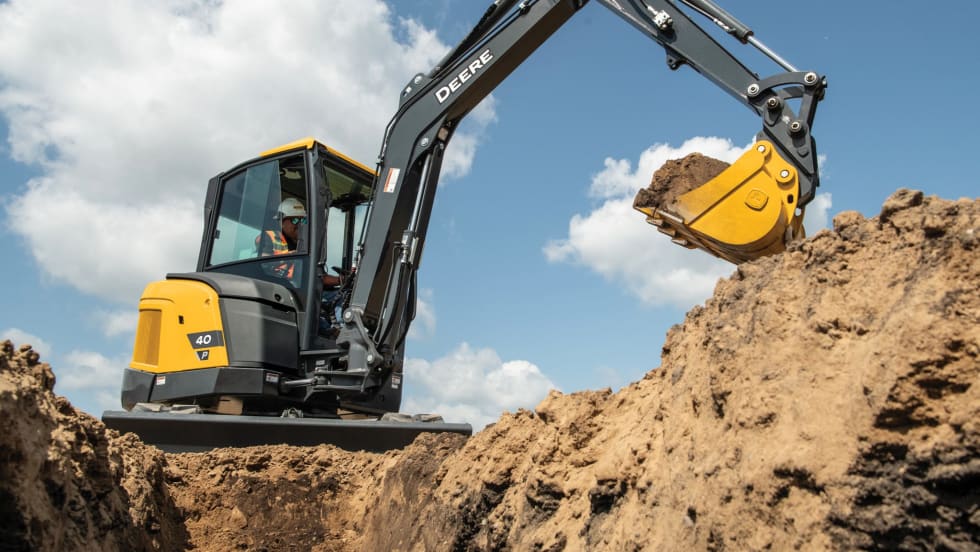
John Deere Introduces 40 P-Tier Compact Excavator
John Deere is adding a compact excavator designed for crews that need to move equipment between jobsites and handle multiple types of work with one machine. The 40 P-Tier weighs less than 10,000 pounds and offers configurable hydraulics, attachment options, and connected fleet-management capabilities.
Read More →
How Leading Fleets Improve and Why Business Plans Matter
This week, we look at what past Leading Fleet winners can teach us about making progress, plus how to build a business plan your fleet will actually use.
Read More →
Nominate a Fleet Leader for the 2027 Public Fleet Hall of Fame
Do you know a fleet leader who has made a lasting impact on the industry? Nominate this fleet professional for the 2027 Public Fleet Hall of Fame.
Read More →
Why Fleet Business Plans Need Three Perspectives
A fleet business plan should help agency leaders understand the fleet’s value, give the organization a clear direction, and establish shared expectations with customer departments.
Read More →
How Oil Analysis, Safety Technology, and Fleet Awards Drive Improvement
What happens when fleets let measured results guide their next decision?
Read More →
Emergency Response, Fleet Sales and New Technology
This week’s fleet news covers emergency preparedness, shifting vehicle sales, electric truck investments, and new tools for monitoring road conditions.
Read More →