




Build Relationships for Better Customer Service
Craig Willingham knows directing your focus to the immediate task at hand improves the quality of work you accomplish.

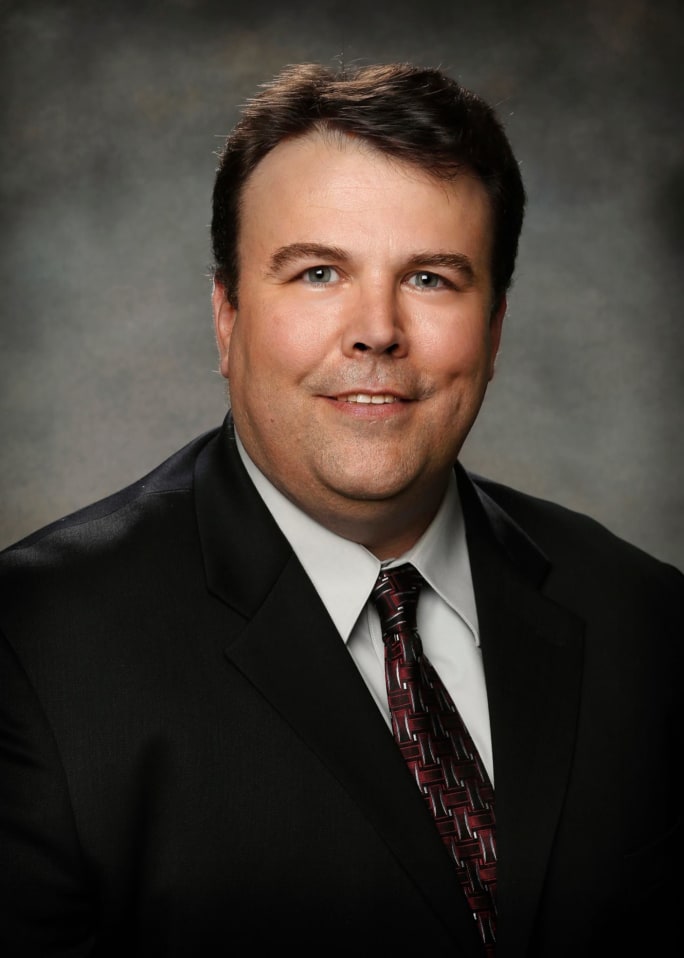
Craig Willingham
In the fleet world, no two days are ever the same. What does remain the same, however, is the need to focus on exceptional customer service. Craig Willingham, CAFM, fleet manager for the Department of General Services, Fleet Services Division in Chesterfield County, Va., says even when life throws you into a different direction than you planned for the day, you can never shirk your responsibility to those you are there to serve.
Meeting Needs by Prioritizing Others
It’s always nice to have a framework for what tasks you want to get done for the day, but sometimes you’re forced to throw away the to-do list and focus on the moment at hand. Willingham says this isn’t necessarily a bad thing as it makes you think on your feet.
“You may have a plan as far as ‘I’ll work on this from this time to this time,’ but things happen and that makes the day more interesting and breaks the monotony,” he says.
Another interesting aspect of the job that comes with learning how to improve your customer service tactics is getting to meet and develop relationships with many people at different levels. Whether it's an end user, a person who manages a department's budget, or county leadership, Willingham is grateful for the opportunities to interact with others and foster meaningful relationships.
“At Fleet Services, our customers are internal because they are from other county departments and divisions, but we run our operation like a business and ensure our customer's needs are not only met, but exceeded. We serve a diverse array of people who use county vehicles and I frequently remind my staff that how we do our job directly affects how others can do theirs.”
Adapting Swiftly
As most fleet managers, he has learned much from having to switch gears to adapt to complications caused by COVID-19. During the first two weeks of the crisis, many didn't know what the next hour would bring, let alone the next day. The fleet he manages consists of 2,600+ vehicles, including fire apparatus, police, specialized utility, school buses, and administrative vehicles. His operation includes four maintenance facilities servicing all county vehicles and an internal motor pool program. The bus fleet in Chesterfield County is one of the largest in Virginia.
“That was a challenging time. I was asked to deploy staff to other departments because we were experiencing furloughs. We had to adjust to immediate changes in workload because some of our customer departments went virtual. We also had to adjust our internal processes for paperless invoice processing and disinfecting of equipment,” he explains.
For several weeks in the spring, the fleet operation transitioned to two separate, non-overlapping shifts to avoid any potential spreading of the virus. As a result, issues such as parts availability developed because some vendors were only open at times that didn’t coincide with the shifts that staff were working.
“It was a behavioral shift for us and our customers because a lot of our work is for public safety and we had to make adjustments and incorporate solutions in order to best serve them. Also, being responsible for almost 90 employees, I frequently thought about the impacts to each of their families. For example, if someone who normally worked during the day had to be assigned to the night shift for a while, it was tough because I know individuals had to make accommodations as a result, especially as things changed quickly.”
After returning to their regular operations schedule, the experience has taught Willingham that it is difficult to prepare for something for which no one has ever seen before. Normally, departments have plans for emergency situations like storms or snow; with COVID-19, there was no way to “prepare” for something the world has never really gone through at this scale.
“I've managed through blizzards, hurricanes, and earthquakes, but this was by far the most difficult because there were so many unknowns and so many changes. Now that we have some experience to lean on, we can plan and respond better. There just wasn't anything in the playbook to anticipate and handle something like this. The experience was uncomfortable at times, but my team did a fantastic job in adapting and overcoming the challenges.”
Becoming Environmentally Friendly
As a proponent of alternative fuels, Willingham is excited for a new initiative. Earlier this year before COVID hit, the fleet added 25 dedicated propane school buses, nearly doubling their total number of propane-powered buses to 51, or approximately 8% of the entire bus fleet. The fleet also includes an additional 26 light duty vehicles that are bi-fuel, as they are powered by both gasoline and propane. Now, they’ve struck up a partnership with Dominion Energy, the electric provider for most of Virginia.
Dominion Energy started a program where municipalities could apply and partner with them on adding electric school buses to their fleets. After going through the application process, Chesterfield County was awarded two type-C, 77-passenger school buses, saving the county quite a bit of money.
“We have to pay the diesel equivalent of the bus and Dominion covers for the rest of the cost. We will perform the maintenance on the buses,” he explains.
The buses are supposed to be delivered to Chesterfield County later this calendar year, and Willingham is working on selecting a site for the charging station that will be provided by Dominion Energy.
Improving Time Management Skills
Willingham’s best advice he can give others is to learn how to manage your time.
“If you know how to do that, you’ve already set yourself up for success. If you can't, you're going to have a difficult time when situations come out of the blue or you have to react to things that require your immediate attention.”
Improving his time management skills has accelerated his growth and made him a better manager overall.
He tells a story of a time he had a customer return several pieces of equipment at once. Normally he was given a heads up, but on this occasion several units were being returned without warning. One of his counterparts was visiting his operation at the time and as they were going through the process of inspecting equipment, Willingham received some sound advice.
“I was a little frustrated, and my colleague told me that, ‘you can only do one thing at a time.’ We can juggle all these tasks, but we can only focus on the one that's in front of us at the moment. Understanding that reset me professionally.”
More Operations

Fleet Forward Conference Introduces One-Day Passes for 2026
New one-day registration lets fleet professionals attend Tuesday, Wednesday, or Thursday, with passes available for $249.
Read More →
ENC Unveils its ZAVIR Medium-Duty Shuttle
Two variants of the concept shuttles were revealed: a low-floor configuration and a high-floor configuration.
Read More →
Could Your Next Fleet Technician Start as an Intern?
What if your next technician hasn’t worked in a fleet shop yet? What fleets are doing to free up time.
Read More →
How Phoenix Is Building Its Next Generation of Fleet Technicians
With more than 8,000 vehicles and pieces of equipment to maintain, the City of Phoenix could not afford to wait for fully trained technicians to walk through the door. Instead, they revamped their entire workforce strategy and showed how public fleets can create their own talent pipeline while preparing existing employees for increasingly complex vehicles.
Read More →
What’s Slowing Your Fleet Down?
Could a change in how work gets done help your fleet return vehicles to service sooner?
Read More →
Can Public Fleets Trust the Data Driving Their Decisions?
Public fleets have more data than ever, but inconsistent records and missing information can still undermine maintenance, replacement, and cost decisions.
Read More →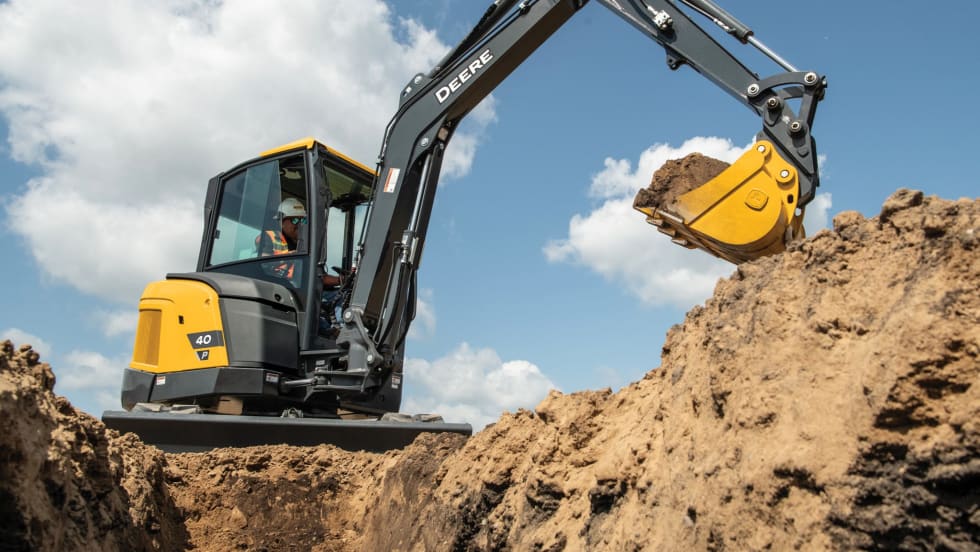
John Deere Introduces 40 P-Tier Compact Excavator
John Deere is adding a compact excavator designed for crews that need to move equipment between jobsites and handle multiple types of work with one machine. The 40 P-Tier weighs less than 10,000 pounds and offers configurable hydraulics, attachment options, and connected fleet-management capabilities.
Read More →
How Leading Fleets Improve and Why Business Plans Matter
This week, we look at what past Leading Fleet winners can teach us about making progress, plus how to build a business plan your fleet will actually use.
Read More →
Nominate a Fleet Leader for the 2027 Public Fleet Hall of Fame
Do you know a fleet leader who has made a lasting impact on the industry? Nominate this fleet professional for the 2027 Public Fleet Hall of Fame.
Read More →
Why Fleet Business Plans Need Three Perspectives
A fleet business plan should help agency leaders understand the fleet’s value, give the organization a clear direction, and establish shared expectations with customer departments.
Read More →