





Related: Taking a Long-Term Approach to Designing an Emergency Response Vehicle
UCLA Health Center Adds Zero-Emission Mobile Lab
The university expects to save nearly $750,000 with its new battery-electric mobile surgical instrument lab (eMSIL) instead of contracting a third party.
November 15, 2019
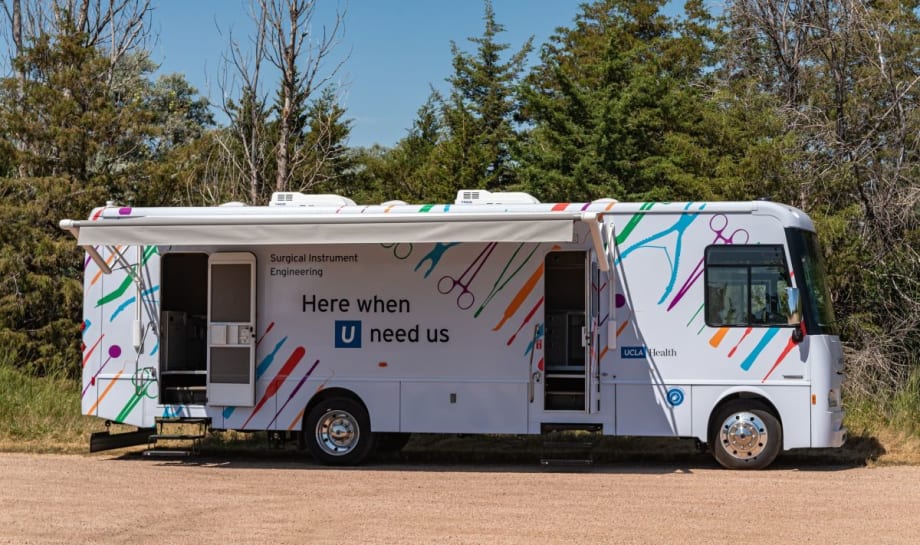
The mobile surgical instrument lab will travel between UCLA's two medical campuses.
Photo courtesy of Winnebago
2 min to read
The University of California, Los Angeles (UCLA) Health Center has taken delivery of the first battery-electric mobile surgical instrument lab (eMSIL). The mobile medical unit will travel between UCLA’s medical campuses in Westwood and Santa Monica to collect, clean, repair, disinfect, and sterilize surgical suite instruments.
The eMSIL is a turnkey solution for receiving, decontaminating, preparing, packaging, sterilizing and distributing nearly any type of surgical equipment hospitals use. Ashis Bhattacharya, vice president of business development, specialty vehicles, and advanced technology for Winnebago, said UCLA Health Center expects to save nearly $750,000 per year with the mobile unit, instead of contracting a third party to service surgical instruments off-site.
Built by Winnebago Specialty Vehicles and platform upfitter Summit Bodyworks, the eMSIL is powered by an all-electric EPIC F-53 33-foot chassis from Motiv Power Systems. The vehicle is designed to hold enough battery charge for eight hours of typical service plus round-trip travel to and from its home facility. The vehicle has completed significant road testing and delivers an expected range of 85 to 125 miles on a full charge.
The eMSIL is stocked with all the equipment needed to deliver the same level of decontamination through sterilization as a lab located in a building, and is upfitted with two desks in the slide-out area, two workbenches, an industrial sink and two stations for 5.5 gallon ultrasonic cleaners, and other custom cabinetry and equipment.
A portion of the funds used to purchase of the UCLA eMSIL were provided by the Hybrid and Zero-Emission Truck and Bus Voucher Incentive Project (HVIP), a California Air Resources Board (CARB) program administered by clean transportation accelerator Calstart and funded with cap-and-trade proceeds through California Climate Investments (CCI).
In addition to the eMSIL, UCLA Heath also manages a mobile stroke unit, mobile eye clinic, and mobile clinic serving homeless and low-income individuals.
More Green Fleet
Sustainability Partners, Energy Systems Group Help Albuquerque Close the Gap on its 100% Renewable Energy Goal
The eight-site, 6 MW solar project has advanced the city toward 100% renewable energy for municipal operations.
Read More →
Port Authority and CALSTART Launch $45 Million Electric Truck and Charging Programs
The programs aim to boost sustainable operations across the East Coast's busiest seaport.
Read More →
Moving Government Fleets Beyond the Vehicle Purchase: EV as a Service
A discussion on how EVaaS is moving beyond pilot programs and what fleets should consider before beginning a larger deployment.
Read More →
Moving Government Fleets Beyond the Vehicle Purchase: EV as a Service
As fleets move beyond small EV pilots, Sustainability Partners CEO Adam Cain explains how EVaaS can address the infrastructure and long-term planning required for larger deployments.
Read More →
Peterbilt Expands Sourcewell Partnership with Electric Vehicle Lineup
The agreement aims to provide streamlined procurement of Peterbilt trucks for government, education, nonprofit and tribal organizations across the United States and Canada.
Read More →

EV Adoption & Charging Challenges
Where is your fleet in the journey of vehicle electrification? If you're still looking for answers to fleet electrification you've come to the right place.
Read More →
Hawaii Passes Clean Fuel Policy
Hawaii lawmakers passed clean fuel legislation that could support renewable natural gas production, biogas-powered transportation, and lower-carbon fueling options for public and commercial fleets.
Read More →
Stanislaus County Deploys Ten Beam Global EV ARC Systems to Support County Fleet Electrification
Stanislaus County deployed 10 off-grid solar-powered EV charging systems and a mobile charging trailer from Beam Global to support its electric fleet operations and emergency response flexibility.
Read More →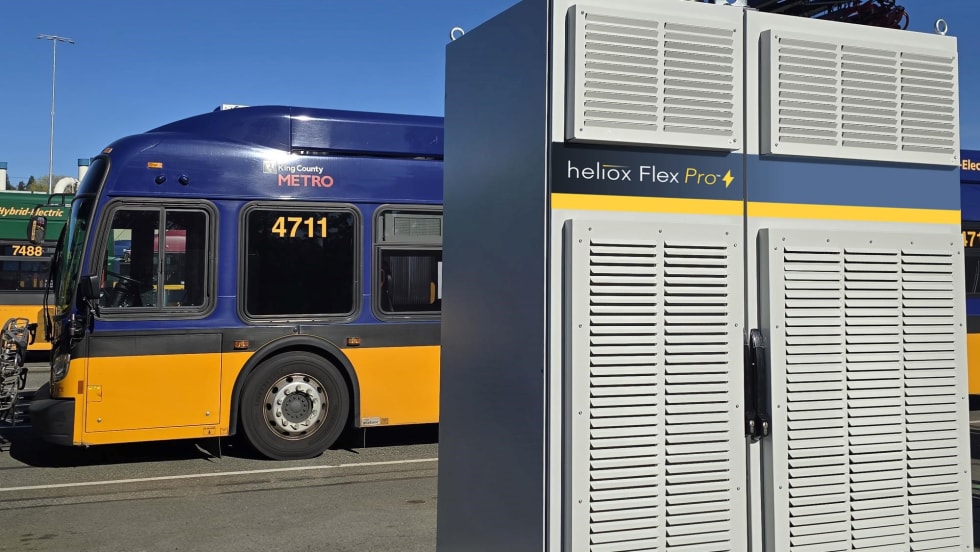
Heliox Pilots 480-kW Bus Charger with King County Metro
King County Metro is piloting Heliox’s new 480-kW Flex Pro charger to support expansion of its battery-electric bus fleet and depot charging infrastructure. The compact charging system supports pantograph and plug-in charging configurations for high-density transit operations.
Read More →