




Vehicle-to-What? — Evolving Vehicle Communication Technologies
Can vehicle collisions be avoided with vehicle-to-infrastructure or vehicle-to-vehicle technology? Several of the major OEMs think so and are spending billions of dollars a year working on the technology.

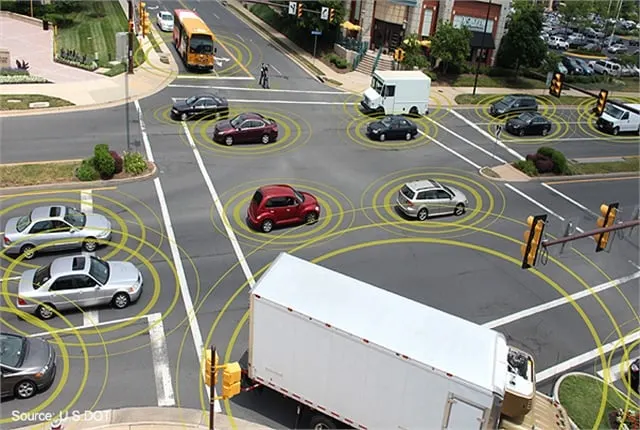
Image of connected vehicles courtesy of U.S. Department of Transportation
A few years ago, while I was a fleet manager, I remember an accident involving one of our marked police vehicles — a type of accident that happens too often. The officer was approaching the intersection with no vehicles in his lane but several vehicles headed in the same direction in lane next to him creating a wall of cars. As the officer edged out into the intersection to make sure it was clear, he was T-boned and suffered significant injuries.
Vehicle manufacturers, often in partnership with third-party companies, are working on all sorts of interesting technologies in hopes of creating safer vehicles and roads. At the same time, they are adding to the acronyms floating around in our industry. While some are closer than others to actually having an impact on government fleets, it’s important to get familiar with them now as they may have huge implications in the near future. So here they are as defined by major organizations:
Vehicle-to-Vehicle (V2V): “Vehicle-to-vehicle (V2V) communication’s ability to wirelessly exchange information about the speed and position of surrounding vehicles shows great promise in helping to avoid crashes, ease traffic congestion, and improve the environment. But the greatest benefits can only be achieved when all vehicles can communicate with each other.” Source: National Highway Traffic Safety Administration
Cellular Vehicle-to-Everything (C-V2X): “Cellular vehicle-to-everything (C-V2X) complements other current vehicle sensor technologies by extending a vehicle’s ability to ‘see’ further down the road and providing a higher level of predictability for enhanced safety and autonomous driving.” Source: Ford Motor Company
Vehicle-to-Infrastructure (V2I): “V2I technologies capture vehicle-generated traffic data, wirelessly providing information such as advisories from the infrastructure to the vehicle that inform the driver of safety, mobility, or environment-related conditions.” Source: United States Department of Transportation
Vehicle-to-Grid (V2G): “V2G technology allows for the bi-directional sharing of electricity between electric vehicles (EVs) and plug-in electric hybrid vehicles (PHEVs) and the electric power grid. The technology turns each vehicle into a power storage system, increasing power reliability and the amount of renewable energy available to the grid during peak power usage.” Source: Pacific Gas and Electric Company
Vehicle-to-X (V2X): “…refers to an intelligent transportation system where all vehicle and infrastructure systems are interconnected with each other.” Source: Siemens
Brain-to-Vehicle (B2V): “The driver wears a device that measures brain wave activity, which is then analyzed by autonomous systems. By anticipating intended movement, the systems can take actions — such as turning the steering wheel or slowing the car — 0.2 to 0.5 seconds faster than the driver, while remaining largely imperceptible.” Source: Nissan
There is a good chance that I not only missed some acronyms, but that new ones may have developed while you read this blog post.
So back to the example of the officer getting into a serious accident that I started off with. Could this accident have been avoided with V2I or V2V technology? Several of the major OEMs think so and are spending billions of dollars a year working on the technology. Sure, there are also security concerns, but start thinking about this since you may one day have a check box available for this technology as you are spec'ing your new equipment.
More Blog Posts
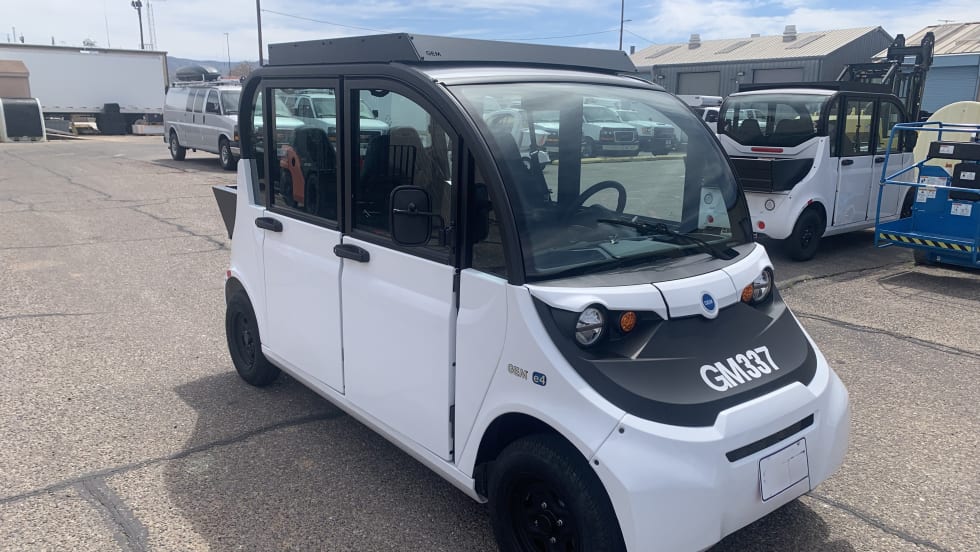
Taking a Solar-Powered Ride with Sandia National Laboratories
A case study of Sandia National Laboratories examines their transition from gas-powered golf carts to alternative transportation options. In 2002, the organization began this process with the acquisition of low-speed electric vehicles.
Read More →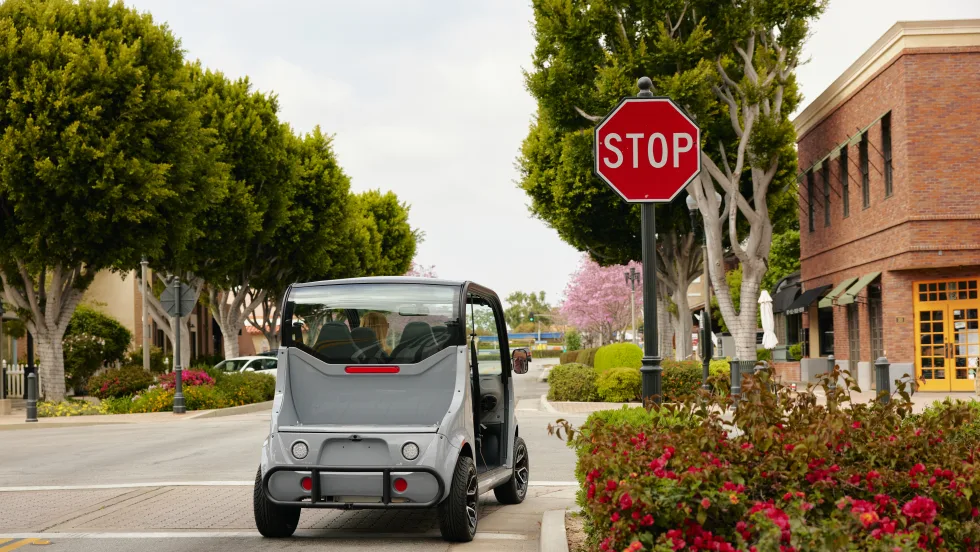
LSVs: The Unexpected EV Government Fleets Need?
A closer look at low-speed vehicles and why organizations may want to consider adding them to their fleets.
Read More →Tire Data I Wish I’d Had as a Fleet Manager
If I had more data on tires, collected several times a day, I may have been able to improve my preventive maintenance program even more. That technology exists now.
Read More →Qualified and Skilled Technicians at Your Shop, On Demand
For fleets facing a technician shortage, a temporary technician at your shop can help reduce vehicle downtime and costs.
Read More →Should You Be Thinking About Bike Shares?
Electric scooters and bikes are starting to show up everywhere. How do you see them affecting your fleet operation?
Read More →Recouping Lost Technician Time
If time is money, what is saving a few hours of your technicians' time worth?
Read More →Streets of the Future Could Take Automatic Tire Readings
WheelRight allows vehicles to drive through a specialized lane and captures tire pressure readings on all four tires while also providing tire tread depth within a few seconds and printed receipt.
Read More →Improved Communication (There's an App for That)
Slack brings all of your communication together in a way that you can sort. Conversations, PDFs, and documents are all be archived and searchable.
Read More →Booster Fuels: Bringing the Gas Station to You
Booster Fuels brings the gas station to your vehicles for the same price as a gas station. Its team members will fill up vehicles overnight or at a requested time and bill weekly. This could be a solution for fleets with old, expensive fueling infrastructure.
Read More →Rethinking Utilization: Using the Energy in Parked EVs
Think the return on investment for electric vehicles (EVs) is too long? Vehicle-to-grid technology allows EVs to earn money while parked by utilizing their large batteries to provide energy storage services for buildings, utilities, and the grid. This extra money can reduce the total cost of ownership of EVs.
Read More →