




New Hampshire DOT Raises Operator Rates to Attract More Contractors
The department is also increasing equipment rental rates. It has struggled to attract drivers and contracted equipment to maintain its roadways in the winter.

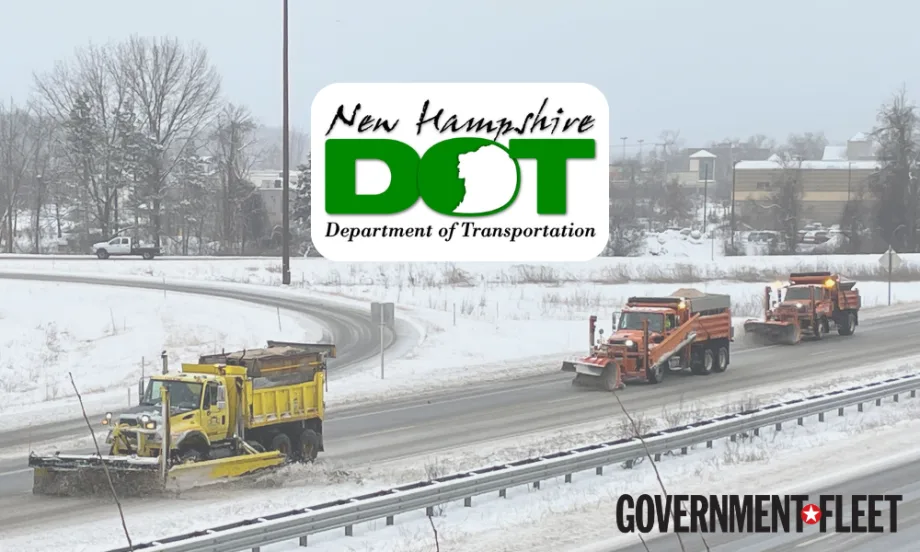
NHDOT is increasing both its equipment rental and operator rates by 15%.
Photo: NHDOT/Canva
The New Hampshire Department of Transportation is increasing the contracted operator rates for winter maintenance by 15%, in hopes of attracting more contractors in a competitive market.
Additionally, the department is raising hourly rental rates by 15% for private contracted rental equipment for winter maintenance, including plow trucks material spreaders.
The department relies on both contracted rental equipment and operators to supplement its own internal winter operations workforce to treat the state highway system, according to NHDOT documents DOT Commissioner William Cass wrote to the department's Executive Council.
Attracting Workers in a Competitive Market
The department is having difficulty competing with adjacent states, municipalities, and private companies to attract CDL holders for department highway maintenance positions.
"Our internal shortage of available CDL drivers with plowing experience only serves to heighten our need for recruiting and retaining sufficient contracted equipment," Cass stated. "Failure to attract internal or rental resources to meet the snow removal needs will likely result in reduced plowing frequency which will translate into longer periods of degraded driving conditions and longer durations before highways are fully treated."
An NHDOT spokesperson told Government Fleet that the department has to compete with private construction firms and municipalities for truck drivers and equipment operators.
"[These groups] can change their salary structure much quicker [in reaction to market and availability] than the Department’s two-year union bargaining cycle," the spokesperson explained. "We believe the Department has a competitive overall salary/benefits package but in this volatile marketplace for commercial truck drivers and construction equipment operations, it’s difficult to compete. And adding to this is a general overall lack of people looking for Engineering/Construction type jobs."
For the department, maintaining relationships with local contractors is important.
"NHDOT has enjoyed a great working relationship with our local contractors and owner/operators for decades. They are quick to call us and lend their support immediately after (and often during) major storm events. We could not respond as quickly as we do without their support. We expect that relationship to continue for years to come," the spokesperson said.
Rental Equipment Needed for Snow Removal
According to department documents, in order to maintain expected service levels, the department must secure both contracted labor and equipment, so it's also increasing equipment rental rates by 15%.
In an analysis of neighboring states, NHDOT found that Massachusetts pays rental rates that are roughly 64%-136% higher than NH's rates for 1- ton, 5-ton, and 10-ton plow trucks.
The department also noted that many local municipalities around the state are paying $115 to $150 per hour for contracted snow removal services alone. That doesn't even include the salt/sand spreaders or liquid pre-wet ability or ground speed controls.
While the Massachusetts DOT rates will remain 42% to 105% higher than the New Hampshire rates, the department still anticipates that the increases will result in a greater ability to secure rental contracts throughout the state, as well as help the department meet expected service levels for winter road maintenance.
About the New Agreements
NHDOT staff are currently working on re-signing current contracted equipment to the new rates, as well as signing up new contractors when there is interest.
Here is what the 15% operator rate increases will look like:
The non-CDL plow truck operator's rate will increase from $20.00 to $23.00 per hour.
The CDL plow truck operator's rate will increase from $23.00 to $26.45 per hour depending on the size vehicle.
Here is what the 15% equipment rental rate increases will look like:
Rates for 14,000 GVWR (or 1 ton) trucks with with plow equipment and 3 cu. yd. spreaders will increase from $67.64 to $77.79.
Rates for 36,000 GVWR (or 3 to 5 ton) trucks with with plow equipment and 6 cu. yd. spreaders with over 2-ton hydraulic hoists, ground speed spreader control, and on/off pre-wet systems will increase from $91.56 to $105.29.
Rates for 55,000 GVWR (or 10-wheel) trucks with with plow equipment and 11 cu. yd. spreaders with over 2-ton hydraulic hoists, ground speed spreader control, and on/off pre-wet systems will increase from $96.24 to $110.68.
This will equal an average increase of approximately $1.3 million in rental expenditures based on the average costs of the last two years. Funding for the increase will be split between the Highway Fund and Turnpike Fund.
The contract agreements will be set up on a five-year term.
More Operations

Is Keeping Older Fleet Vehicles Really Saving Money?
Is keeping vehicles longer saving money, and what happens when a diagnostic test points to the wrong fix?
Read More →
How Smart Fleet Strategy Can Help Local Government Agencies Do More with Less
Keeping a vehicle longer may ease this year’s budget, but what does it cost the next one? A closer look at fleet decisions can reveal opportunities to reduce spending while protecting essential services.
Read More →
Connect with Government Fleet on LinkedIn
From industry news and fleet management strategies to conversations with peers, Government Fleet's LinkedIn page offers public-sector fleet professionals another way to stay informed and connected.
Read More →
Town of Queen Creek Named Most Successful Fleet Award Winner of Inaugural RTA Fleet Success Awards
Five fleets were honored at RTA Connect 2026 in Chicago for excellence across resource efficiency, intentional culture, risk management, and stakeholder satisfaction.
Read More →
A buyer's guide to fleet management software in 2027
Buying fleet management software in 2027 means looking beyond features and price. As fleet operations, technology and expectations evolve, this guide explores what today’s fleet professionals should consider when choosing a system that can deliver value now and adapt to what comes next.
Read More →
Hazard Alerts, Fleet Car Sales Rise and a New Shuttle Concept
Fleet car sales doubled, but the bigger picture tells a different story in this week’s roundup.
Read More →
How St. Johns County Turned Fleet Data Into Better Replacement Decisions
St. Johns County, Florida, had fleet data, but turning it into reliable decision guidance was another matter. Instead of starting over with a new fleet management system, the county connected existing tools and built a scoring system that gives managers an objective look at fleet health.
Read More →
Fleet Forward Conference Introduces One-Day Passes for 2026
New one-day registration lets fleet professionals attend Tuesday, Wednesday, or Thursday, with passes available for $249.
Read More →
ENC Unveils its ZAVIR Medium-Duty Shuttle
Two variants of the concept shuttles were revealed: a low-floor configuration and a high-floor configuration.
Read More →
Could Your Next Fleet Technician Start as an Intern?
What if your next technician hasn’t worked in a fleet shop yet? What fleets are doing to free up time.
Read More →