





According to Evolve Houston, 9% of newly registered cars in the City were EVs in 2022, surpassing the national average by 2.5%.
Houston Hits EV Milestone Despite Supply Chain Issues
The Texas city currently has 333 hybrid-electric vehicles and 88 battery-electric vehicles, with additional battery-electric pickups, hybrid-electric pickups, and hybrid-electric SUVs deliveries expected before the end of the calendar year.
July 12, 2023
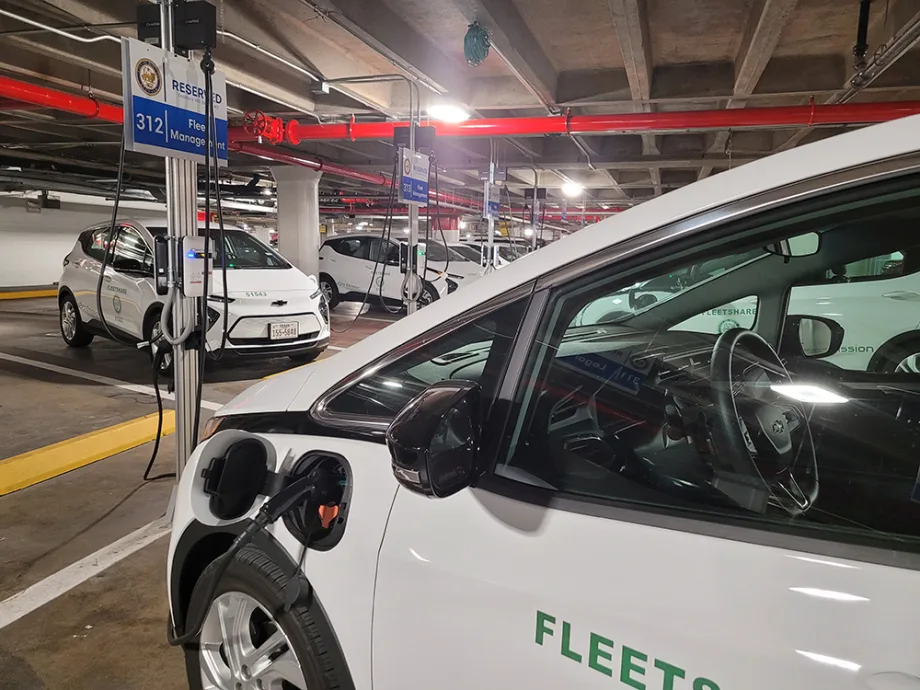
With regard to charging infrastructure, the Houston currently has 57 installed chargers.
Photo: City of Houson
2 min to read
Despite national supply chain issues and inflationary pressure, the City of Houston has made significant strides in implementing electric vehicles (EVs) in its municipal fleet, marking a notable milestone.
Currently, the Texas city has 421 EVs, including 333 hybrid and 88 battery EVs. The city anticipates the delivery of 67 battery-electric pickups, 20 hybrid-electric pickups, and 21 hybrid-electric SUVs by year-end. Within the next twelve months, they also expect 27 battery-electric SUVs and 13 battery-electric pickups.
Efforts are underway to secure grants for additional electric vehicles.
Following a Climate Action Plan to Reduce Emissions
The Houston Climate Action Plan is driving the transition to electric vehicles. The plan aims to reduce greenhouse gas emissions, improve air quality, enhance climate resilience, achieve carbon neutrality by 2050, and lead the global energy transition. By 2030, the goal is to convert all non-emergency, light-duty municipal vehicles to electric power.
Houston has partnered with Evolve Houston, a public-private partnership involving CenterPoint, NRG, Shell, and the University of Houston, to accelerate the adoption of EVs. The objective is to achieve 50% electric vehicle sales by 2030 and assess the need for EV charging infrastructure at a regional level.
Currently, the city operates 57 chargers, including two DC fast chargers. A contract was approved with Siemens to purchase 144 level 2 battery chargers. Installation of 15 chargers at the Houston Health Department's Stadium Dr. location will begin in two weeks. However, supply chain issues have affected the availability of electrical components for charger installations.
Consideration of Mobile Charging Solutions
The city's Fleet Management Department, in collaboration with the Mayor's Office of Resilience and Sustainability, is evaluating a potential mobile charging solution as an interim measure. They are also exploring opportunities for home charging of vehicles used by emergency response employees.
Home charging can reduce installation costs and enhance the city's resilience by utilizing a distributed grid.
Mayor Sylvester Turner emphasized the importance of electrification in Houston's climate action plan, considering that nearly half of the city's carbon emissions come from transportation, particularly single occupancy vehicles. He expressed confidence in achieving their goals.
Houston continues its progress in 2023 through public-private partnerships like the Hertz Electrifies Houston initiative, which plans to introduce over 2,100 rental EVs to the city.
More Operations

Is Keeping Older Fleet Vehicles Really Saving Money?
Is keeping vehicles longer saving money, and what happens when a diagnostic test points to the wrong fix?
Read More →
How Smart Fleet Strategy Can Help Local Government Agencies Do More with Less
Keeping a vehicle longer may ease this year’s budget, but what does it cost the next one? A closer look at fleet decisions can reveal opportunities to reduce spending while protecting essential services.
Read More →
Connect with Government Fleet on LinkedIn
From industry news and fleet management strategies to conversations with peers, Government Fleet's LinkedIn page offers public-sector fleet professionals another way to stay informed and connected.
Read More →
Town of Queen Creek Named Most Successful Fleet Award Winner of Inaugural RTA Fleet Success Awards
Five fleets were honored at RTA Connect 2026 in Chicago for excellence across resource efficiency, intentional culture, risk management, and stakeholder satisfaction.
Read More →
Sponsored•October 14, 2026
A buyer's guide to fleet management software in 2027
Buying fleet management software in 2027 means looking beyond features and price. As fleet operations, technology and expectations evolve, this guide explores what today’s fleet professionals should consider when choosing a system that can deliver value now and adapt to what comes next.
Read More →
Hazard Alerts, Fleet Car Sales Rise and a New Shuttle Concept
Fleet car sales doubled, but the bigger picture tells a different story in this week’s roundup.
Read More →
How St. Johns County Turned Fleet Data Into Better Replacement Decisions
St. Johns County, Florida, had fleet data, but turning it into reliable decision guidance was another matter. Instead of starting over with a new fleet management system, the county connected existing tools and built a scoring system that gives managers an objective look at fleet health.
Read More →
Fleet Forward Conference Introduces One-Day Passes for 2026
New one-day registration lets fleet professionals attend Tuesday, Wednesday, or Thursday, with passes available for $249.
Read More →
ENC Unveils its ZAVIR Medium-Duty Shuttle
Two variants of the concept shuttles were revealed: a low-floor configuration and a high-floor configuration.
Read More →
Could Your Next Fleet Technician Start as an Intern?
What if your next technician hasn’t worked in a fleet shop yet? What fleets are doing to free up time.
Read More →