





Ford Updates: F-Series Super Duty Towing for 2023
Order and Allocation Updates for MY23 Super Duty
Several members of the Fleet Management Association met to discuss Ford Super Duty order and allocation update.
November 23, 2022
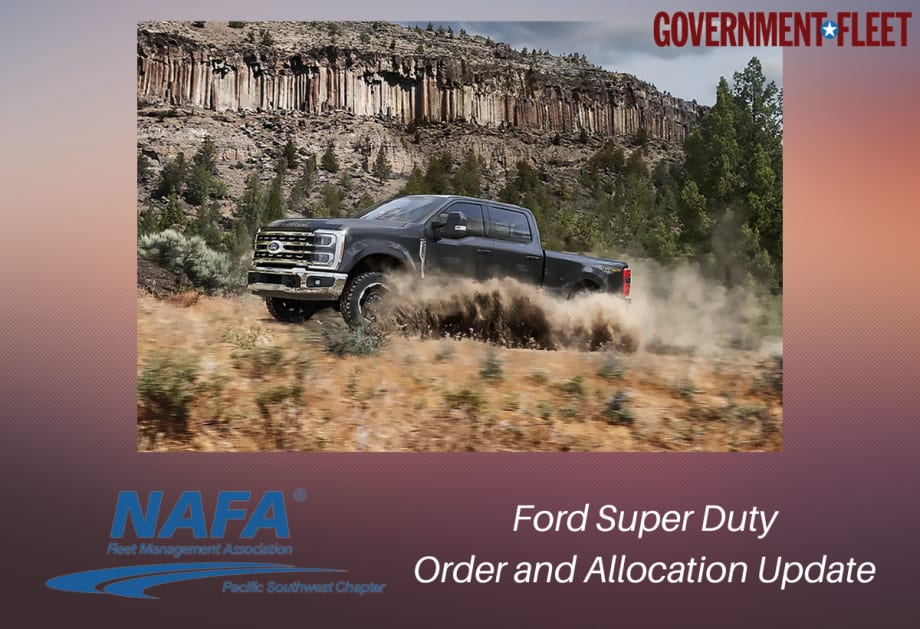
The MY23 Super Duty has several factors affecting its production.
Ford/NAFA
3 min to read
On Tuesday, Ford released an order and allocation update for its MY23 Super Duty.
Long Beach, Ca., Fleet Services Manager Dan Berlenbach, Fairfield, Ca., Fleet Division Manager David Renschler, and Santa Clara, Ca., Fleet Manager David Worthington discussed order bank dates, allocation, and production. This information will also help MEMA fleets in planning vehicle purchases.
Nationwide Government Orders Information
To start, the new open date is now November 21, 2022, and will last for 33 days. And the on-time delivery time will vary.
As for allocation and production, according to the update:
Allocation
Each fleet with a FIN will get an allocation based on their average Super Duty purchase for the last five years — approximately 55-60% of their last five-year average purchases.
The allocation does not include cab and chassis or cutaway orders that were placed by upfitting vendors such as aerial/bucket trucks or ambulances bodybuilders.
The FIN number has not previously been used to track that the vehicle was associated with a specific fleet agency at aerial/bucket trucks, ambulances, etc. bodybuilders.
MY22 trucks rolled into MY23 are not price-protected. The price will be less than a 20% increase. A FIN fleet’s allocation will be live on a special website on 11/14.
There is also no price protection for MY21 or MY22 vehicle orders that were not produced.
Allocations are calculated based on global orders (different dealers) or based on the FIN code. Medium duties will likely be allocated the same way.
As for ordering, Ford will only accept a PO that has been uploaded to its website via the dealer and use Ford’s FIN code towards its allotments.
If there are any allocations that haven’t been used after the order bank closes, Ford will put those back into the general pool of government allocations and assign them.
A fleet cannot direct its unused allocation to another fleet to use its vehicle order needs, and there is no horse trading.
There will be no guarantees on the production of the allocations that have been ordered even if they are assigned a VIN number.
For California orders, Ford has approximately 75% of the California government truck market and has increased allocations from last year to help support these customers.
Priority on allocations and build slots will be given to those FINs that had orders balanced out by Ford for MY 22.
Several Factors Affecting Production
The 2023 Model Year (MY) is a short model year with a limited number of Super Duty trucks being produced. MY23 is expected to balance out MY22 orders, which will come off the top and be produced in the first couple of months.
According to the allocation update, one of the main reasons production will start late is the parts shortages affecting production. Also, the computer chip supply chain challenge is not expected to diminish until the calendar year 2024.
The overall U.S. vehicle production has had a backload of approximately 5 million vehicles since 2020. Experts believe it will take several more years for production to match demand.
More Vehicle Research
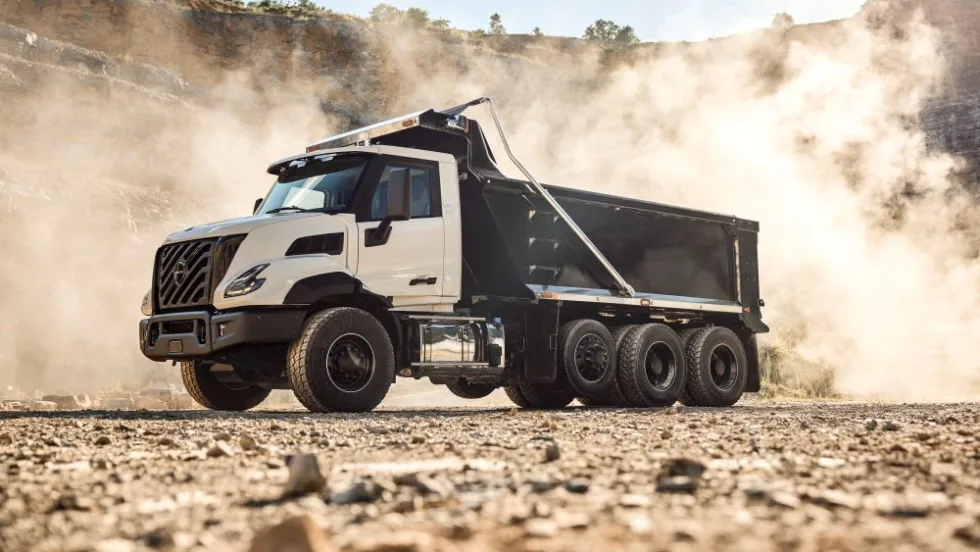
Volvo Trucks Unveils New Volvo VNX, a Vocational and Heavy-Haul Truck
The Volvo VNX features standard forward pedestrian detection that continuously scans for people in the truck's path, and optional blind-spot detection, now available on both sides.
Read More →
Government Fleet Sales Fall in August Despite Year-to-Date Gain
Government fleet sales declined in August, but stronger year-to-date truck and SUV sales kept the overall 2026 total ahead of last year.
Read More →
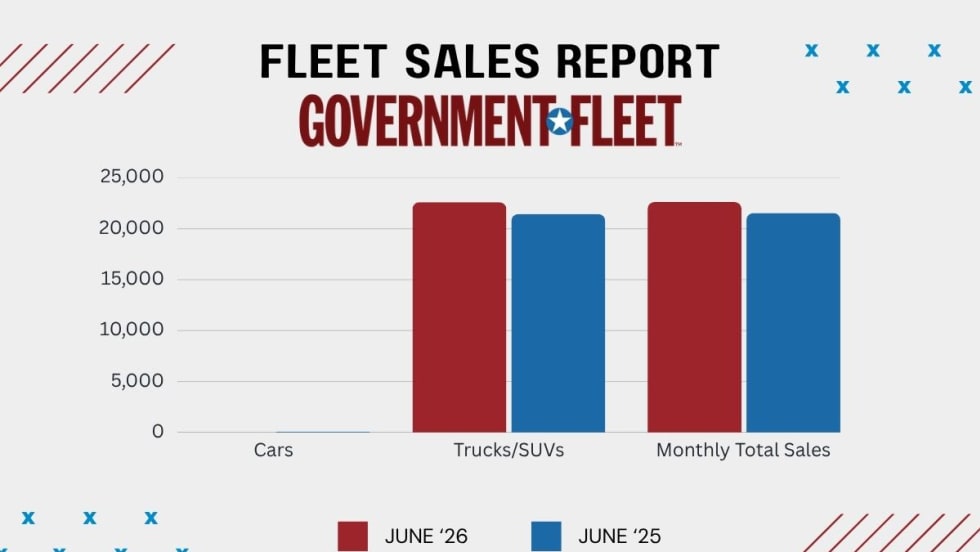
June Government Vehicle Sales See a Jump in Numbers
There were a reported 22,626 government fleet vehicles sold in June compared to 21,539 vehicles sold in June 2025.
Read More →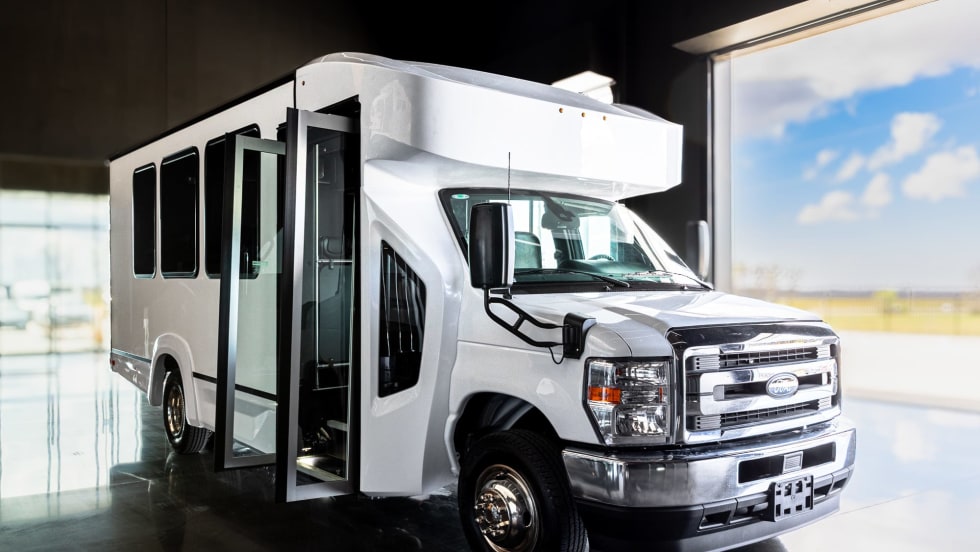
Master's Motors Introduces Shuttle Buses for Government and Commercial Fleets
Master's Motors has introduced two new shuttle bus models aimed at government and commercial fleet operators. The buses incorporate updated structural and accessibility features while offering configurable layouts for a variety of passenger transportation applications.
Read More →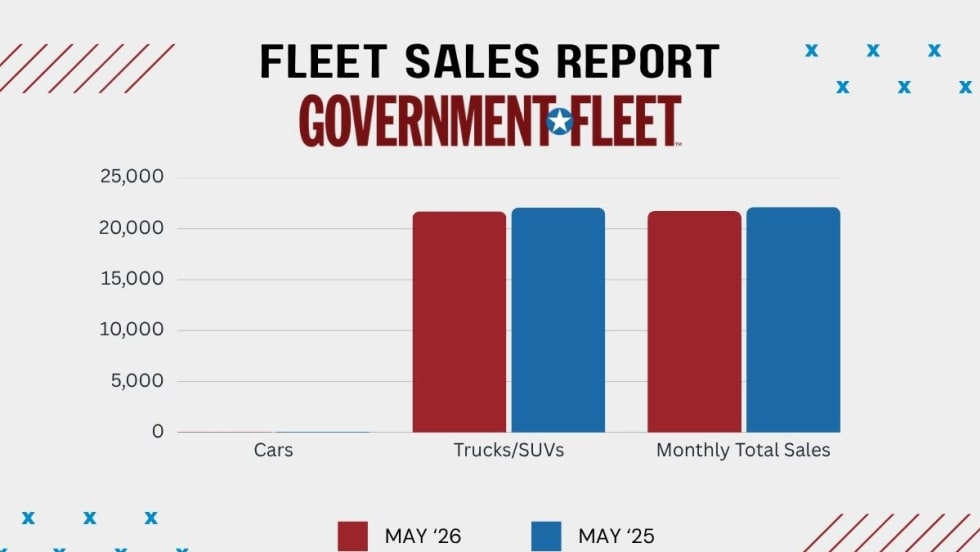
May Government Fleet Sales Slip Below 2025 Pace
Despite last month's sales increase, May vehicle numbers took a downward turn.
Read More →
April 2026 Recall Roundup: Chrysler, Lucid, & More
Are any of the vehicles in your fleet recalled? Check out the latest recalls of popular government fleet vehicles and equipment.
Read More →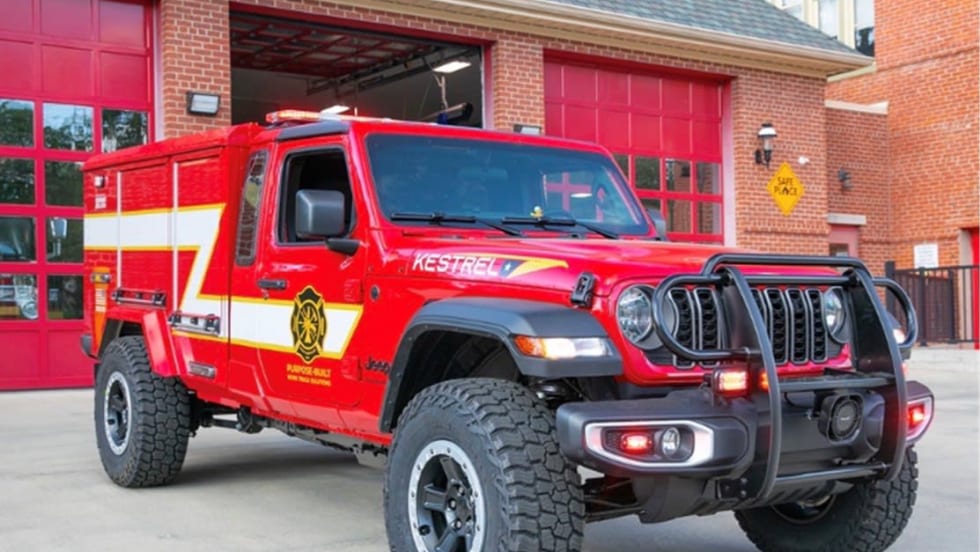
Kestrel Work Truck for First Response Debuts at FDIC 2026
Morgan Olson introduced its Kestrel platform, a compact, four-wheel-drive Class 2 work truck designed for first responders, with multiple configurations, validated safety testing, and a focus on durability and fleet lifecycle performance.
Read More →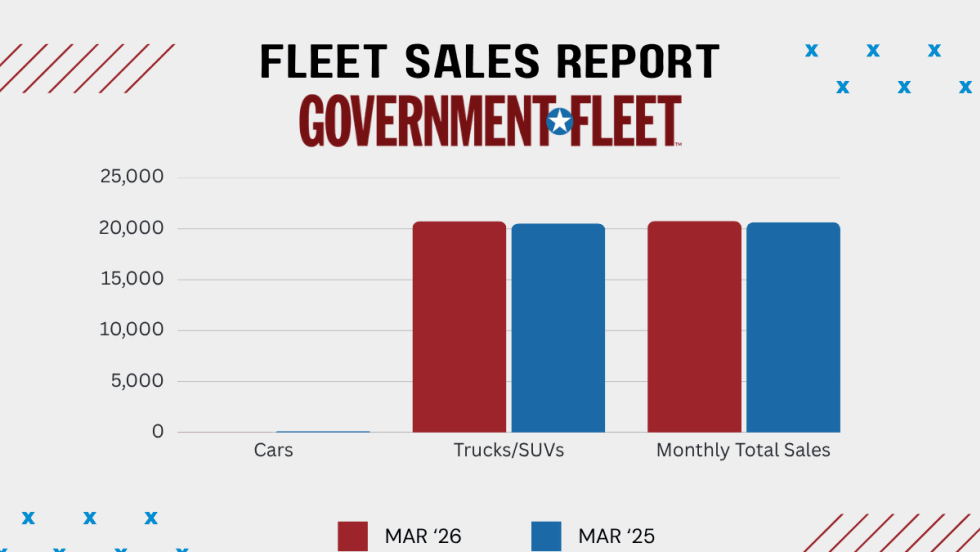
Government Fleet Vehicle Sales Rise In March
Government fleet vehicle sales increased by 1% in March, up from March 2025.
Read More →
March 2026 Recall Roundup: Ford, Kia, & More
Are any of the vehicles in your fleet recalled? Check out the latest recalls of popular government fleet vehicles and equipment.
Read More →