





Want more? Learn about McNeilus' Debut of the Zero Radius Automated Side Loader
McNeilus, SSAB Partner for Fossil-Free Steel Truck
The first use of the fossil-free steel will be to prototype advanced, environmentally sustainable McNeilus refuse collection vehicles.
November 9, 2022
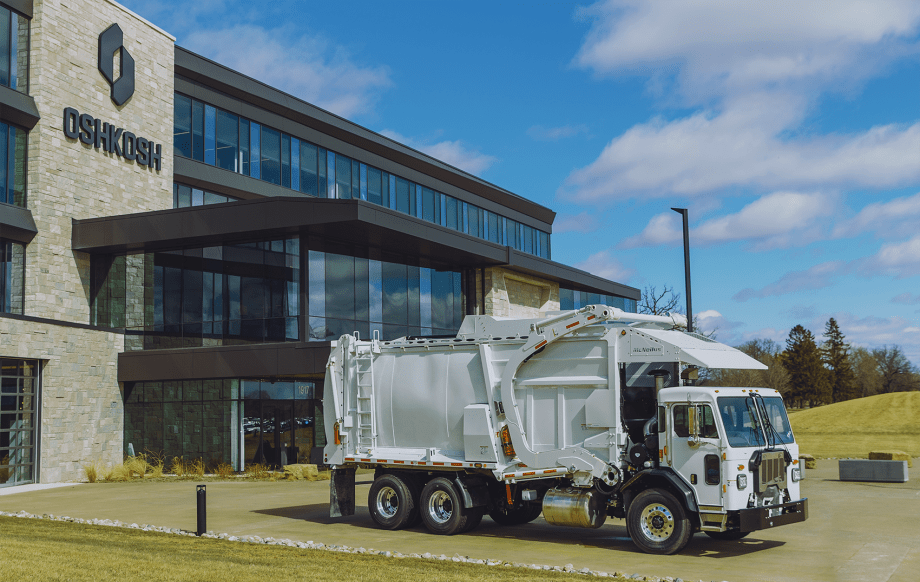
The first use of the fossil fuel-free steel will be to prototype advanced, environmentally sustainable McNeilus refuse collection vehicles.
Photo: McNeilus
2 min to read
McNeilus Truck and Manufacturing, an Oshkosh Corporation company, will be partnering with SSAB in fossil-free steel applications for severe-duty commercial vehicles.
The first use of this fossil-free steel will be to prototype "advanced, environmentally sustainable McNeilus refuse collection vehicles."
SSAB delivered the first steel made of hydrogen-reduced iron in 2021 and is aiming to deliver fossil-free steel to the market in commercial scale during 2026. SSAB works with iron ore producer LKAB and energy company Vattenfall in Sweden as part of the HYBRIT initiative to develop a value chain for fossil-free iron- and steel production, replacing coking coal traditionally needed for iron ore-based steelmaking, with fossil-free electricity and hydrogen. This process virtually eliminates carbon dioxide-emissions in steel production, according to McNeilus.
“Creating a more sustainable future is central to our strategic vision,” said Brad Nelson, president of McNeilus Truck and Manufacturing and senior vice president of Oshkosh Corporation. “As a leader and innovator in the industries we serve, Oshkosh Corporation and McNeilus are proud to partner with SSAB on this global initiative as a next step in delivering high-performance, sustainable products to our customers.”
Sustainability efforts across McNeilus and Oshkosh Corporation include working to reduce the “use-phase” emissions of products through fuel efficiency, alternative fuels, and electrification to help customers significantly reduce their carbon footprint.
Oshkosh Corporation and McNeilus are working together on future research and development initiatives across multiple commercial vehicle product lines.
More Operations

Is Keeping Older Fleet Vehicles Really Saving Money?
Is keeping vehicles longer saving money, and what happens when a diagnostic test points to the wrong fix?
Read More →
How Smart Fleet Strategy Can Help Local Government Agencies Do More with Less
Keeping a vehicle longer may ease this year’s budget, but what does it cost the next one? A closer look at fleet decisions can reveal opportunities to reduce spending while protecting essential services.
Read More →
Connect with Government Fleet on LinkedIn
From industry news and fleet management strategies to conversations with peers, Government Fleet's LinkedIn page offers public-sector fleet professionals another way to stay informed and connected.
Read More →
Town of Queen Creek Named Most Successful Fleet Award Winner of Inaugural RTA Fleet Success Awards
Five fleets were honored at RTA Connect 2026 in Chicago for excellence across resource efficiency, intentional culture, risk management, and stakeholder satisfaction.
Read More →
Sponsored•October 14, 2026
A buyer's guide to fleet management software in 2027
Buying fleet management software in 2027 means looking beyond features and price. As fleet operations, technology and expectations evolve, this guide explores what today’s fleet professionals should consider when choosing a system that can deliver value now and adapt to what comes next.
Read More →
Hazard Alerts, Fleet Car Sales Rise and a New Shuttle Concept
Fleet car sales doubled, but the bigger picture tells a different story in this week’s roundup.
Read More →
How St. Johns County Turned Fleet Data Into Better Replacement Decisions
St. Johns County, Florida, had fleet data, but turning it into reliable decision guidance was another matter. Instead of starting over with a new fleet management system, the county connected existing tools and built a scoring system that gives managers an objective look at fleet health.
Read More →
Fleet Forward Conference Introduces One-Day Passes for 2026
New one-day registration lets fleet professionals attend Tuesday, Wednesday, or Thursday, with passes available for $249.
Read More →
ENC Unveils its ZAVIR Medium-Duty Shuttle
Two variants of the concept shuttles were revealed: a low-floor configuration and a high-floor configuration.
Read More →
Could Your Next Fleet Technician Start as an Intern?
What if your next technician hasn’t worked in a fleet shop yet? What fleets are doing to free up time.
Read More →