





Similar Content: Georgia County to Purchase 2 Command Vehicles
Gulf Coast State College Receives Three Frontline Communications Disaster Response Vehicles
The customized vehicles include two C-25 Mobile Command Vehicles and one C-33 Mobile Command Center.
August 3, 2022
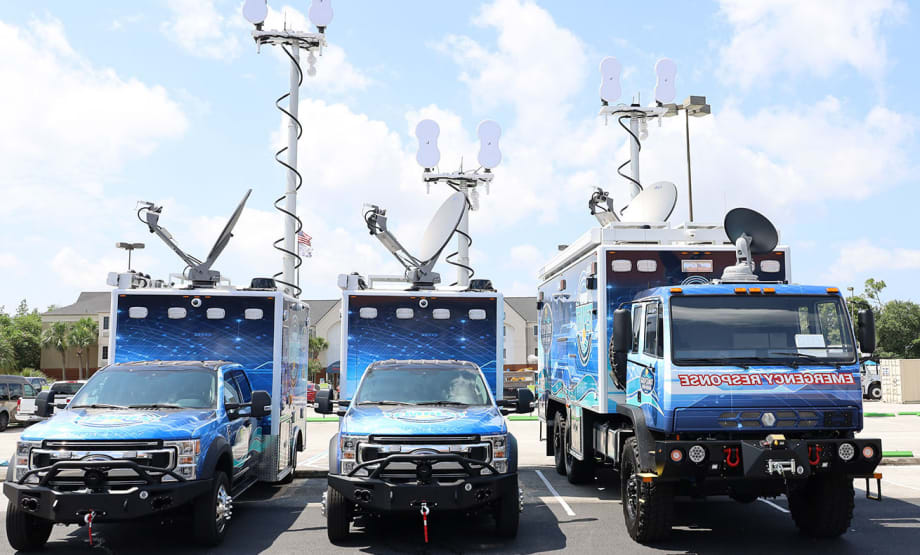
The vehicles’ data services on a cellular and satellite backbone are augmented by a mast-based, point-to-point transmission system.
Photo: Frontline Communications
3 min to read
Frontline Communications, a division of Pierce Manufacturing Inc., and a subsidiary of Oshkosh Corporation (NYSE:OSK), announced that Gulf Coast State College in Panama City, Florida, has taken delivery of three disaster response vehicles incorporating advanced communication and technology features. Sold through Pierce and Frontline Communications’ dealer, Ten-8 Fire Equipment, the vehicles include two C-25 Mobile Command Vehicles and one C-33 Mobile Command Center.
“When hurricane Michael came through in 2018, it was a category 5 event resulting in extensive damage and communications challenges,” said James Baxley Jr., executive director of radio, TV, and broadcasting with Gulf Coast State College. “We aimed to close communications gaps and do a better job next time, and our new Frontline Communications disaster response vehicles provide us with the most technologically advanced resources to face future events. The vehicles were obtained through the Triumph Grant and maintain an eight-county memorandum of understanding to be put in service where and when needed to support emergency operations.”
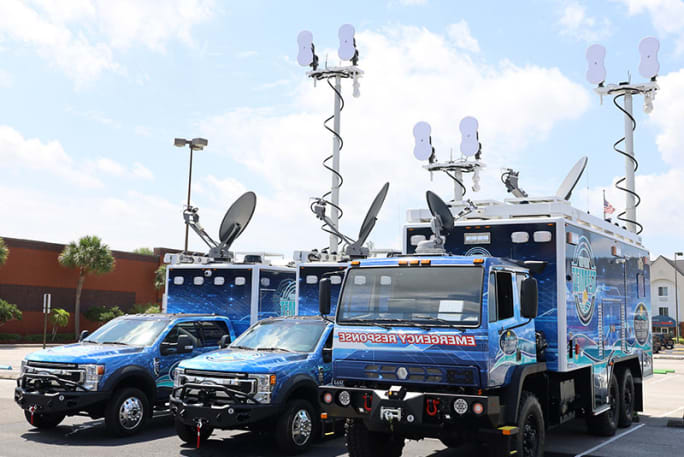
Gulf Coast State College’s new disaster response vehicles were delivered in late May.
Photo: Frontline Communications
Some of the most notable system design and integrated communications attributes of Gulf Coast State College’s new disaster response vehicles include:
Cellular and satellite data network
Point-to-point transmission system 2+ gigabit per minute
Dual HD/thermal PTZ camera
Columbia weatherstation
HAM radio system with auto-tuning and PC controls
Video switching matrix
Multiple PCs for data processing
42-foot mast for custom antenna/camera deployment
Docking station for TVU cellular backpack encoder
Exterior workstation with anti-glare monitor
Electric awning
UHF, VHF, and HAM radios
The vehicles’ data services on a cellular and satellite backbone are augmented by a mast-based, point-to-point transmission system featuring auto-acquisition and transfer rates of over two gigabit per minute, intended for transfer of live UAV video between trucks.
Other vehicle features include:
Features
C-25
C-33
Chassis:
Ford F-550 4x4
Acela Monterra 6x6
Cab seating capacity:
4
2
GVWR:
19,500 lbs.
44,650 lbs.
Generator:
12kW
20kW
Workstations:
2
9
HVAC:
2 roof-mount
4 roof-mount
Baxley added, “With over 40 years of building communications vehicles, we knew Frontline Communications would be able to deliver what we needed. These new vehicles were customized to fit our needs, and we hope even more than the eight counties around us will benefit from their remarkable features when they are faced with water, hurricanes, fire, and other emergencies.”
Gulf Coast State College’s new disaster response vehicles were delivered in late May, and emergency responders have begun extensive training to properly utilize the assets when needed.
“We’ve appreciated having the opportunity to work with Gulf Coast State College developing vehicles which will provide critical disaster response and communications support for such a substantial geographic area in Florida,” said Rob McAtee, fire apparatus sales representative with Ten-8 Fire Equipment. “The customized design of the two C-25 Mobile Command Vehicles and one C-33 Mobile Command Center incorporates some of the most advanced features we’ve built into specialty vehicles to date. Our team, and our partners at Frontline Communications, look forward to providing dedicated support for training, service, and beyond.”
To learn more about Frontline Communications and the latest disaster response vehicles, visit www.frontlinecomm.com.
More Safety

New York City Expands Safety Technologies Across Municipal Fleet
Executive Order 19 moves intelligent speed assistance and pedestrian alerts from pilot programs toward standard fleet equipment, offering other public fleets a look at how safety technology can be tested, measured, and scaled.
Read More →
Sponsored•August 10, 2026
Hidden in Plain Sight: Fleet Compliance Risks
Fleet compliance isn't just about having policies — it's about consistently enforcing them. This practical guide reveals six hidden compliance risks common in public sector and shared fleet operations and outlines proven strategies to improve visibility, accountability, and audit readiness.
Read More →
5 Days Left to Submit Your 2026 Fleet Safety Award Nomination
Know a government fleet, safety, or risk manager who deserves recognition for making fleet operations safer? Nominations are open through Aug. 15.
Read More →
How the First 24 Hours Can Shape a Fleet Crash Response
How a strong accident response process helps government fleets move from the initial report to recovery while building a clearer record for what needs to change next.
Read More →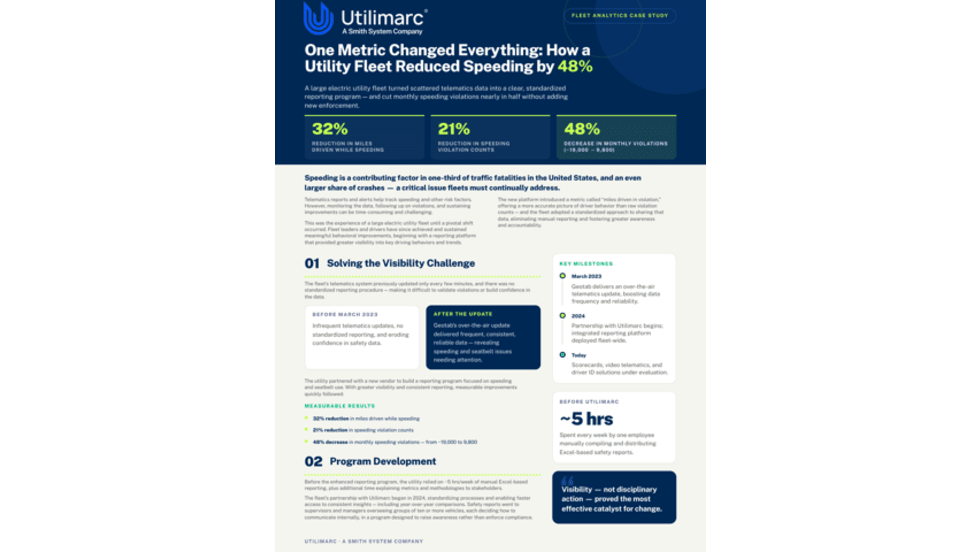
Sponsored•July 17, 2026
How Better Visibility Cut Speeding Violations by 48%
Fleet leaders don't need more data, they need clearer visibility into what the data is saying. This case study explores how one utility replaced speeding-event counts with a single metric — miles driven in violation — to strengthen safety and significantly reduce speeding violations.
Read More →
e-con Systems Expands AI Camera Tools for Traffic Monitoring
The systems support license plate recognition, traffic analytics, and video management for transportation agencies.
Read More →
King Township Pilot Links Driver Feedback to Reduced Speeding
How King Township, a best-in-class municipal fleet, reduced speeding by 10.9% and demonstrated a projected 349% ROI by putting safety ownership directly in drivers' hands.
Read More →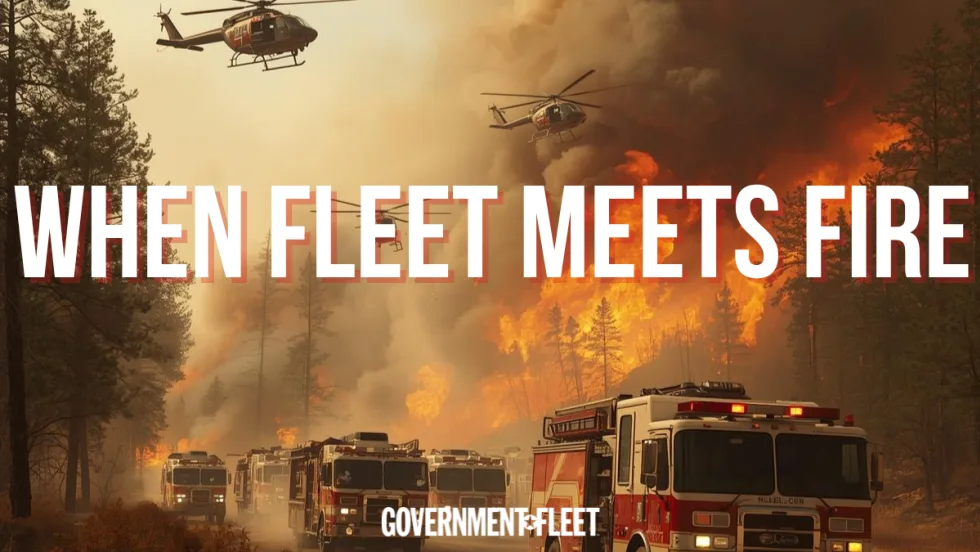
Beyond the Fireline: The Critical Role of Public Fleets in Wildfire Response
Behind every wildfire response is a complex network of vehicles, data, and decisions that must work in sync under extreme pressure. Global heating trends require strong fleet coordination and reliable communications to keep crews safe and operations running smoothly.
Read More →
How AI Is Transforming Public Fleet Safety - Part 1
AI-powered safety systems are helping public fleets tackle distracted driving by delivering real-time coaching and measurable behavior change behind the wheel. In part one of our Q&A, Nauto CEO Stefan Heck explains how agencies can improve safety, reduce costs, and navigate implementation challenges with AI-driven technology.
Read More →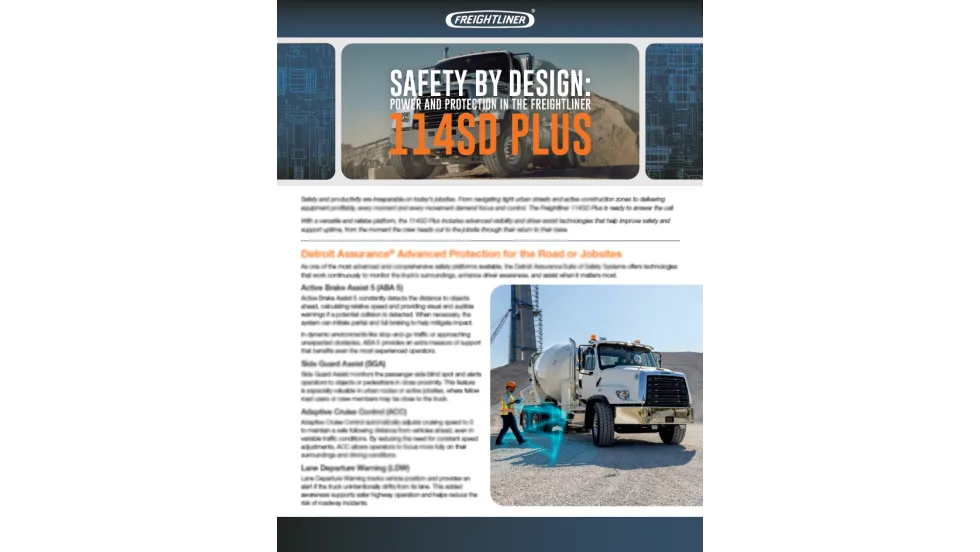
Reducing Risk and Improving Safety in Public Sector Fleets with Advanced Driver-Assist Technology
Public sector fleets face increasing pressure to improve safety, reduce liability, and operate efficiently. See how advanced vehicle technologies are helping agencies protect drivers, the public, and their budgets.
Read More →