




About the Author: Ron Zima is the founder and CEO of GoGreen Communications. GoGreen is working with municipal agencies around the U.S. and has conducted research and dozens of interviews with stakeholders across these organizations regarding idle reduction behavior modification.
How to Achieve Driver Idling Behavior Reductions in Government Fleets
Drivers of government fleets are spending significant fuel budget while emitting enormous amounts of greenhouse gas and other tailpipe emissions from idling.
by Ron Zima, GoGreen Communications
August 30, 2021
Photo: GoGreen
4 min to read
One of the biggest opportunities readily available now for government fleet operators to reduce fuel costs, greenhouse gas emissions, and exhaust pollution is driver idle reduction behavior modification. However, such a program is largely off-limits for government fleet managers because of structural challenges they face with the would-be funders of such a program — city administrators — and end-users of the vehicles themselves — city departments and drivers.
The net effect: drivers of government fleets across the U.S. and Canada are spending significant fuel budget while emitting enormous amounts of greenhouse gas and other tailpipe emissions, from “driver idling by choice” (idling without a business purpose). Ironically, some of these may be the same fleet operations that are demonstrating “green fleet” leadership in other areas (such as converting vehicles to alternative fuels).
In effect, public employees are commonly being paid to unconsciously idle their work vehicle when it’s parked (with the city’s logo on the side). Many cities also have anti-idling bylaws in place for citizens (mostly unenforceable) and aggressive sustainability plans to dramatically cut greenhouse gas emissions. The question citizens may be asking themselves as they observe city drivers idling behavior in government fleets is: “How does this demonstrate fiscal responsibility and environmental responsibility?”
Who Has Say Over Driver Behavior?
In some municipal agencies with more than 1,000 on-the-road vehicles, the costs of driver “idling by choice” when parked can be millions of dollars and thousands of tons of CO2 annually. This while government fleet managers are being asked to do more with less due to pandemic budget pressures. Not to mention the stress on budgets from fuel price volatility.
What’s going on here? Why aren’t government fleets leading and coaching their drivers to reduce idling behavioral costs? Why isn’t driver idling behavior a priority at this time of budget crunching and the race to “go green” with fleet carbon reduction initiatives?
Based on our research and practice, what we’ve learned is that the funders of an idle reduction behavior modification program (i.e. city administrators) are often disconnected from the fleet management department regarding the cost dynamics of idling and the net benefits of an effective program.
Also, idling fuel and emissions savings by different operating fleet departments don’t accrue to the same budget that currently might fund such a project (Sustainability, for example). As a result, there are daunting internal, structural hurdles for the government fleet manager to navigate before they can institute a driver idle reduction behavior modification program. So, in many cases, fleet managers simply throw up their hands and focus on other priorities.
This results in an idle reduction dilemma: the fleet management division typically does not control how an operator (the driver) operates the vehicle (idling behavior), and it can’t budget or acquire a program to reduce idling behavior, even if it wanted to.
We often hear: “We don’t own the driver or their individual idling habits. Talk to city administration and our sustainability department. It’s their budget.” Then, we are often told: “If you had technology to install to reduce idle, that’s something we can look at.”
The bottom line is that city administrators (who have the power to fund an idle reduction behavior modification program) are often disconnected with the costs and extraordinary payback of reducing driver idling behavior. Government fleets are idling and wasting millions of budget dollars while adding thousands of tons of greenhouse gas emissions as climate change accelerates. City administrators should also think about the optics idling behavior sends to the public regarding fiscal responsibility and environmental responsibility.
2 Ways to Change Idling Practices
It doesn’t have to be this way. Here are the top two barriers and solutions to instituting a driver idle reduction culture in a government fleet organization:
Create an Idle Reduction Stakeholder Group
One stakeholder group with the mission of reducing idling costs and emissions should be formed representing all city departments (with vehicles) and equipped with the mandate of reducing idling by any means, whether it be technology driven or behavior modification (eLearning based, no equipment required). This will repair the disconnect around the costs and savings of driver “idling by choice.” The municipality can then act with a unified voice.
Make the Business Case
Municipal stakeholders who may be passionate and ready to implement a plan of action are often hamstrung by the lack of tools and expertise in making the business case for idle reduction behavior modification. An idle reduction opportunity assessment can provide a reliable forecast of the net savings on fuel and carbon emissions. This assessment tool will help stakeholders make the business case for an idle reduction program. Managers will also be shocked at how quickly a payback can happen with an effective program.
Anti-Idling Beyond Fleet Vehicles
The net savings from idling for city administrators promises to be extraordinary, particularly for those that have more than 20% of engine time idling when parked. However, there’s an even bigger prize: the value in “green fleet PR.” Inspiring the public to follow the public agency’s lead on driver idling behavior promises to be the biggest prize of all. Imagine saving idling emissions from drivers across an entire city.
Subscribe to Our Newsletter
More Green Fleet

Sustainability Partners, Energy Systems Group Help Albuquerque Close the Gap on its 100% Renewable Energy Goal
The eight-site, 6 MW solar project has advanced the city toward 100% renewable energy for municipal operations.
Read More →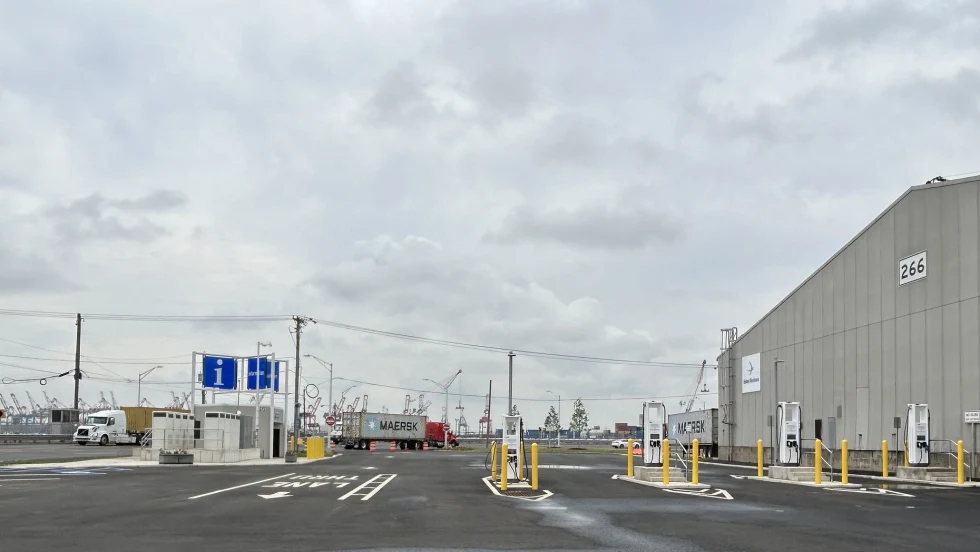
Port Authority and CALSTART Launch $45 Million Electric Truck and Charging Programs
The programs aim to boost sustainable operations across the East Coast's busiest seaport.
Read More →
Moving Government Fleets Beyond the Vehicle Purchase: EV as a Service
A discussion on how EVaaS is moving beyond pilot programs and what fleets should consider before beginning a larger deployment.
Read More →
Moving Government Fleets Beyond the Vehicle Purchase: EV as a Service
As fleets move beyond small EV pilots, Sustainability Partners CEO Adam Cain explains how EVaaS can address the infrastructure and long-term planning required for larger deployments.
Read More →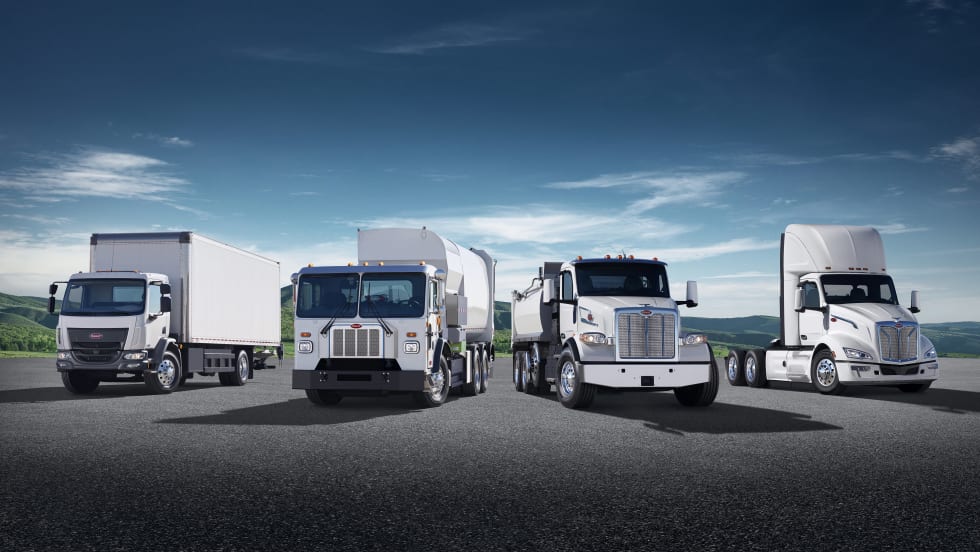
Peterbilt Expands Sourcewell Partnership with Electric Vehicle Lineup
The agreement aims to provide streamlined procurement of Peterbilt trucks for government, education, nonprofit and tribal organizations across the United States and Canada.
Read More →
EV Adoption & Charging Challenges
Where is your fleet in the journey of vehicle electrification? If you're still looking for answers to fleet electrification you've come to the right place.
Read More →
Hawaii Passes Clean Fuel Policy
Hawaii lawmakers passed clean fuel legislation that could support renewable natural gas production, biogas-powered transportation, and lower-carbon fueling options for public and commercial fleets.
Read More →
Stanislaus County Deploys Ten Beam Global EV ARC Systems to Support County Fleet Electrification
Stanislaus County deployed 10 off-grid solar-powered EV charging systems and a mobile charging trailer from Beam Global to support its electric fleet operations and emergency response flexibility.
Read More →
Heliox Pilots 480-kW Bus Charger with King County Metro
King County Metro is piloting Heliox’s new 480-kW Flex Pro charger to support expansion of its battery-electric bus fleet and depot charging infrastructure. The compact charging system supports pantograph and plug-in charging configurations for high-density transit operations.
Read More →