




How Are Service Professionals Adapting to the COVID-19 Business Climate?
The National Institute for Automotive Service Excellence (ASE) conducted a comprehensive survey in Aug. 2020 to better understand the impact of the COVID-19 pandemic on the automotive service industry and its workforce.

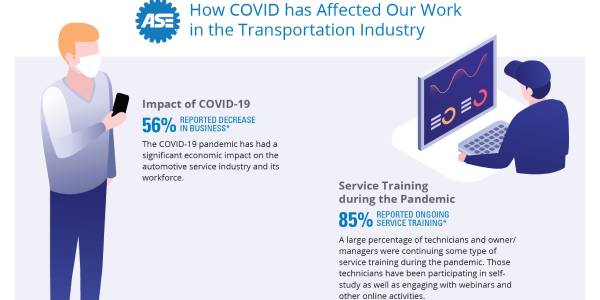
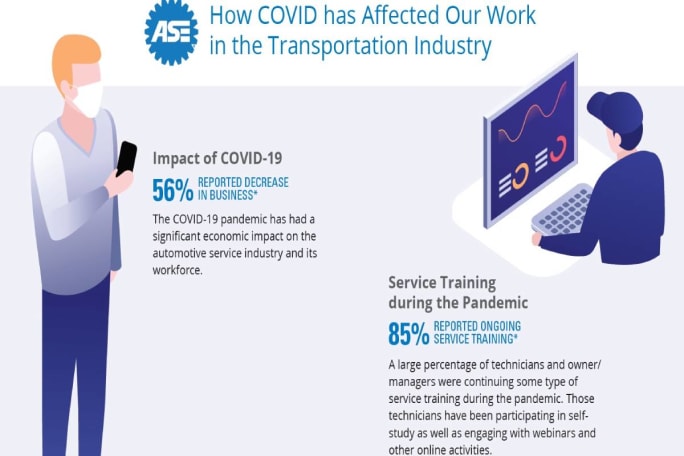
Photo: ASE
The National Institute for Automotive Service Excellence (ASE) conducted a comprehensive survey in Aug. 2020 to better understand the impact of the COVID-19 pandemic on the automotive service industry and its workforce.
A key takeaway from the survey is that while 19% of those surveyed have seen an increase in business since the start of the pandemic, 56% reported a decrease in business.
The survey found that 34% of service facilities have reduced business hours, and the effect on technicians has come in the form of reduction of hours (34%), temporary furloughs (14%) and terminations (8%).
According to the survey, shops have been proactive in instituting safety measures for their employees and customers. Results show that nearly 70% of those surveyed are using protective equipment, while 63% have implemented social distancing measures and 62% have added supplemental sanitizing measures.
Participants were asked if they have been pursuing service training and credentialing since the start of the pandemic. Over 65% of those surveyed said they have done some type of self-study or enhanced training, while 46% participated in a webinar or online training course.
The use of social media by professional service providers also increased over the past several months. Over 42% of respondents said they have increased their usage of social media somewhat or significantly, with Facebook and YouTube named as the top platforms utilized.
More Operations

What Can Disappear After a Fleet Crash?
This week, we look at drone footage, what fleets should document before repairs begin, and share a quick poll.

Does Your Government Fleet Handle Refuse and Waste Operations? Take Our Poll
Government Fleet wants to hear from public-sector fleet professionals about their responsibilities for refuse collection and waste management equipment.

Fleet Replacement Decisions, Waste Fleet Technology and the GFX Deadline
Is your next vehicle the right fit, can your records settle a missed pickup dispute, and what could your fleet teach others at GFX 2027?

Is Delaying Fleet Replacement Really Saving Money?
Could delaying replacement cost your fleet more than it saves? This week’s recap takes a closer look, plus an update on GFX 2027.

What Government Fleets Are Missing About Their True Costs
What are fleet budgets missing, and how can agencies use the data they already collect to make a stronger case for change?

Rethinking Fleet Decisions From the Budget Office to the Shop
This October we looked back at how public fleets are reconsidering familiar processes and using what they learn to make better decisions.

Who Owns the Message on a Refuse Truck?
Refuse trucks can carry public messages into neighborhoods, but keeping those messages current takes planning and clear responsibility.

Who Deserves Fleet Recognition and What Could You Teach at GFX?
Who helped shape your fleet career, and what have you learned that could help someone else?

What’s Haunting Public Sector Fleets?
Public sector fleet challenges rarely happen in isolation, and addressing one often means understanding how it connects to another.

Is Keeping Older Fleet Vehicles Really Saving Money?
Is keeping vehicles longer saving money, and what happens when a diagnostic test points to the wrong fix?