




Pima Community College Goes Green with New Priuses
TUCSON, AZ – Pima Community College (PCC) purchased three new Toyota Prius hybrid sedans. The Priuses were bought under PCC’s vehicle fleet lifecycle-replacement program and are part of the College’s 109-vehicle fleet.
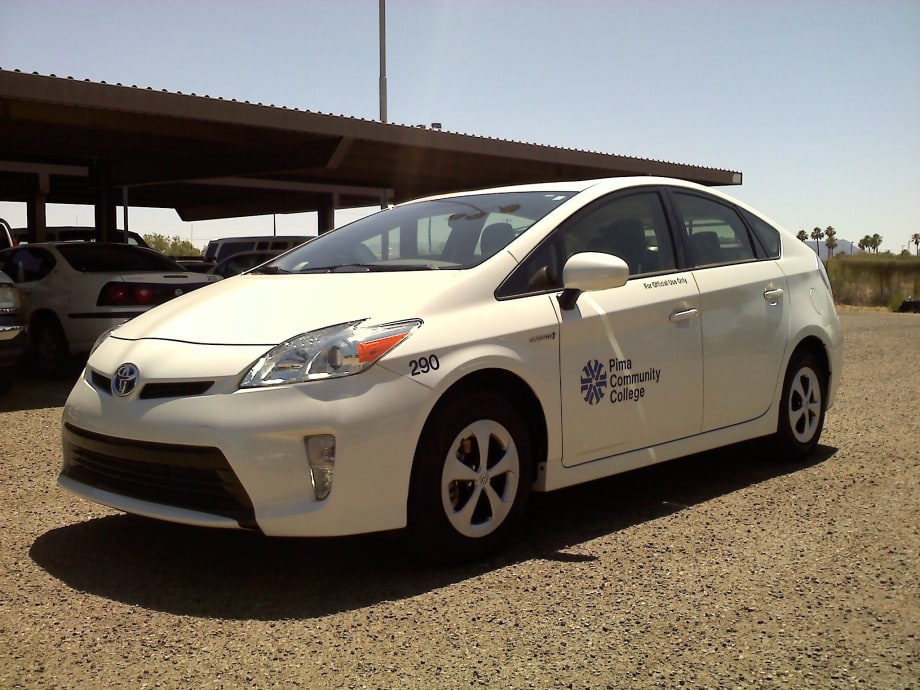
The Priuses were bought under Pima Community College’s vehicle fleet lifecycle-replacement program. Photo courtesy of PPC.
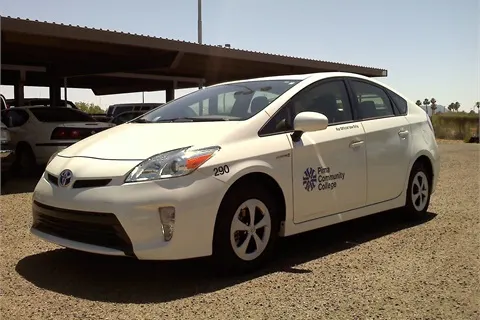
The Priuses were bought under Pima Community College’s vehicle fleet lifecycle-replacement program. Photo courtesy of PPC.
TUCSON, AZ – Pima Community College (PCC) purchased three new Toyota Prius hybrid sedans in order to reduce the college’s carbon emissions and energy costs. The Priuses were bought under PCC’s vehicle fleet lifecycle-replacement program and are part of the College’s 109-vehicle fleet. They will be used by College employees who need to travel as part of their jobs, according to a release from the PCC.
“We see the purchase of these hybrid vehicles, which get an EPA combined-cycle of 50 miles per gallon, as another way to become leaner and more efficient with our fuel budget,” said William Ward, assistant vice chancellor for Facilities. “Ultimately, they will help us save taxpayer dollars while doing something good for the environment.”
Prior to purchasing the Priuses, PCC evaluated the Chevrolet Volt, Nissan Leaf, and Ford Fusion Hybrid. Ward explained that the College chose the Prius because of its long range, reliability, and ease of operation.
Cost was another factor. At approximately $27,000 each, the Priuses were relatively inexpensive compared with the other options.
The College is taking other steps to reduce the cost of maintaining its vehicles while becoming more responsible stewards of the environment. For example, Ward said PCC is replacing some full-size V-8-powered work trucks with smaller four- or six-cylinder trucks and is tracking its trucks with GPS to optimize efficiency.
“We reject the idea that it’s not easy being green,” Ward said. “For us, being green has a direct impact on the operational costs of a College that has six campuses and numerous learning centers throughout Tucson.”
Other efforts at going green include an ongoing project to upgrade and modernize College restrooms with automatic sinks, low-flow toilets, and waterless urinals, according to the release.
Founded in 1969, PCC serves more than 75,000 students annually and is the eighth largest community college in the United States.
More Green Fleet
Sustainability Partners, Energy Systems Group Help Albuquerque Close the Gap on its 100% Renewable Energy Goal
The eight-site, 6 MW solar project has advanced the city toward 100% renewable energy for municipal operations.
Read More →
Port Authority and CALSTART Launch $45 Million Electric Truck and Charging Programs
The programs aim to boost sustainable operations across the East Coast's busiest seaport.
Read More →
Moving Government Fleets Beyond the Vehicle Purchase: EV as a Service
A discussion on how EVaaS is moving beyond pilot programs and what fleets should consider before beginning a larger deployment.
Read More →
Moving Government Fleets Beyond the Vehicle Purchase: EV as a Service
As fleets move beyond small EV pilots, Sustainability Partners CEO Adam Cain explains how EVaaS can address the infrastructure and long-term planning required for larger deployments.
Read More →
Peterbilt Expands Sourcewell Partnership with Electric Vehicle Lineup
The agreement aims to provide streamlined procurement of Peterbilt trucks for government, education, nonprofit and tribal organizations across the United States and Canada.
Read More →

EV Adoption & Charging Challenges
Where is your fleet in the journey of vehicle electrification? If you're still looking for answers to fleet electrification you've come to the right place.
Read More →
Hawaii Passes Clean Fuel Policy
Hawaii lawmakers passed clean fuel legislation that could support renewable natural gas production, biogas-powered transportation, and lower-carbon fueling options for public and commercial fleets.
Read More →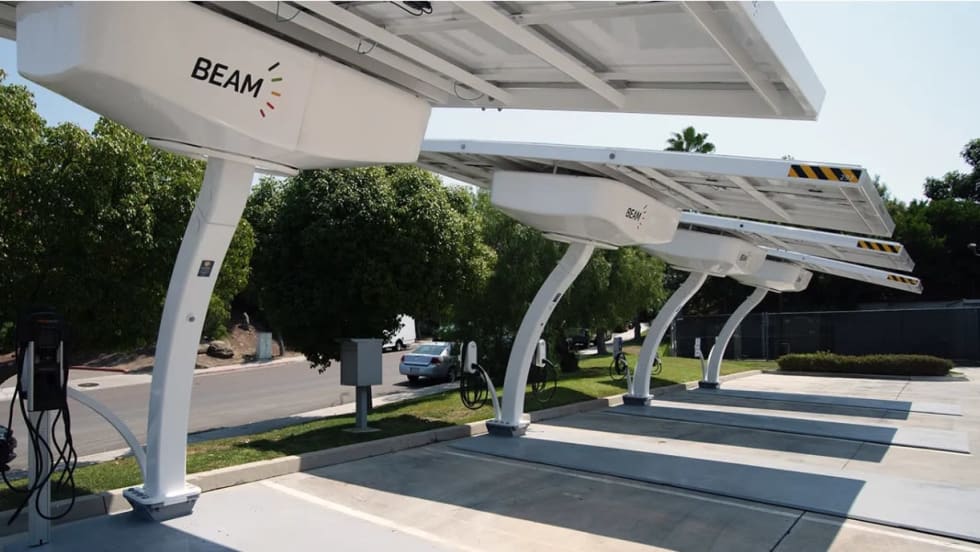
Stanislaus County Deploys Ten Beam Global EV ARC Systems to Support County Fleet Electrification
Stanislaus County deployed 10 off-grid solar-powered EV charging systems and a mobile charging trailer from Beam Global to support its electric fleet operations and emergency response flexibility.
Read More →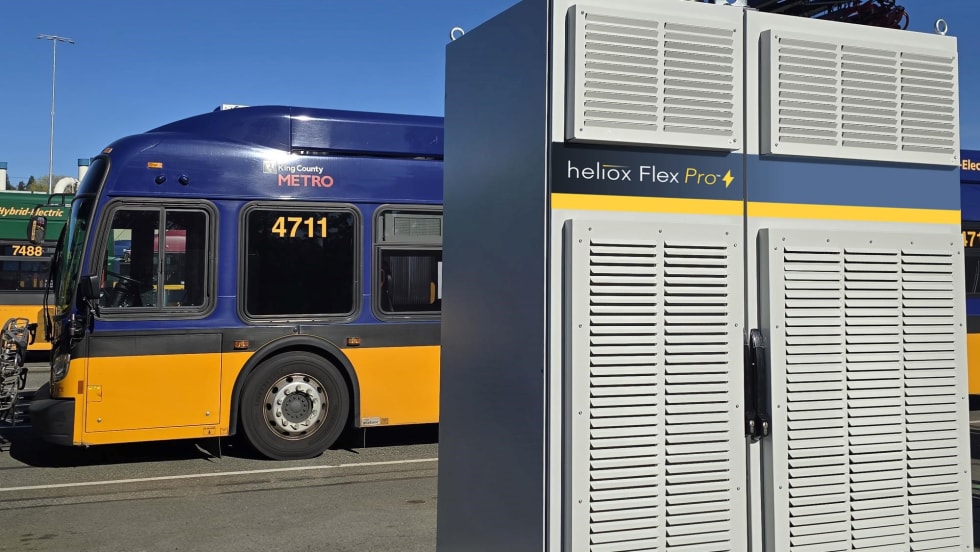
Heliox Pilots 480-kW Bus Charger with King County Metro
King County Metro is piloting Heliox’s new 480-kW Flex Pro charger to support expansion of its battery-electric bus fleet and depot charging infrastructure. The compact charging system supports pantograph and plug-in charging configurations for high-density transit operations.
Read More →