




How Chevrolet's Tahoe PPV Differs From its Retail Relative
For the Chevrolet Tahoe PPV, tires are added to the vehicles that are capable of handling speeds of up to 134 mph and the brakes are adjusted to handle frequent stopping at high speeds.


As part of Chevrolet’s 100-year anniversary celebration Dec. 15-16 in Fort Worth, Texas, media were invited to ride along with the Fort Worth Police Department on its police pursuit course. The vehicle used by the Fort Worth Police, the Chevrolet Tahoe PPV (Police Pursuit Vehicle), enters the manufacturing process just like vehicles meant for consumers.
The vehicles destined for police departments across the nation start with the same frame, body, and engine transmission as their consumer counterparts. However, Chevrolet makes modifications to the vehicles to better fit the needs of the officers, said Erick Stanczak, chief engineer for Chevrolet.
After assembling the general frame and body of the vehicle, PPVs are built to handle high speeds and sudden and frequent stopping.
“We do that because the needs of the police officer for this vehicle are different than the needs of the general consumer,” Stanczak said. “They need to be able to do high speed pursuits. They need to [have] some different equipment that normal consumers don’t have in their vehicle, like sirens, flashers, lights, and their computer equipment.”
For the Chevrolet Tahoe PPV, tires are installed that are capable of handling speeds of up to 134 mph and the brakes are adjusted to handle frequent stopping at high speeds. The third row of seats is also removed to make room for gun racks and computer mounts.
The vehicles are equipped with a unique suspension tuning with dampers and springs that have been calibrated with specific spring rates and loads, said Stanczak.
“When we’re all set and done, the controls have to match that hardware so we have a special set of tuning we put on the chassis control system to make sure the vehicle handles well and is predictable at high speeds,” he said.
Additionally, electrical systems must be able to handle daily police operations. Chevrolet outfits its PPVs with an output alternator and an auxiliary battery, which help power the vehicle’s lights, computer system, and siren.
After Chevrolet has manufactured the base vehicles, they’re sent to an upfitter that installs special equipment, including gun racks and computers.
More Blog Posts
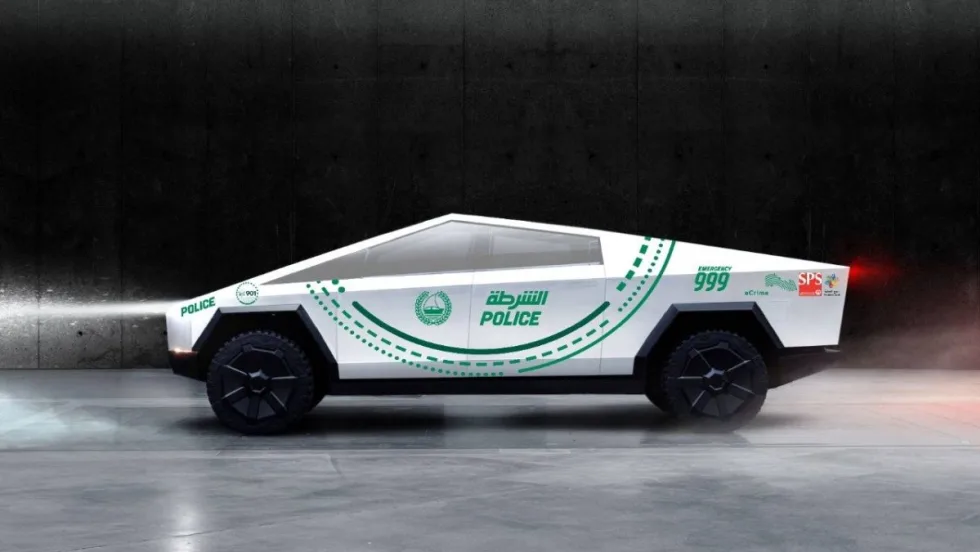
The Future of Police Fleets? Dubai Police Teases Cybertruck for Patrol
The Dubai Police Department posted a mockup of Tesla's new Cybertruck fitted with patrol-ready vehicle graphics.
Read More →Police Vehicles Pushed to the Limit in California
The Los Angeles County Sheriff's Department conducted its annual evaluation of 2018-model-year police vehicles from Oct. 10 to 13. Agency deputies got behind the wheel of 13 four-wheel vehicles and five motorcycles for the testing.
Read More →2018 Police Motorcycles Tested in Michigan
Harley-Davidson adds performance-oriented stage kits to its pair of bikes, while Yamaha offers a police version of its FJR1300 sport touring model.
Read More →2018 Police Vehicles Tested in Michigan
Michigan State Police test Ford's F-150 and hybrid sedan responders, as well as a Dodge Durango, during a 2018-model-year testing round that broadened the options for pursuit vehicles.
Read More →The Efficiency of the CHP's Vehicle Assembly Line
The California Highway Patrol uses an assembly line similar to one found in an automaker's factory to add auxiliary equipment to about 1,000 vehicles per year.
Read More →How FCA Views the Police Market
Law enforcement agencies continue to purchase Fiat Chrysler's Dodge Charger Pursuit, which appeals to law enforcement officers, who say the vehicle in a violator's rear-view conveys business.
Read More →Upgrading the F-150 for Off-Road Patrol
Ford took the wraps off its 2018 F-150 Police Responder earlier this month and showed police agencies its latest tool for law enforcement work on more rugged terrain. Early feedback indicates that the truck will find a place with more rural agencies.
Read More →Managing High-Speed Pursuits
Pursuits can be deadly for everyone involved, but they can't be prohibited in all cases. So agencies need to have policies and procedures in place to reduce the danger.
Read More →How to Deal With the Privileges of Rank
In law enforcement, police chiefs, sheriffs, and other top brass have been known to request higher trim grades and other vehicle upgrades, which can present challenges to the public fleet manager who must repurpose the vehicle after the chief switches into a new vehicle.
Read More →How Ford's Hybrid Patrol Car Is Different
Ford's Police Responder Hybrid Sedan offers several important differences from other retail hybrid cars that should make it well suited for the demands of a police duty cycle, while also providing lower costs to operate.
Read More →